

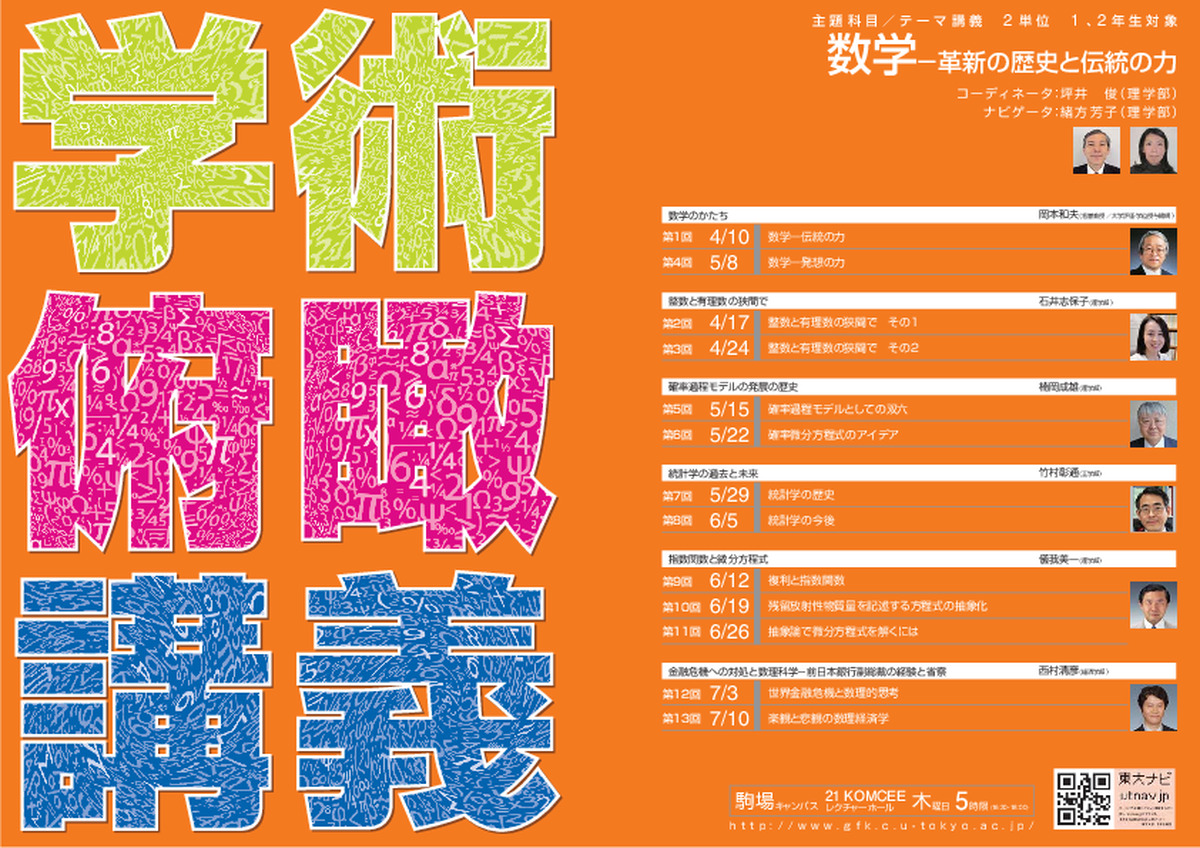
Mathematics: The History of Innovation and the Power of Tradition (Global Focus on Knowledge)





0

0

0
Content List
The Shape of Mathematics


Available

Audio-Only
Listening
#1 Mathematics: The Power of Tradition
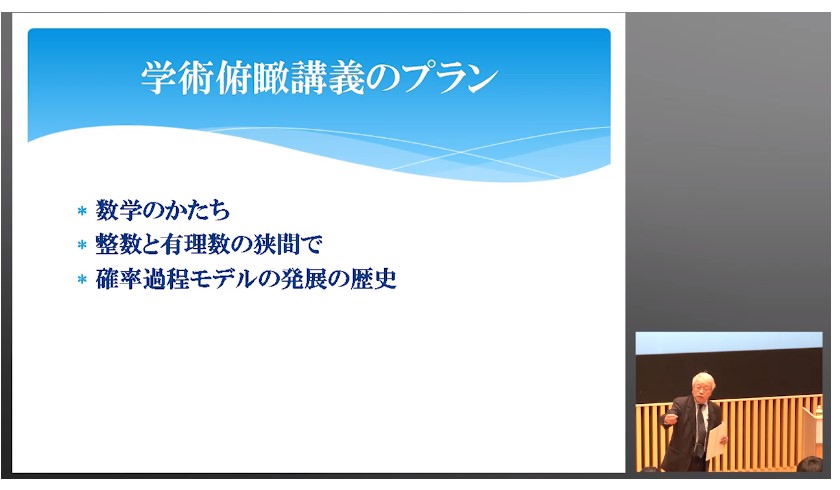
Overview: These lectures will review the process of the creation of mathematics in terms of the shape of mathematics. The material will be limited to content taught in high school based on the belief that a contemplation of how mathematical ideas have been created is significant and beneficial for students in both humanities and science courses. Lecture 1 will provide an overall introduction and …
Available
Audio-Only
Listening
Available
Audio-Only
Listening
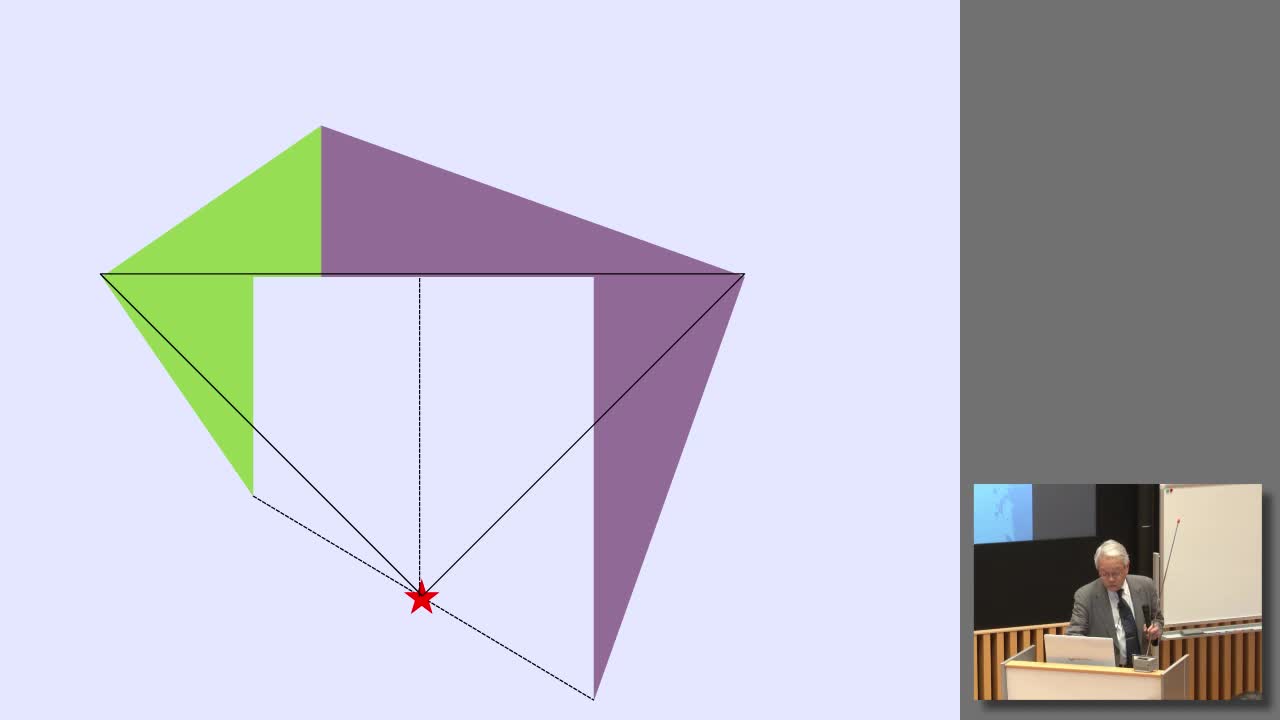
#4 Mathematics: The Power of Ideas
Overview: These lectures will review the process of the creation of mathematics in terms of the shape of mathematics. The material will be limited to content taught in high school based on the belief that a contemplation of how mathematical ideas have been created is significant and beneficial for students in both humanities and science courses. Lecture 1 will provide an overall introduction and …
Available
Audio-Only
Listening
Between Integers and Rationals
Available
Audio-Only
Listening
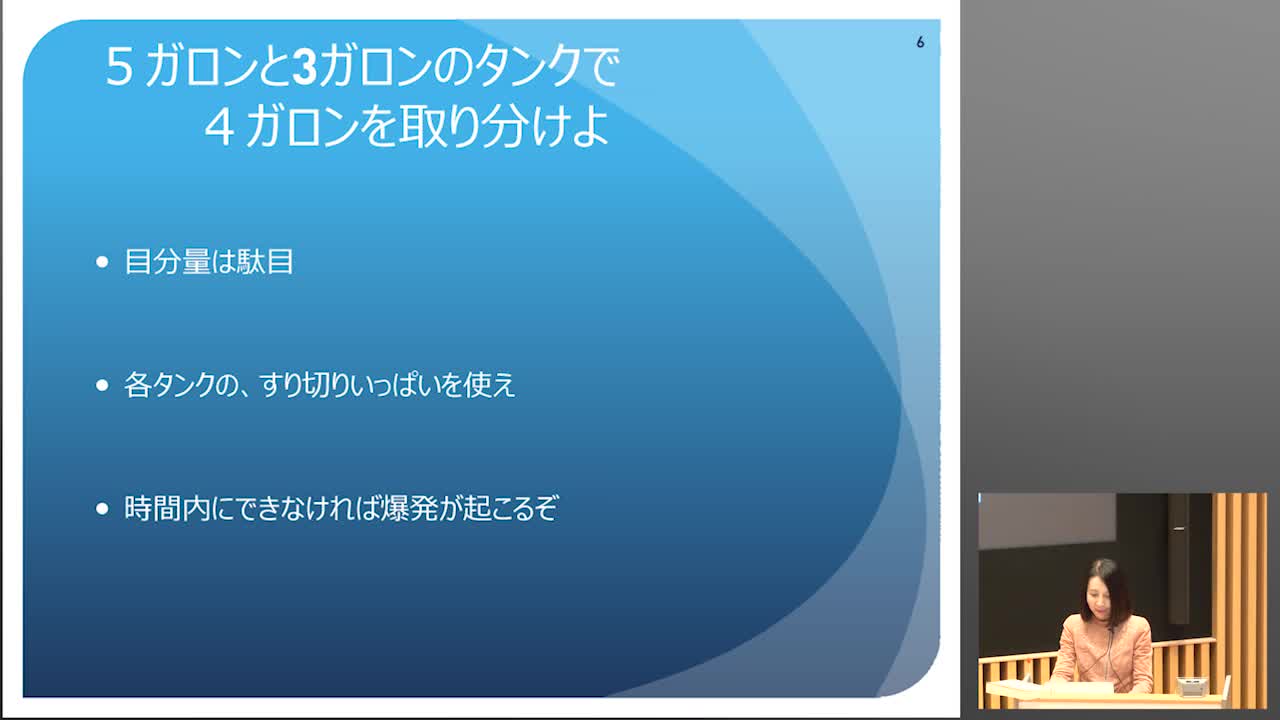
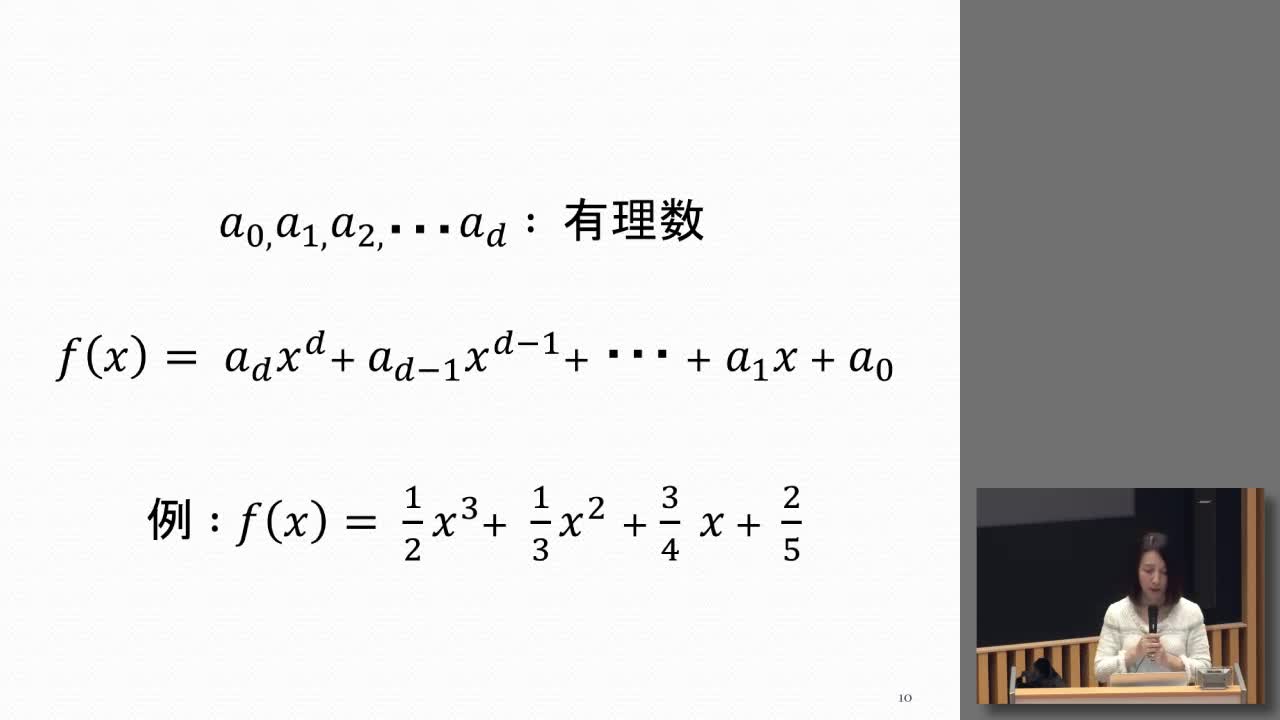
#2 Between Integers and Rationals: Part 1
Overview: These lectures will focus on some problems of integers and rationals to clarify differences in the view points of contemporary mathematics and mathematics taught in high school.
Available
Audio-Only
Listening
Available
Audio-Only
Listening
#3 Between Integers and Rationals: Part 2
Overview: These lectures will focus on some problems of integers and rationals to clarify differences in the view points of contemporary mathematics and mathematics taught in high school.
Available
Audio-Only
Listening
The Development of the Stochastic Process Model
Available
Audio-Only
Listening
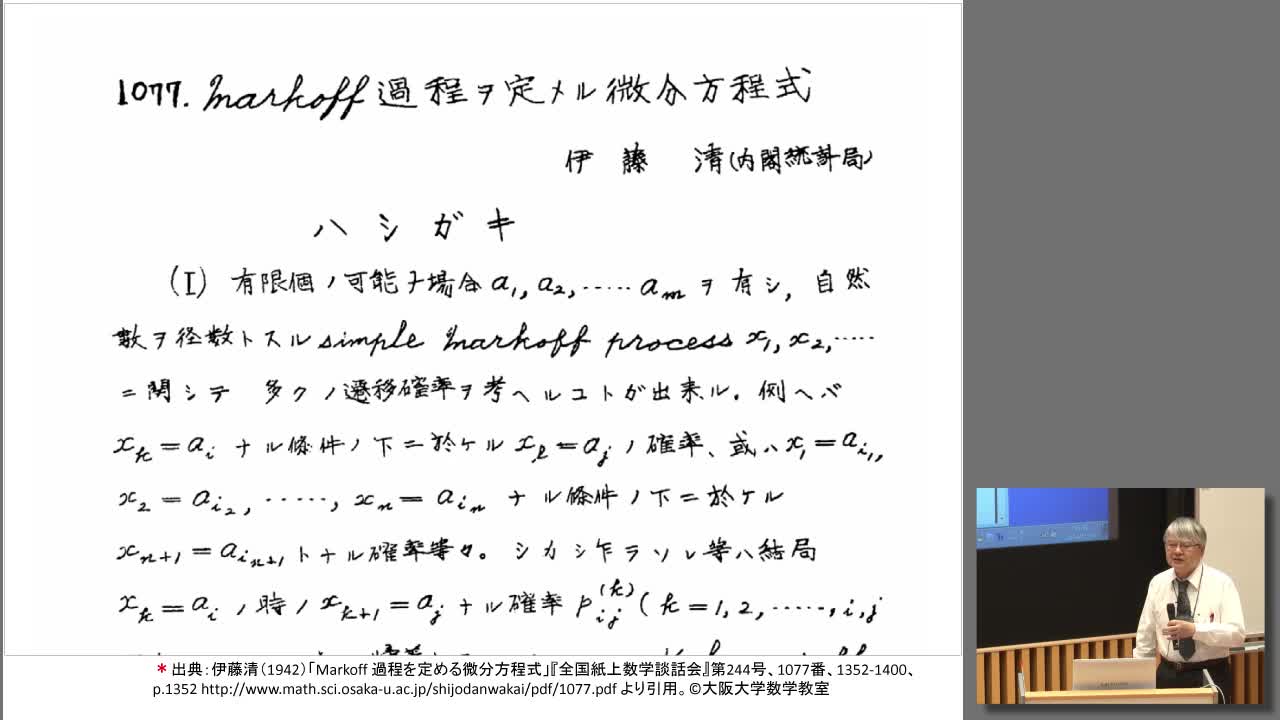
#5 The Game of Sugoroku as a Stochastic Process Model
Overview: The stochastic process model is used in engineering, economics, finance, and other various fields as a tool to represent the indeterminate evolution of something over time. Lecture 1 explains the discrete-time Markov process model, which is a little complicated sugoroku game. The idea that time and space are continuous in this model may seem obvious, but this was not an easy task for ma…
Available
Audio-Only
Listening
Available
Audio-Only
Listening
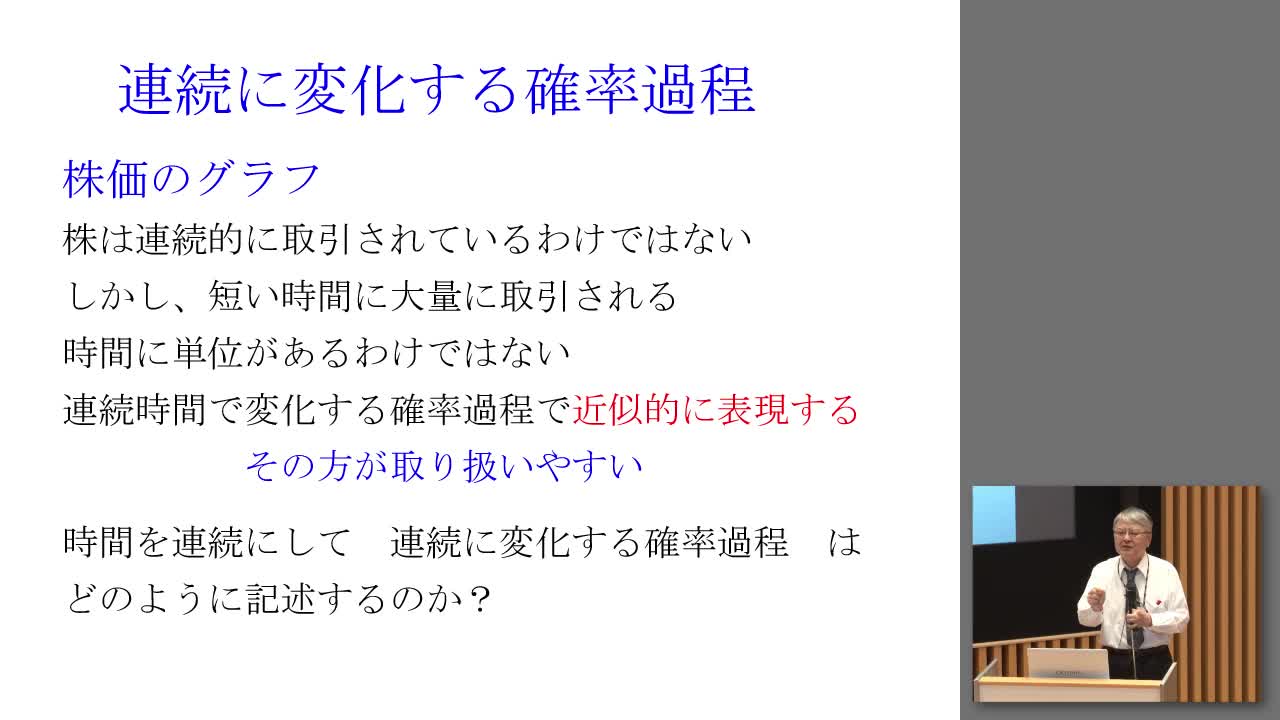
#6 The Idea of Stochastic Differential Equations
Overview: The stochastic process model is used in engineering, economics, finance, and other various fields as a tool to represent the indeterminate evolution of something over time. Lecture 1 explains the discrete-time Markov process model, which is a little complicated sugoroku game. The idea that time and space are continuous in this model may seem obvious, but this was not an easy task for ma…
Available
Audio-Only
Listening
The Past and Future of Statistics
Available
Audio-Only
Listening
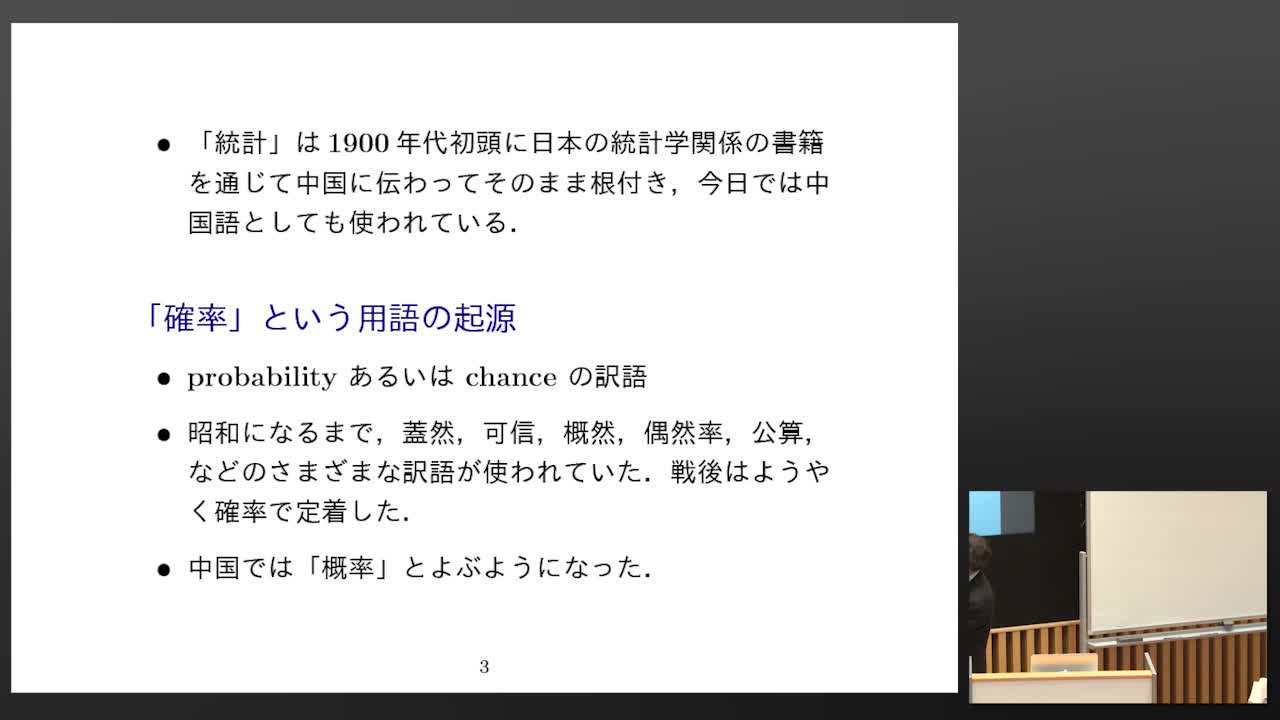
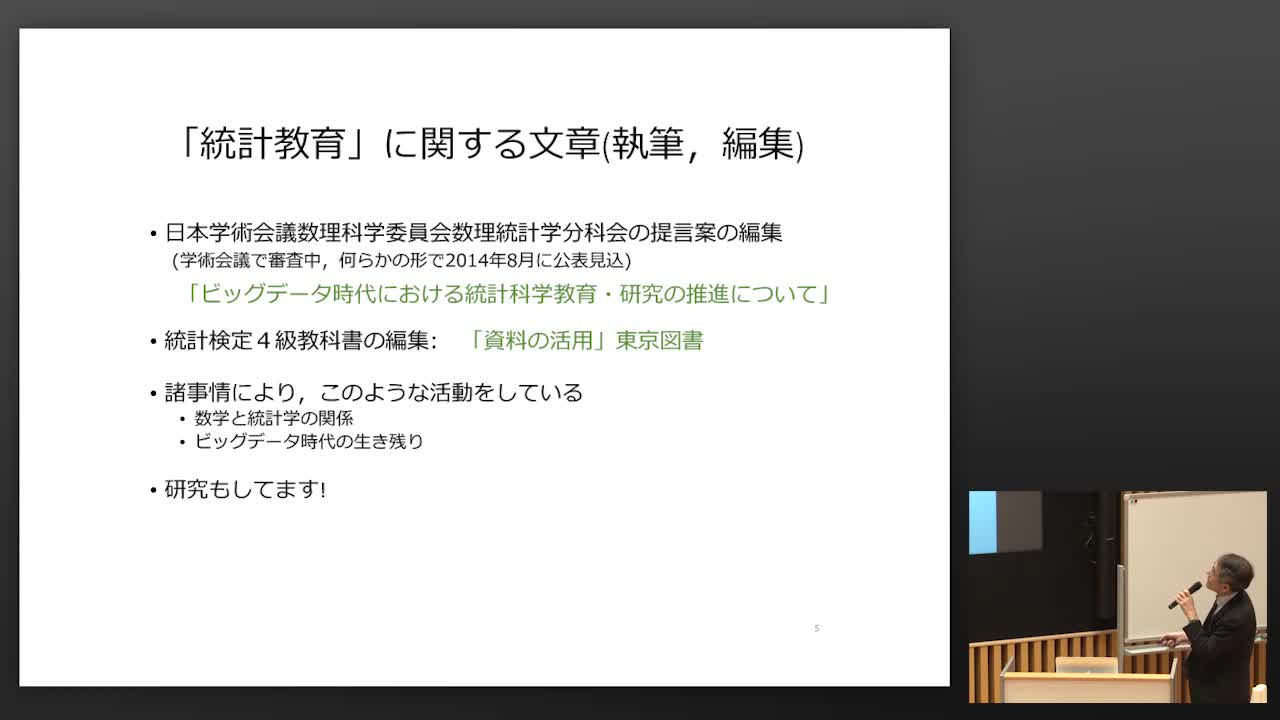
#7 The History of Statistics
Overview: The English word statistics is derived from the word ‘state,’ and thus statistics historically developed as a means to quantify the condition of a society or nation. This then became linked to the theory of probability, and by the early 20th century statistics was established as a general method to handle quantified data and data including uncertainties. As the world today has been desc…
Available
Audio-Only
Listening
Available
Audio-Only
Listening
#8 The Future of Statistics
Overview: The English word statistics is derived from the word ‘state,’ and thus statistics historically developed as a means to quantify the condition of a society or nation. This then became linked to the theory of probability, and by the early 20th century statistics was established as a general method to handle quantified data and data including uncertainties. As the world today has been desc…
Available
Audio-Only
Listening
Exponent Functions and Differential Equations
Available
#9 Compound Interest and Exponential Functions
Overview: Mathematics may often be described as abstract and unrealistic, but this abstract nature is what drives its widespread application. These lectures will explain how the abstract theory founded by Professor Kosaku Yosida, an alumnus of the University of Tokyo, has innovated the studies of differential equations.
Available
Available
#10 Abstraction of the Equation Representing Residual Radioactivity
Overview: Mathematics may often be described as abstract and unrealistic, but this abstract nature is what drives its widespread application. These lectures will explain how the abstract theory founded by Professor Kosaku Yosida, an alumnus of the University of Tokyo, has innovated the studies of differential equations.
Available
Available
#11 How to Solve Differential Equations by Abstract Method
Overview: Mathematics may often be described as abstract and unrealistic, but this abstract nature is what drives its widespread application. These lectures will explain how the abstract theory founded by Professor Kosaku Yosida, an alumnus of the University of Tokyo, has innovated the studies of differential equations.
Available
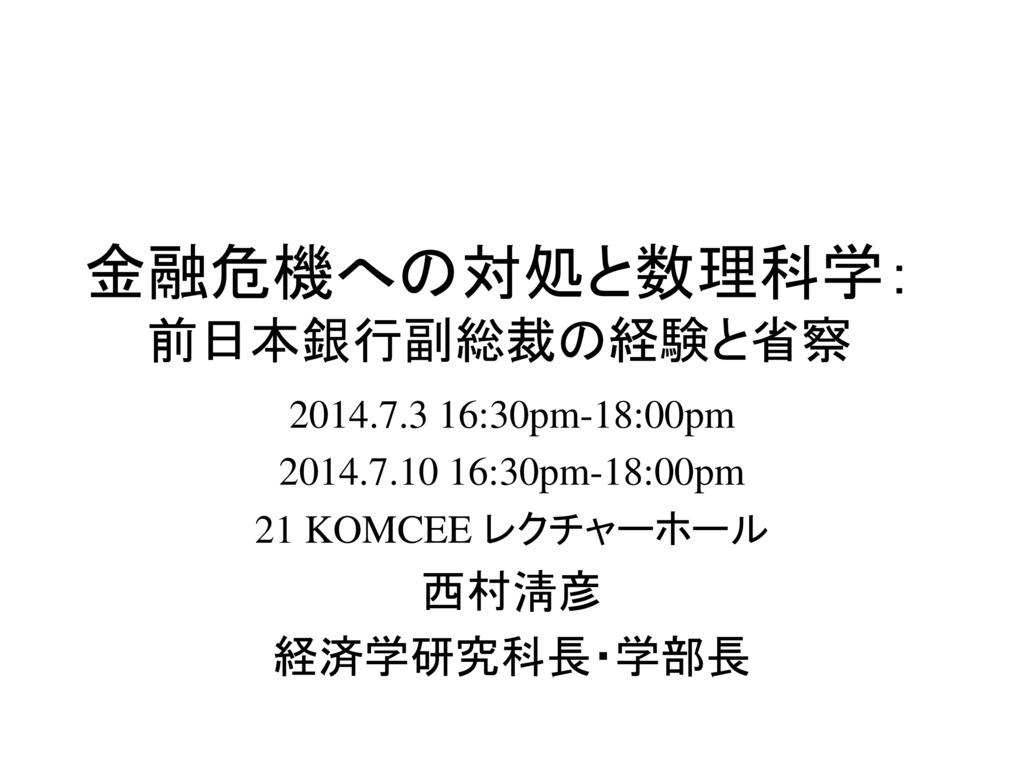
The Financial Crisis and Mathematical Sciences: Reflections of a Former Deputy Governor of the Bank of Japan
Available
#12 The Global Financial Crisis and Mathematical Way of Thinking
Overview: People tend to think that the succinct, abstract world of mathematical sciences lies opposite to the complex market economy of the real world. Predictions of complex market forces are made based on past data and the assumption of a stable structure. However, this structure underwent massive upheavals during the period surrounding the global financial crisis.Past experiences were rendere…
Available
Available
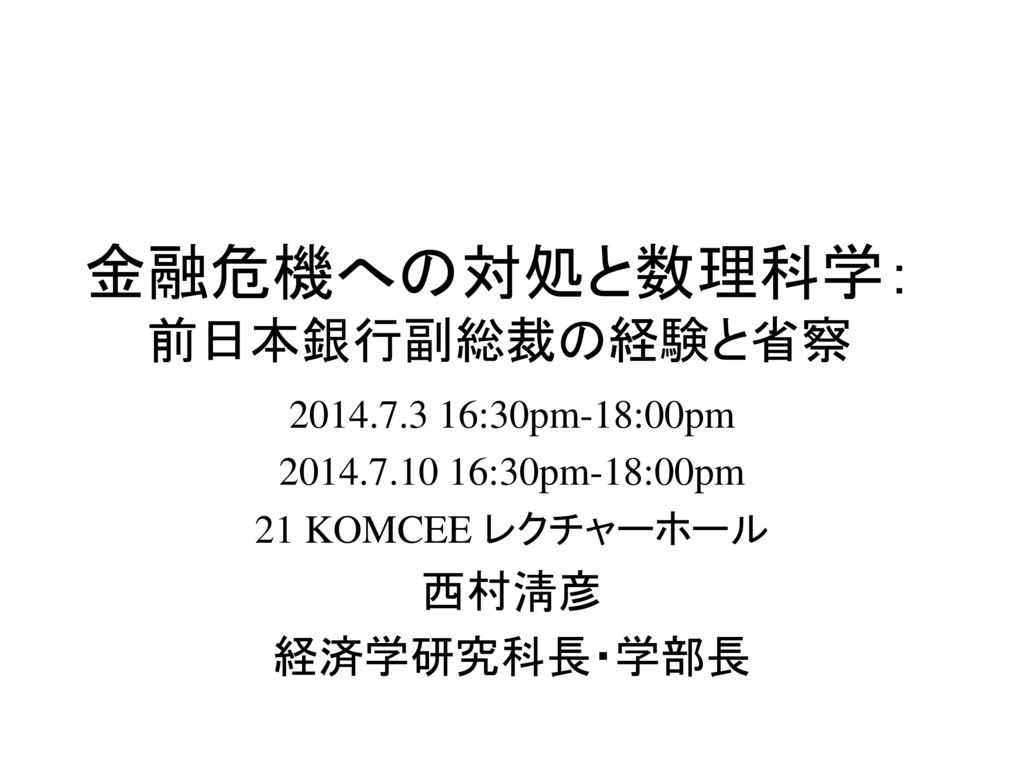
#13 Economic Theory of Optimism and Pessimism
Overview: People tend to think that the succinct, abstract world of mathematical sciences lies opposite to the complex market economy of the real world. Predictions of complex market forces are made based on past data and the assumption of a stable structure. However, this structure underwent massive upheavals during the period surrounding the global financial crisis.Past experiences were rendere…
Available
 Back to Series List