

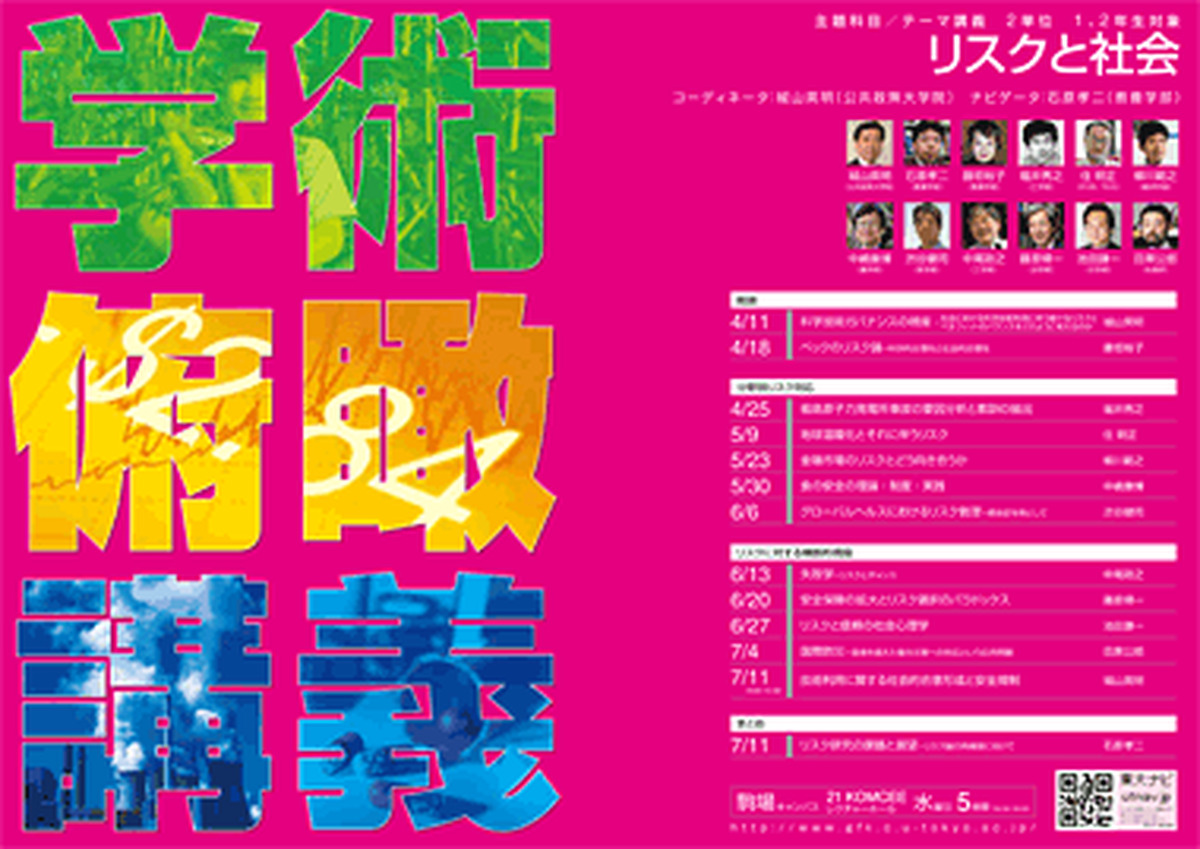
Risks and Society (Global Focus on Knowledge)





1

2

1
Content List
Outlines


Available

Audio-Only
Listening
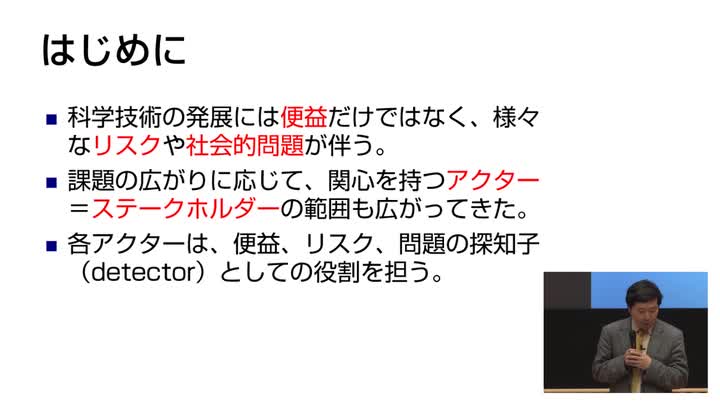
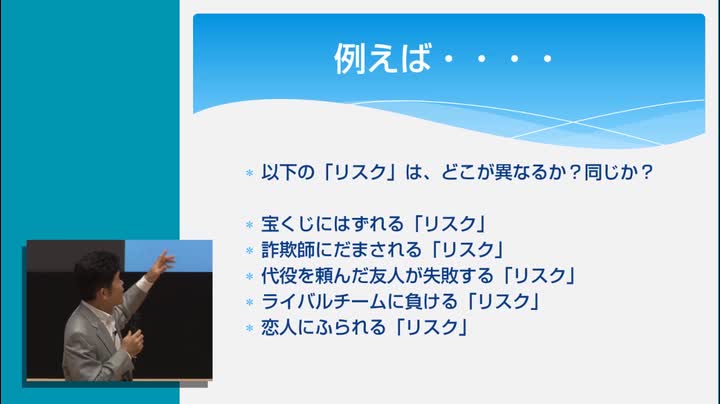
#1 From the view point of governance of scientific technologies – how should we consider the balance between various risks and benefits associated with the usage of scientific technologies in society?
4月11日(水) 科学技術ガバナンスの視座-社会における科学技術利用に伴う様々なリスクとベネフィットのバランスをどのように考えるのか 4月18日(水) ベックのリスク論-科学的合理性と社会的合理性
Available
Audio-Only
Listening
Available
Audio-Only
Listening
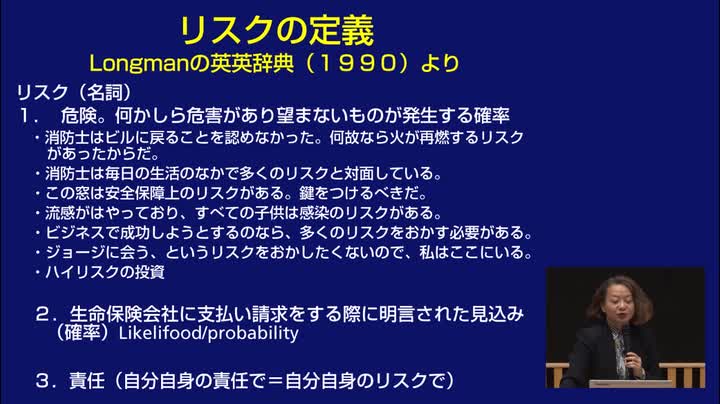
#2 ” Risk Society” by Beck – scientific and social rationality
4月11日(水) 科学技術ガバナンスの視座-社会における科学技術利用に伴う様々なリスクとベネフィットのバランスをどのように考えるのか 4月18日(水) ベックのリスク論-科学的合理性と社会的合理性
Available
Audio-Only
Listening
Risk response by field
Available
Audio-Only
Listening
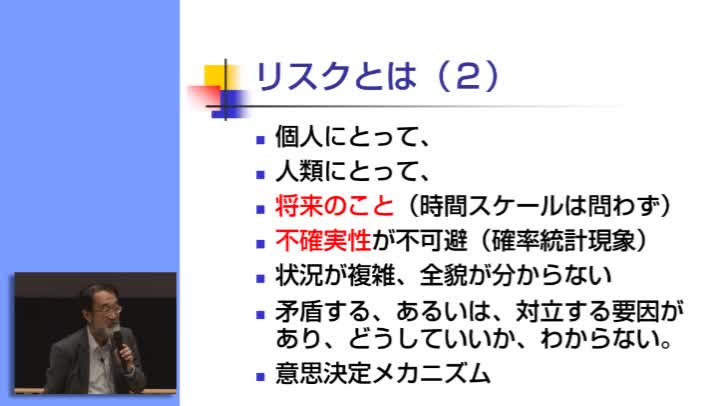
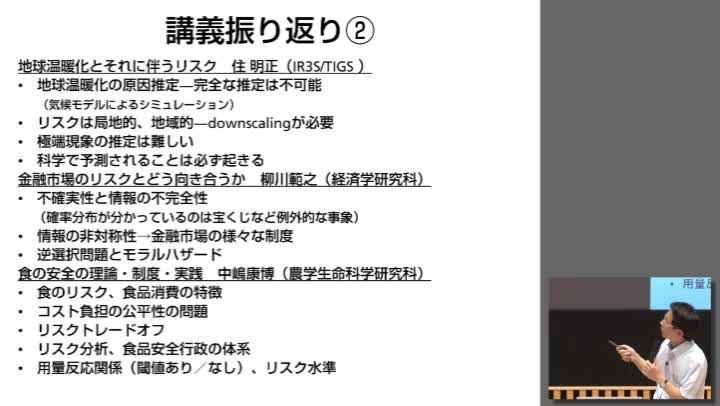
#4 Global warming and associated risks
Global warming changes the global climate, which causes profound effects in many areas. For example, severe local rainstorms and flooding increase in monsoon areas in Asia, while draught is accelerated in the central regions of continents and the Mediterranean coast. However, these climate changes do not necessarily lead to immediate risks. Risk is a function of climate change and societal weakne…
Available
Audio-Only
Listening
Available
Audio-Only
Listening
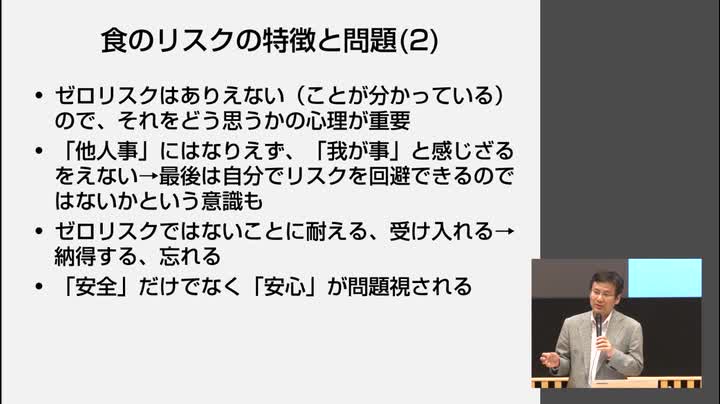
#5 How should we face risks in the financial market?
What are the risks associated with economic activities? In particular, the source of risks in financial markets and countermeasures to deal with them will be simply explained. Risks in economic activities are additionally associated with a number of hidden economic problems, which will also be explained.
Available
Audio-Only
Listening
Available
Audio-Only
Listening
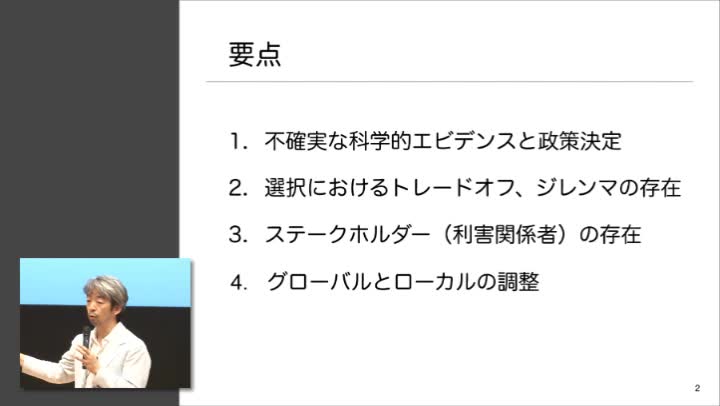
#6 Theory, regulations and application of food safety
The main cause and mechanism of the threat to food safety and sense of security will be explained and diversity in food safety problems will be identified. The multi-faceted feature of the roles of government, manufactures and consumers, as well as the associated cost burden of ensuring safety will be explored.
Available
Audio-Only
Listening
Available
Audio-Only
Listening
#7 Risk management of global health – infectious diseases as examples
The medical field cannot alone shoulder the burden of global health, which also lies at the forefront of politics, diplomacy, economy, trade and business. The limitations and problems associated with normal risk management of global health as led by the World Health Organization (WHO) will be discussed from various aspects, utilizing the example of emerging infectious diseases such as new strains…
Available
Audio-Only
Listening
Cross-sectional viewpoint against risks
Available
Audio-Only
Listening
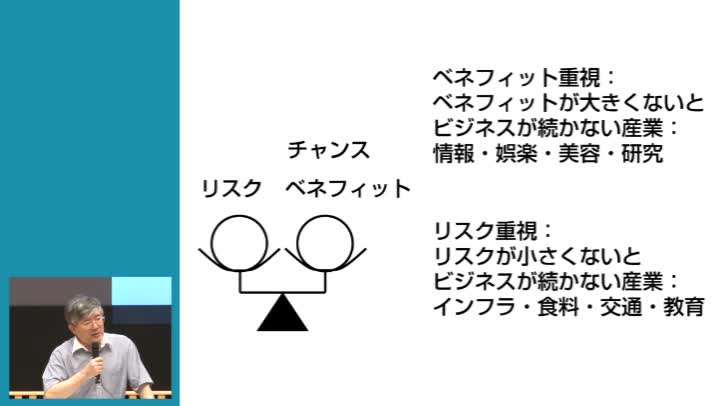
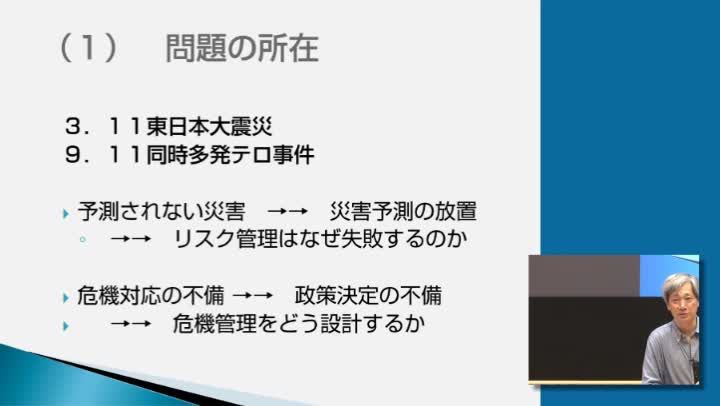
#8 Knowledge of failure – risks and chances
A perfectly safe machine is not necessarily an ideal machine. In its desire for convenience, society draws a fine line between risk and safety and therefore engineers must carefully consider the balance between the two states.
Available
Audio-Only
Listening
Available
Audio-Only
Listening
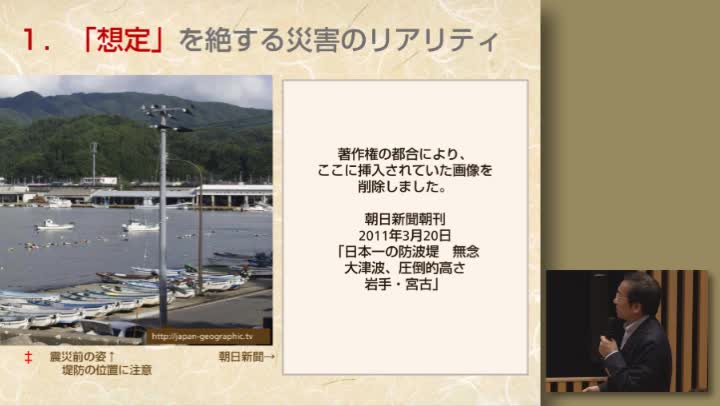
#9 Expansion of safety and security and the paradox of risk selection
When one faces multiple threats, it is difficult to rank them in terms of their level of seriousness. A warning for a large-scale threat can be easily overlooked and risks can be underestimated prior to an incident taking place and overestimated after the fact; these are the results of the paradox of risk selection. This paradox will be discussed.
Available
Audio-Only
Listening
Available
Audio-Only
Listening
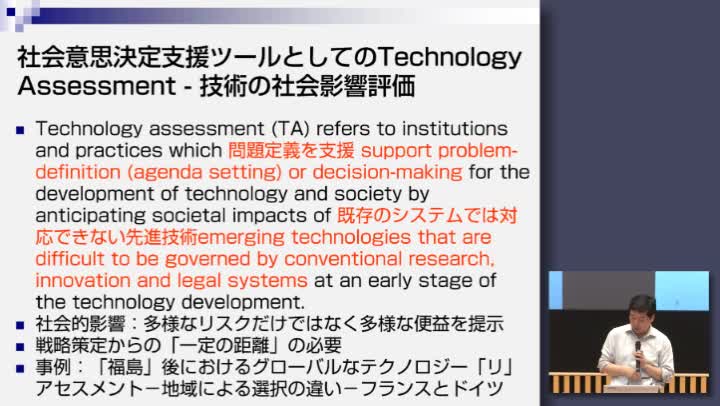
#10 Social psychology of risks and trust
Who determines risk? If we place our trust in institutions such as government and society, can we rely on them to make decisions? The social psychological approach to these subjects will be discussed.
Available
Audio-Only
Listening
Available
Audio-Only
Listening
#12 Development of social consensus and safety regulations regarding technology usage
6月13日(水) 失敗学-リスクとチャンス 絶対的に安全な機械が理想的とは限らない。社会はその利便性を考慮して 適当に安全とリスクの間に境界線を引くので、エンジニアもそのバランスを考慮 しなければならない。6月20日(水) 安全保障の拡大とリスク選択のパラドックス 複数の脅威を前にしてどの脅威がより重要であるか、判断は難しい。そのために生まれるのが、大規模な脅威の予告も捨象されやすい、事件発生前にはリス…
Available
Audio-Only
Listening
 Back to Series List