

Thinking about contemporary Japan (Global Focus on Knowledge)






2

2

0
Content List


Available

Audio-Only
Listening
#1 Beyond the Narrative of the National
[Overview] The Japanese grow up and live our lives largely enveloped by a national narrative, our own story of Japan. This is because scholars recount history as the story of the nation. But from the scholarly perspective, history entails formulating hypothesis about past events, gathering evidence, and verifying facts, while readers tend to think of history as the story that they themselves tell…
Available
Audio-Only
Listening
Available
Audio-Only
Listening
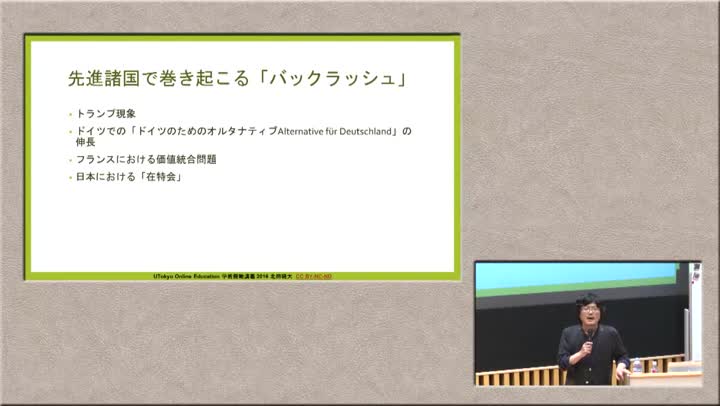
#2 Is Japanese society drifting to the right?
[Overview] In the world of pragmatic politics, the “conservative” Abe regime has brought stability to the government, but the apparent “drift of Japanese society to the right” as evidenced on the street and on the Internet is becoming problematic. But first we must consider several points of contention as to what “drift to the right” means—Is there something th…
Available
Audio-Only
Listening
Available
Audio-Only
Listening
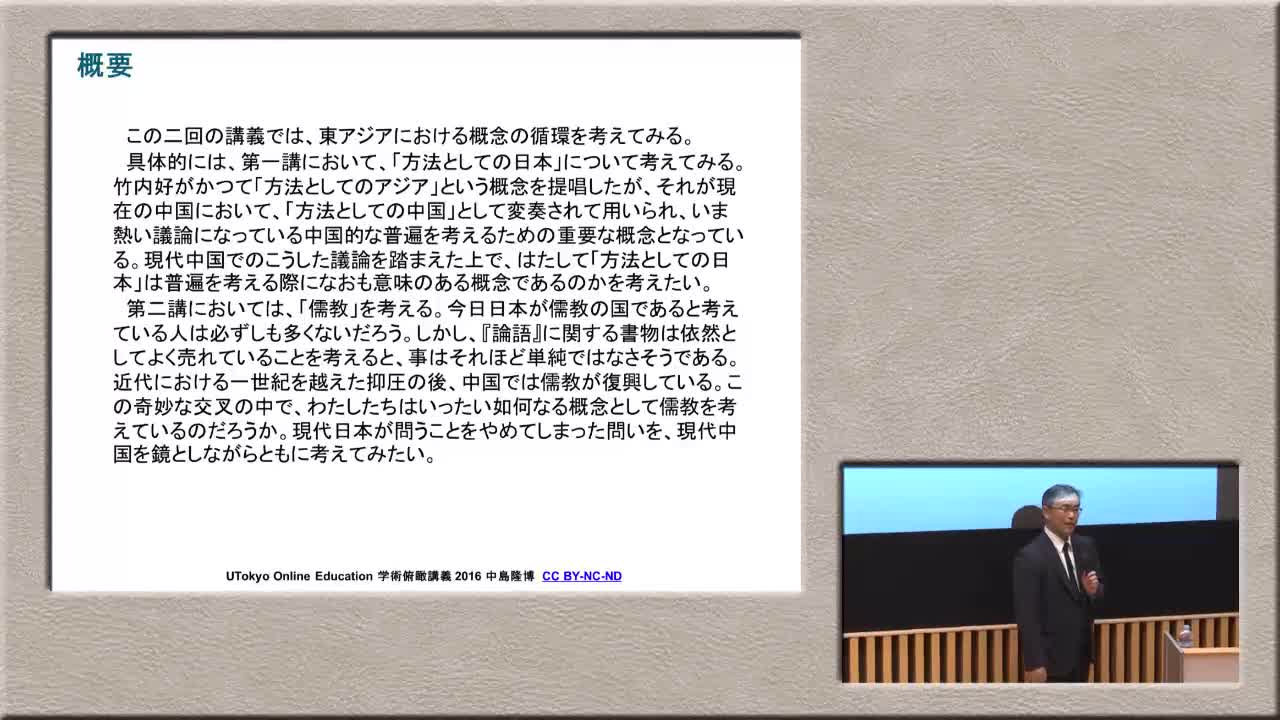
#4 The East Asian Circulation of Concepts: Japan as Method and Confucianism The first lecture
[Overview] One of the driving forces when we launched Global Japan Studies was to put Japan into much wider context such as in East Asia and to compare Japan with other perspectives. Following this idea, I would like to focus on the East Asian circulation of concepts in my talks. In the first lecture, the concept of “Asia as method” by Takeuchi Yoshimi is discussed. There are many debates concern…
Available
Audio-Only
Listening
Available
Audio-Only
Listening
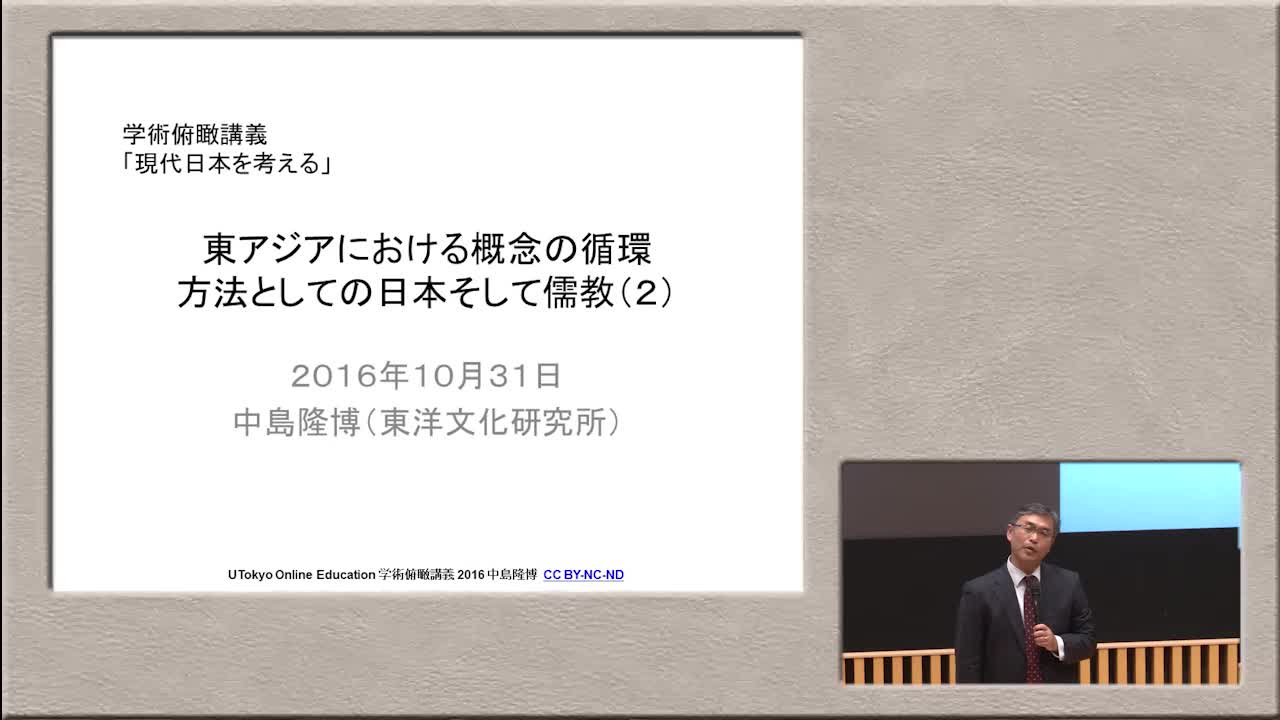
#5 The East Asian Circulation of Concepts: Japan as Method and Confucianism The second lecture
[Overview] One of the driving forces when we launched Global Japan Studies was to put Japan into much wider context such as in East Asia and to compare Japan with other perspectives. Following this idea, I would like to focus on the East Asian circulation of concepts in my talks. In the first lecture, the concept of “Asia as method” by Takeuchi Yoshimi is discussed. There are many debates concern…
Available
Audio-Only
Listening
Available
Audio-Only
Listening
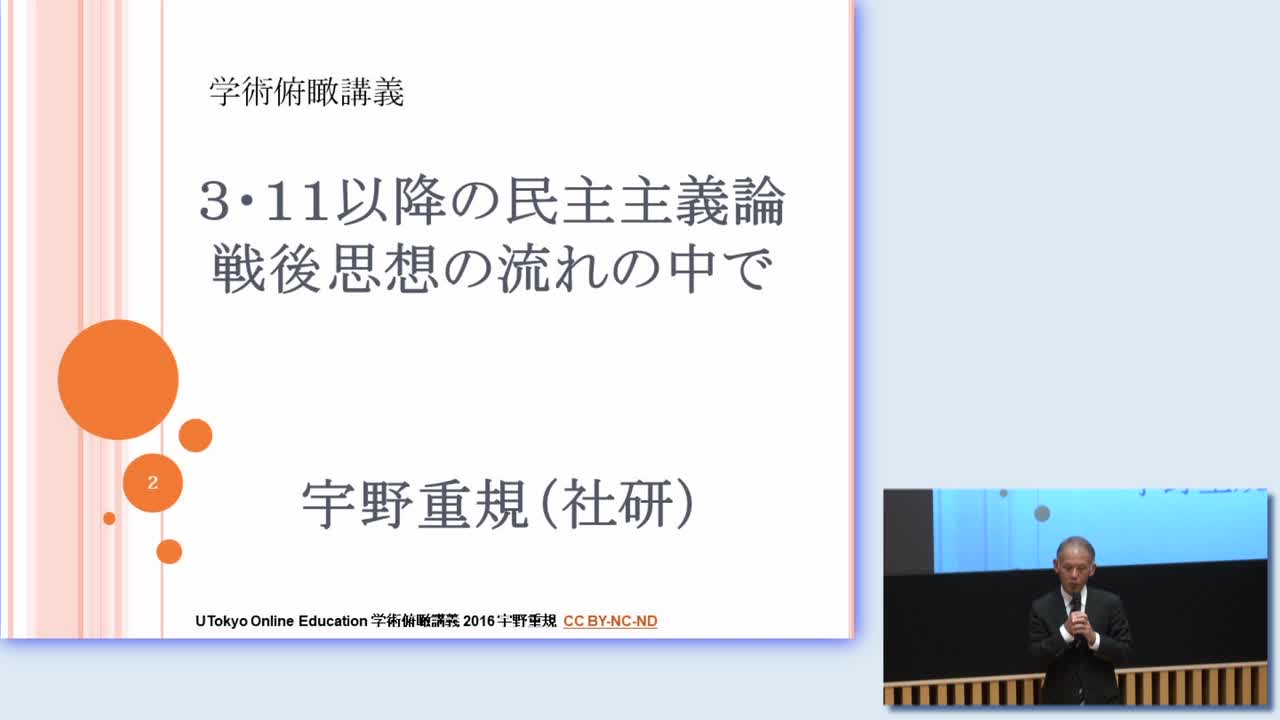
#8 Democracy after the 3・11 earthquake in the flux of post-war thinking
[Overview] Did the Great East Japan Earthquake and tsunami of 2011 alter Japan’s democracy? The triple disasters of earthquake and tsunami followed by major damage to the Fukushima Daiichi nuclear power plant highlighted the vulnerability of Japan’s political system. This provoked heated discussion about the so-called nuclear village (institutional pro-nuclear advocates) and the abili…
Available
Audio-Only
Listening
Available
Audio-Only
Listening
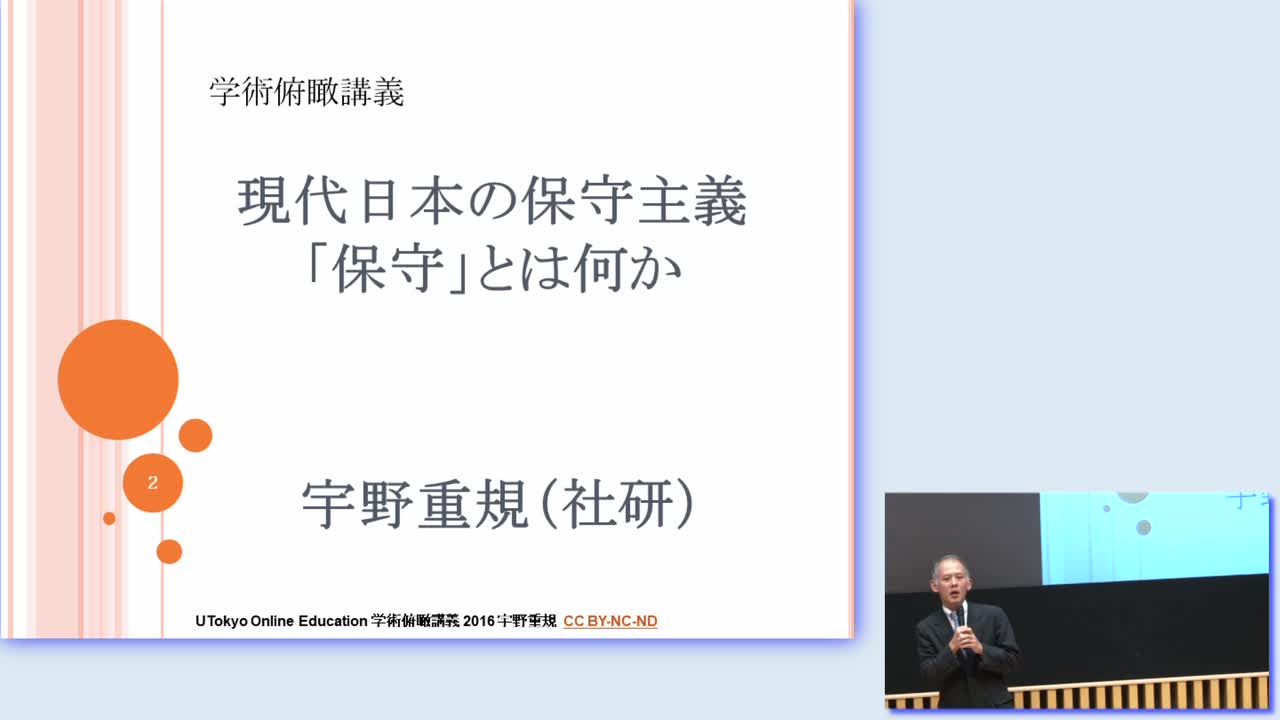
#9 Conservatism in contemporary Japan: What is "conservatism?"
[Overview] In contemporary Japan we frequently see the word “conservative” in the daily newspaper and on the Internet, even if the definition is somewhat fuzzy. This despite the fact that the term conservatism has a long distinguished tradition tracing back to 18th century British politician and thinker Edmund Burke. Does conservatism in this classic sense really exist in contemporary…
Available
Audio-Only
Listening
Available
Audio-Only
Listening
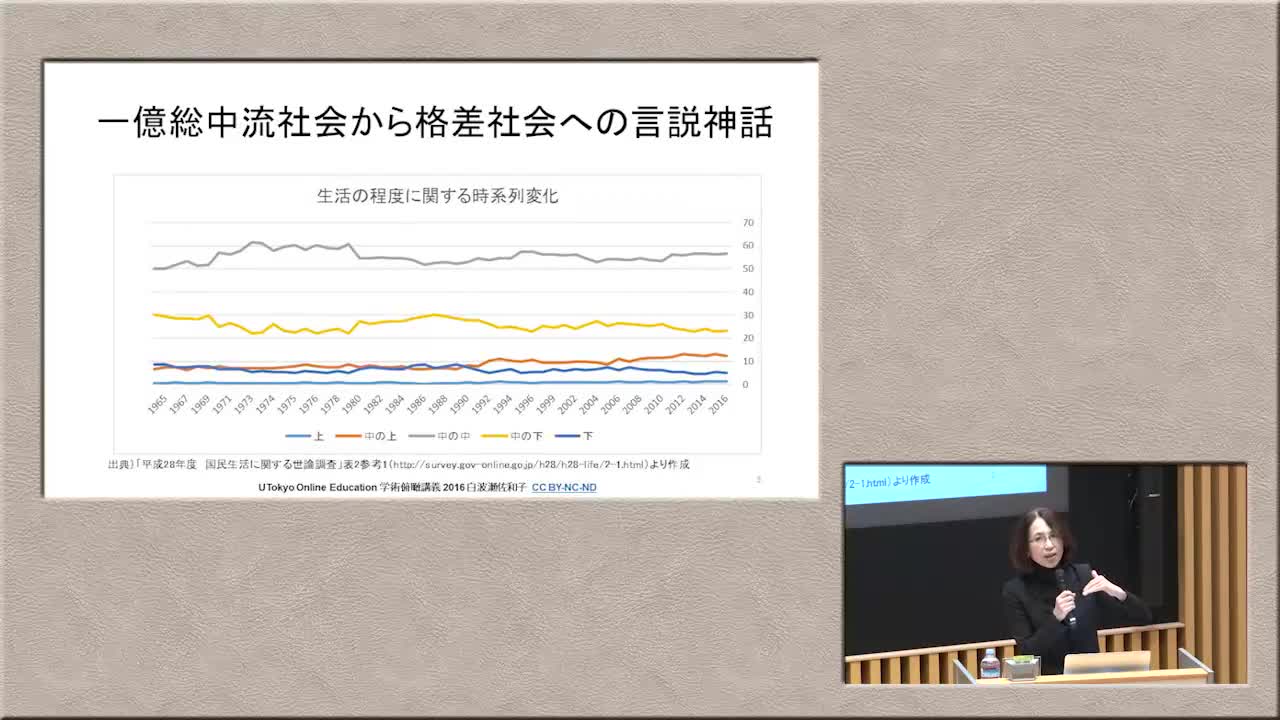
#10 Poor people and rich people: Inequality in opportunity and results
[Overview] The issue of social inequality in Japan have been discussed in various contexts after World War II. For example, the Japanese people found themselves in the midst of an economic miracle when recovering from post-war devastation in the 1960s and 70s, in the ‘100 million, all middle-class society’ where all Japanese belonged to the middle class in the 1980s, and in the rediscovery of the…
Available
Audio-Only
Listening
Available
Audio-Only
Listening
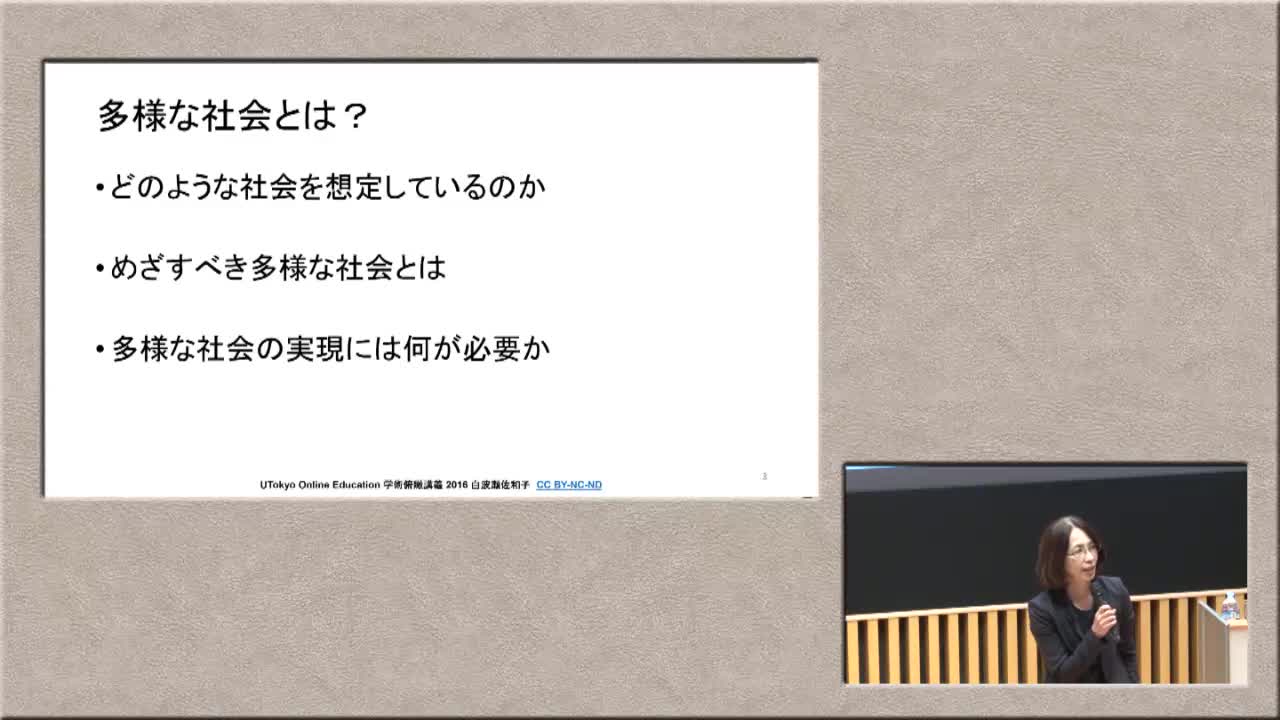
#11 Achieving a diverse society: Acceptance of the minority and sensitivity to others
[Overview] Japan was regarded as a homogeneous society. In this context, it has been considered that the reason Japan was able to fully recover from post-war devastation and achieve an economic miracle in such a short period was because of her cultural characteristics, wherein all Japanese people unite in pursuing a common goal such as achieving economic growth. This could have happened because o…
Available
Audio-Only
Listening
Available
Audio-Only
Listening
#12 Observing Japan from the Outside
[Overview] In bringing this series to a close, we will cast new light on the way Japan used to be, the way it is today, and the significance of considering new perspectives on Japan. While the themes addressed here reflect the way Japan is viewed from outside the country, we would caution that although the opinions may be subjective, that does not necessarily mean that the views are critical or n…
Available
Audio-Only
Listening
 Back to Series List