

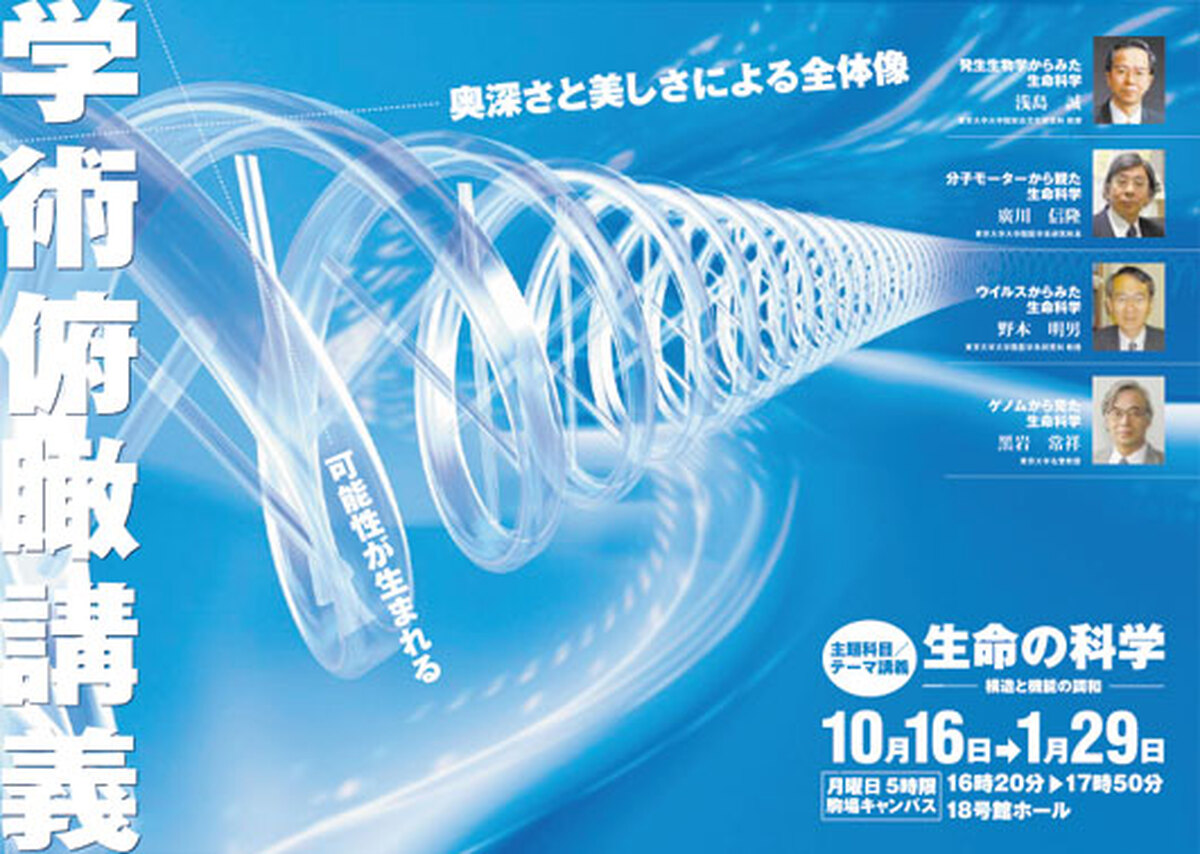
Science of Life - The Harmony Between Structures and Functions (Global Focus on Knowledge)





2

1

1
Content List
Life Science: from the Perspective of Developmental Biology


Available

Audio-Only
Listening
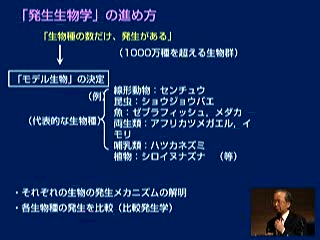
#1 From an Egg to an Adult Body-The Morphogenetic Mechanism
一つの受精卵からどのようにして構造と機能を持った器官(臓器)や組織を形成し、統一のとれた決まった形の親になるのか。その生物の形づくりと器官形成のしくみが次第に分子の言葉で語ることが可能となりつつある。そこには、従来の実験発生生物学から大きく変貌した分子発生生物学や器官形成学などがある。それらを支えているものは遺伝子の発現調節のメカニズム、核と細胞質の相互作用、細胞間相互作用、組織間相互作用などで…
Available
Audio-Only
Listening
Available
Audio-Only
Listening
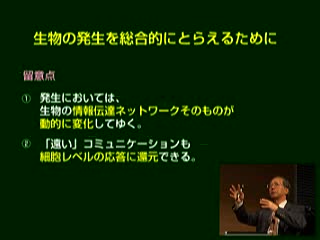
#2 Biological Information System and Networking
一つの受精卵からどのようにして構造と機能を持った器官(臓器)や組織を形成し、統一のとれた決まった形の親になるのか。その生物の形づくりと器官形成のしくみが次第に分子の言葉で語ることが可能となりつつある。そこには、従来の実験発生生物学から大きく変貌した分子発生生物学や器官形成学などがある。それらを支えているものは遺伝子の発現調節のメカニズム、核と細胞質の相互作用、細胞間相互作用、組織間相互作用などで…
Available
Audio-Only
Listening
Available
Audio-Only
Listening
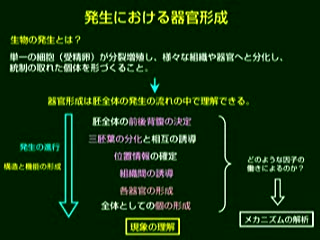
#3 Mechanism of Organ Formation
一つの受精卵からどのようにして構造と機能を持った器官(臓器)や組織を形成し、統一のとれた決まった形の親になるのか。その生物の形づくりと器官形成のしくみが次第に分子の言葉で語ることが可能となりつつある。そこには、従来の実験発生生物学から大きく変貌した分子発生生物学や器官形成学などがある。それらを支えているものは遺伝子の発現調節のメカニズム、核と細胞質の相互作用、細胞間相互作用、組織間相互作用などで…
Available
Audio-Only
Listening
Available
Audio-Only
Listening
#4 Science of Regeneration
一つの受精卵からどのようにして構造と機能を持った器官(臓器)や組織を形成し、統一のとれた決まった形の親になるのか。その生物の形づくりと器官形成のしくみが次第に分子の言葉で語ることが可能となりつつある。そこには、従来の実験発生生物学から大きく変貌した分子発生生物学や器官形成学などがある。それらを支えているものは遺伝子の発現調節のメカニズム、核と細胞質の相互作用、細胞間相互作用、組織間相互作用などで…
Available
Audio-Only
Listening
Life Science Seen from Molecular Motor
Available
Audio-Only
Listening
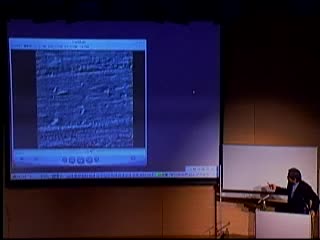
#5 Functions of Brain and Nerves, and Molecular Motor
私たちの体を構成する神経細胞を始めとするすべての細胞は、合成した蛋白質を様々な膜小器官や、蛋白複合体として、または遺伝子そのものを多くのモーター分子群により微小管のレールの上を巧妙に送り分けている。この細胞内物質輸送の分子機構は、細胞の重要な働きの基盤となるだけでなく、脳の発生、神経回路網の形成、記憶、学習などの脳の高次機能、体の左右の決定や腫瘍の抑制など多彩かつ重要な生命現象を司っている。また…
Available
Audio-Only
Listening
Available
Audio-Only
Listening
#6 Body Forming Molecular Motor
私たちの体を構成する神経細胞を始めとするすべての細胞は、合成した蛋白質を様々な膜小器官や、蛋白複合体として、または遺伝子そのものを多くのモーター分子群により微小管のレールの上を巧妙に送り分けている。この細胞内物質輸送の分子機構は、細胞の重要な働きの基盤となるだけでなく、脳の発生、神経回路網の形成、記憶、学習などの脳の高次機能、体の左右の決定や腫瘍の抑制など多彩かつ重要な生命現象を司っている。また…
Available
Audio-Only
Listening
Available
Audio-Only
Listening
#7 How Molecular Motor Works
私たちの体を構成する神経細胞を始めとするすべての細胞は、合成した蛋白質を様々な膜小器官や、蛋白複合体として、または遺伝子そのものを多くのモーター分子群により微小管のレールの上を巧妙に送り分けている。この細胞内物質輸送の分子機構は、細胞の重要な働きの基盤となるだけでなく、脳の発生、神経回路網の形成、記憶、学習などの脳の高次機能、体の左右の決定や腫瘍の抑制など多彩かつ重要な生命現象を司っている。また…
Available
Audio-Only
Listening
Life Science - Viruses
Available
Audio-Only
Listening
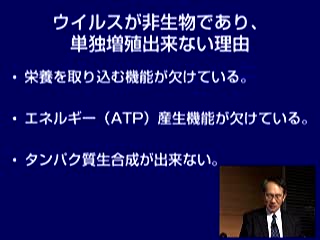
#8 Virus and Organisms
こちらの講義の概要をだいふくちゃん通信でもご紹介しています。 ⇒【ウイルスと生命体】ウイルスは生命体なのか?世界を震撼させ続ける「ウイルス」とは何者か(だいふくちゃん通信)
Available
Audio-Only
Listening
Available
Audio-Only
Listening
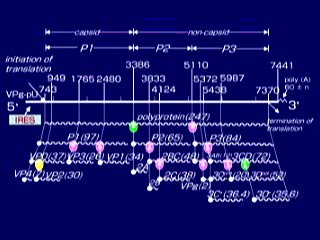
#9 Principles of Virus Infections
ウイルスは、ヒトなどの宿主に感染し、はじめて増殖が可能となる。このようなウイルスと宿主は必然的に自然生態系を形成し、共に進化してきた。両者の関係は調べれば調べる程絶妙であることが分かる。ウイルス感染現象の分子レベルの解析は、生命科学領域に新たな課題を提出し続けている。また、次々と登場する新たなウイルスに人類は対応していかねばならない。ひたすらウイルスを知り、ウイルスに学ぶ姿勢が大切である。 …
Available
Audio-Only
Listening
Available
Audio-Only
Listening
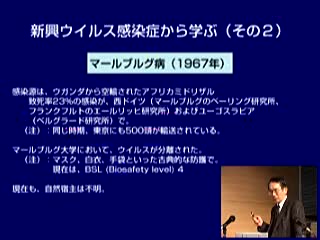
#10 The Battle Between Virus and Human
ウイルスは、ヒトなどの宿主に感染し、はじめて増殖が可能となる。このようなウイルスと宿主は必然的に自然生態系を形成し、共に進化してきた。両者の関係は調べれば調べる程絶妙であることが分かる。ウイルス感染現象の分子レベルの解析は、生命科学領域に新たな課題を提出し続けている。また、次々と登場する新たなウイルスに人類は対応していかねばならない。ひたすらウイルスを知り、ウイルスに学ぶ姿勢が大切である。 …
Available
Audio-Only
Listening
 Back to Series List