

The World of Diverse Matter - The Distant Journey from Space to Earth (Global Focus on Knowledge)






0

0

0
Content List
From Micro Particles to Macro Space


Available

Audio-Only
Listening
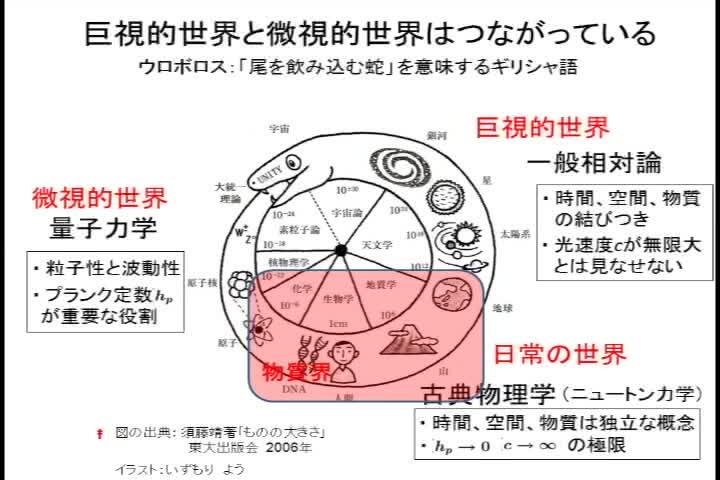
#1 Past, Present, and Future of Particle Physics Research --- What Will the Cutting-Edge Large Hadron Collider (LHC) Change?
What did the universe come from? Why does the universe exist the way it does? Researchers aspire to answer these philosophical questions through science. Elementary particles are the most basic particles comprising matter. As the history of science has progressed, scientists have discovered more basic and more microscopic particles. The goal of the natural sciences is to elucidate the laws ? the …
Available
Audio-Only
Listening

Available
Audio-Only
Listening
#2 Physicists' Worldview --- We Didn't Know Anything
What did the universe come from? Why does the universe exist the way it does? Researchers aspire to answer these philosophical questions through science. Elementary particles are the most basic particles comprising matter. As the history of science has progressed, scientists have discovered more basic and more microscopic particles. The goal of the natural sciences is to elucidate the laws ? the …
Available
Audio-Only
Listening
Available
Audio-Only
Listening
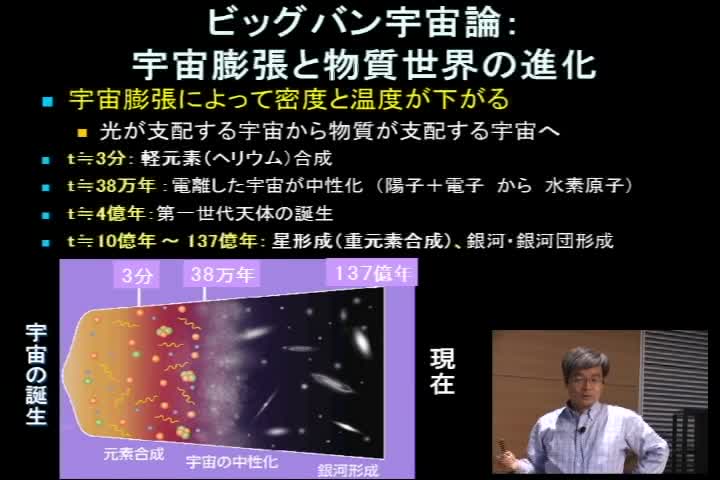
#3 Formation of the Universe and Origin of Matter --- The World of Exoplanets
What did the universe come from? Why does the universe exist the way it does? Researchers aspire to answer these philosophical questions through science. Elementary particles are the most basic particles comprising matter. As the history of science has progressed, scientists have discovered more basic and more microscopic particles. The goal of the natural sciences is to elucidate the laws ? the …
Available
Audio-Only
Listening
Available
Audio-Only
Listening
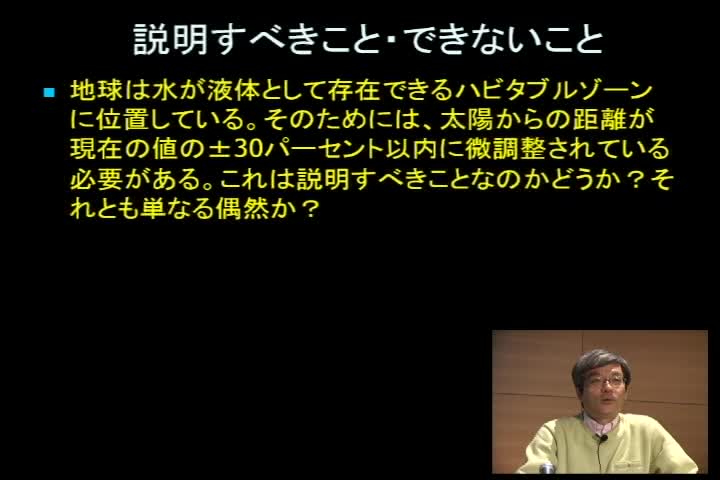
#4 Chance and Necessity in the Universe --- How Far Can Science Describe the World?
What did the universe come from? Why does the universe exist the way it does? Researchers aspire to answer these philosophical questions through science. Elementary particles are the most basic particles comprising matter. As the history of science has progressed, scientists have discovered more basic and more microscopic particles. The goal of the natural sciences is to elucidate the laws ? the …
Available
Audio-Only
Listening
The Diversity of Matter Born from the Actions of Atoms, Electrons, and Molecules
Available
Audio-Only
Listening
#5 Materials Science and Contemporary Society --- From Atoms to Solids
The great diversity of matter is created by the various combinations of the more than 100 chemical elements. The electrical, optical, and magnetic properties of matter are also surprisingly diverse, and scientists can manipulate these properties because they will greatly change according to the physical environment (temperature, pressure, magnetic field, etc.). At first, the lecturers will exp…
Available
Audio-Only
Listening
Available
Audio-Only
Listening
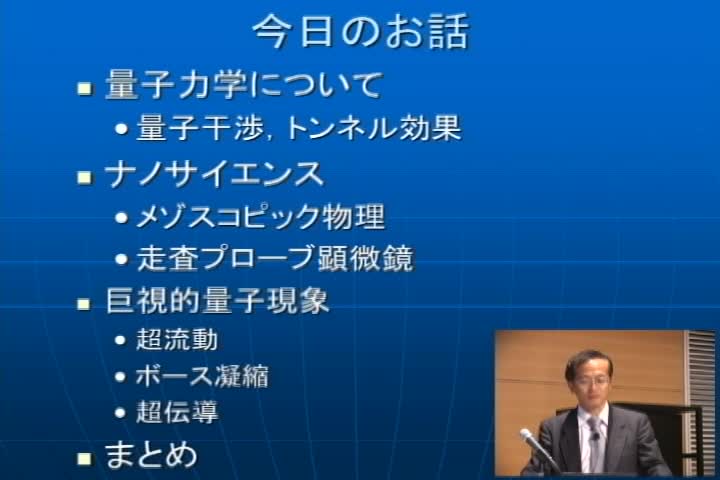
#6 The Quantum World --- Nanoscience, Superconductivity, Superfluidity
The great diversity of matter is created by the various combinations of the more than 100 chemical elements. The electrical, optical, and magnetic properties of matter are also surprisingly diverse, and scientists can manipulate these properties because they will greatly change according to the physical environment (temperature, pressure, magnetic field, etc.). At first, the lecturers will exp…
Available
Audio-Only
Listening
Available
Audio-Only
Listening
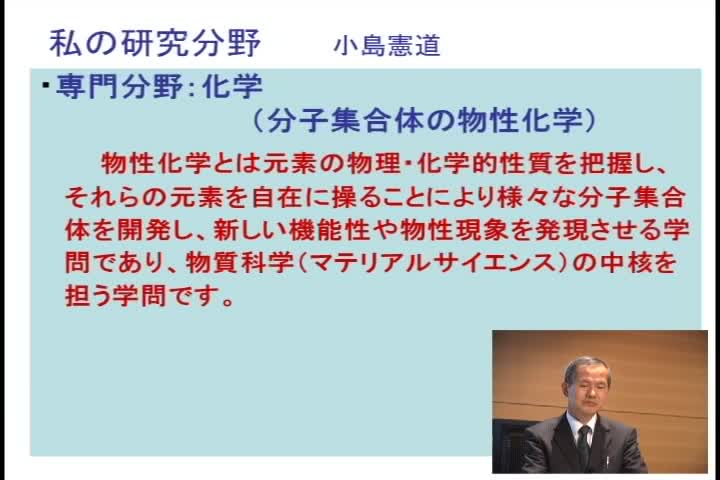
#7 Advanced Functionality Produced by Molecular Mass
The great diversity of matter is created by the various combinations of the more than 100 chemical elements. The electrical, optical, and magnetic properties of matter are also surprisingly diverse, and scientists can manipulate these properties because they will greatly change according to the physical environment (temperature, pressure, magnetic field, etc.). At first, the lecturers will exp…
Available
Audio-Only
Listening
The Search for and Creation of Matter with Desirable Properties --- Discoveries from the Field of Pharmaceutical Science
Available
Audio-Only
Listening
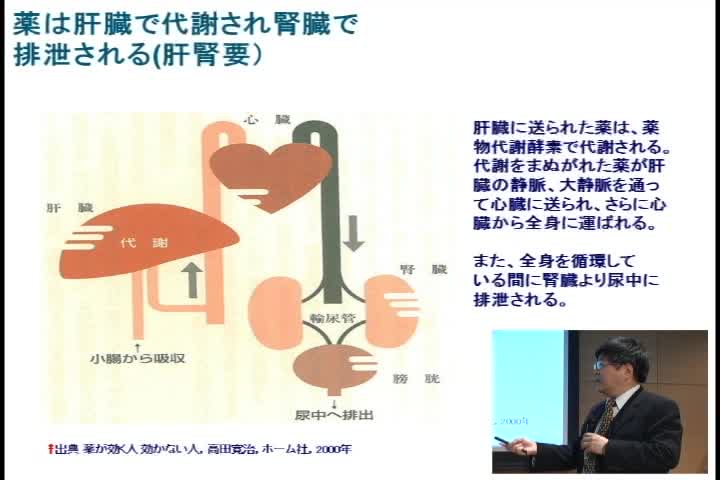
#8 Why Do Drugs Work?
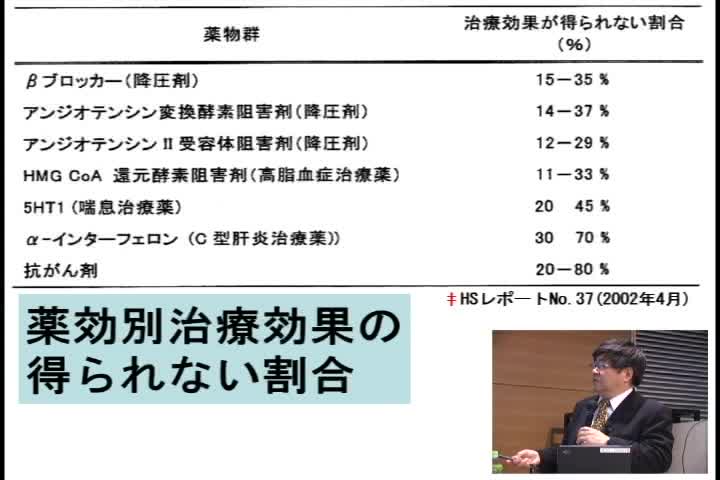
Many drugs are low molecular- and high molecular-weight compounds that are absorbed from outside the body. Through the great breakthroughs in modern biology, which have been based on the growing understanding of the molecular chemistry of biological systems, it has become clear that drugs interact with specific proteins and nucleic acids inside the body, and become effective according to the acti…
Available
Audio-Only
Listening
Available
Audio-Only
Listening
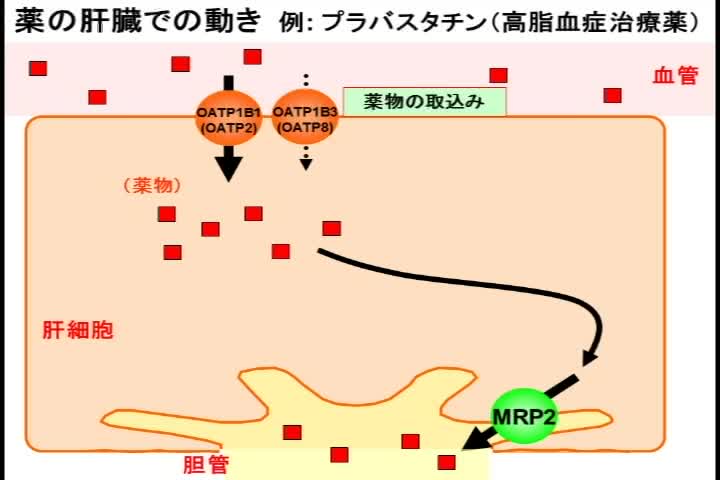
#9 Drug Transporters
Many drugs are low molecular- and high molecular-weight compounds that are absorbed from outside the body. Through the great breakthroughs in modern biology, which have been based on the growing understanding of the molecular chemistry of biological systems, it has become clear that drugs interact with specific proteins and nucleic acids inside the body, and become effective according to the acti…
Available
Audio-Only
Listening
Available
Audio-Only
Listening
#10 Drugs and Compatibility with Humans
Many drugs are low molecular- and high molecular-weight compounds that are absorbed from outside the body. Through the great breakthroughs in modern biology, which have been based on the growing understanding of the molecular chemistry of biological systems, it has become clear that drugs interact with specific proteins and nucleic acids inside the body, and become effective according to the acti…
Available
Audio-Only
Listening
Changing Matter --- From Matter to Material
Available
Audio-Only
Listening
#11 From Matter to Use as a Material --- The Example of Steel
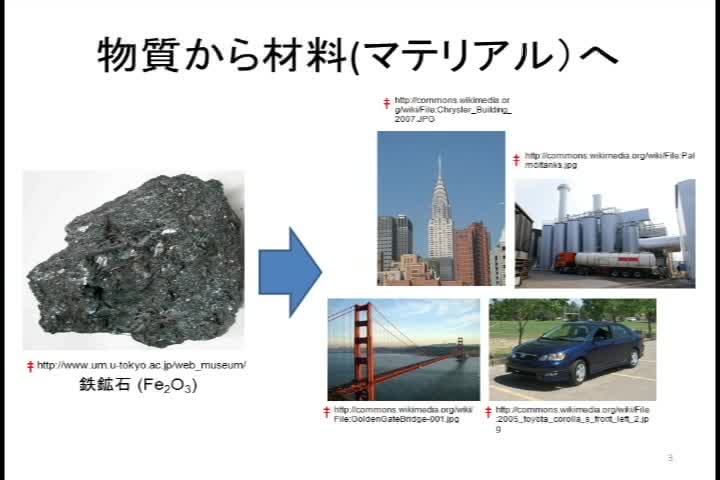
Among the materials with diverse properties, representative materials in wide use now are steel, silicon, and polymers (plastics, etc.). In these lectures, steel and silicon will be examined. Iron has been used since before the start of the Christian era, and now as well, in quantitative terms, iron is one of the most heavily used materials. However, the production method and performance of the…
Available
Audio-Only
Listening
Available
Audio-Only
Listening
#12 Special Features of Technology in the Silicon Age
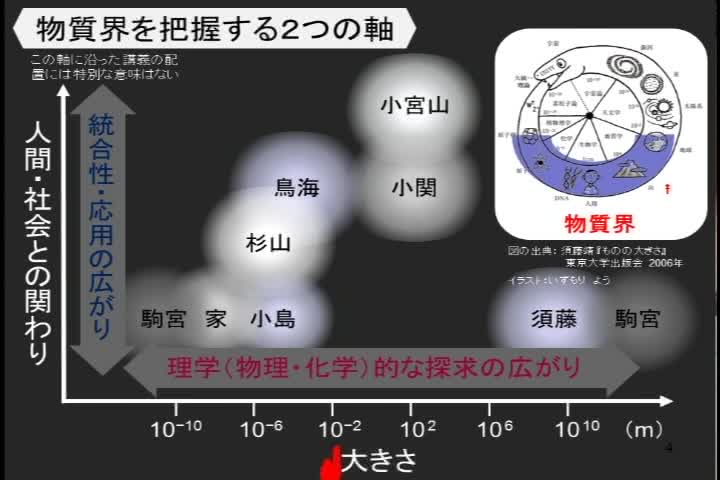
Among the materials with diverse properties, representative materials in wide use now are steel, silicon, and polymers (plastics, etc.). In these lectures, steel and silicon will be examined. Iron has been used since before the start of the Christian era, and now as well, in quantitative terms, iron is one of the most heavily used materials. However, the production method and performance of the…
Available
Audio-Only
Listening

 Back to Series List