

UTokyo Open Lectures: Mind






1

0

2
Content List
Mind and Society
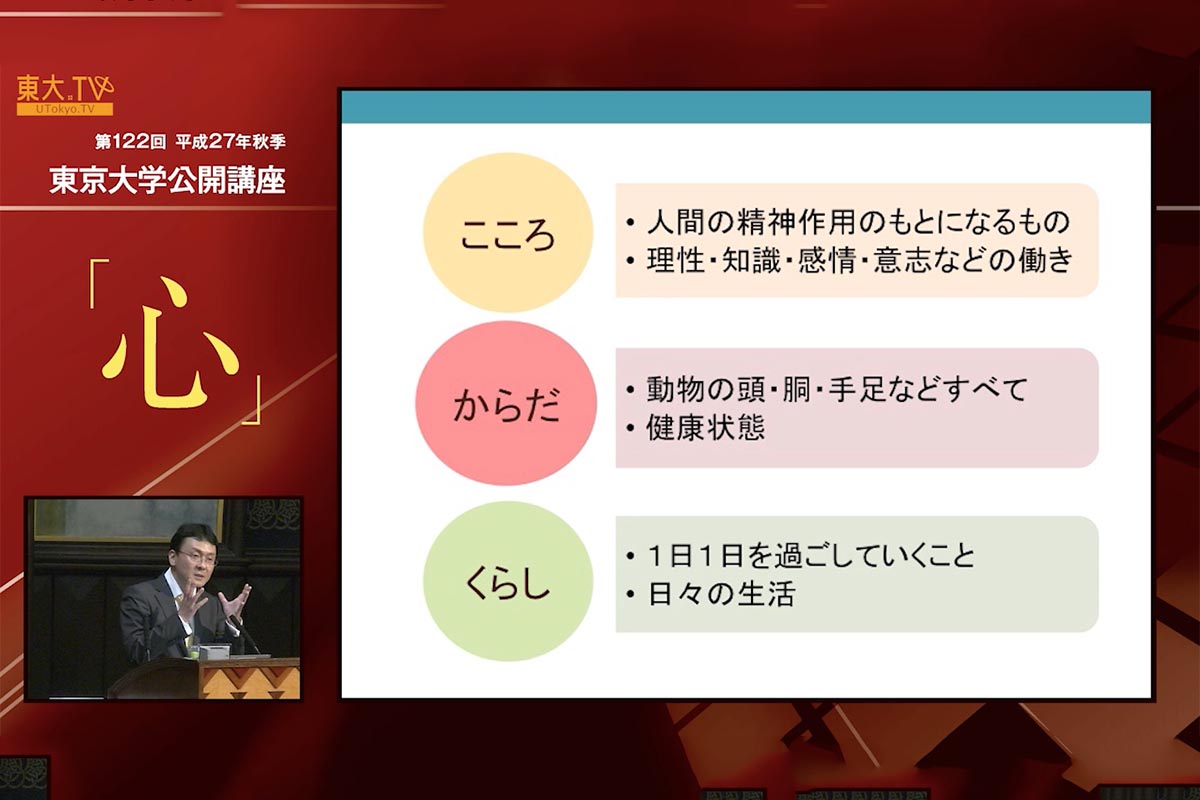

#1 Triangular Relationship of Mind, Body, and Life [JP]
The dichotomy of mental and physical diseases does not fully reflect the reality. Mental illnesses often cause physical disorders, and vice versa. Mental health also influences the patient's duration of life. Moreover, it is without doubt that life style and environment strongly influence one's mental and physical health. In this lecture, Prof. Kondo focuses the close relationship among min…
#2 Mentally Challenged Person, Crime, and Punishment [JP]
残虐な殺人事件が報道された際、「とんでもない事件が起きたな」とみなさん思うことでしょう。その後、その事件の犯人が精神障害者であることが続報され、そのため、刑事裁判にかけられることはないであろうと報道される際、「 仕方がない」と思う方もいれば、「とんでもないことだ」と憤慨される人もいるのではないでしょうか。この講義では、なぜ精神障害者は処罰されないのか、具体的にどのような場合に処罰されないのか…
Evolution and Mind
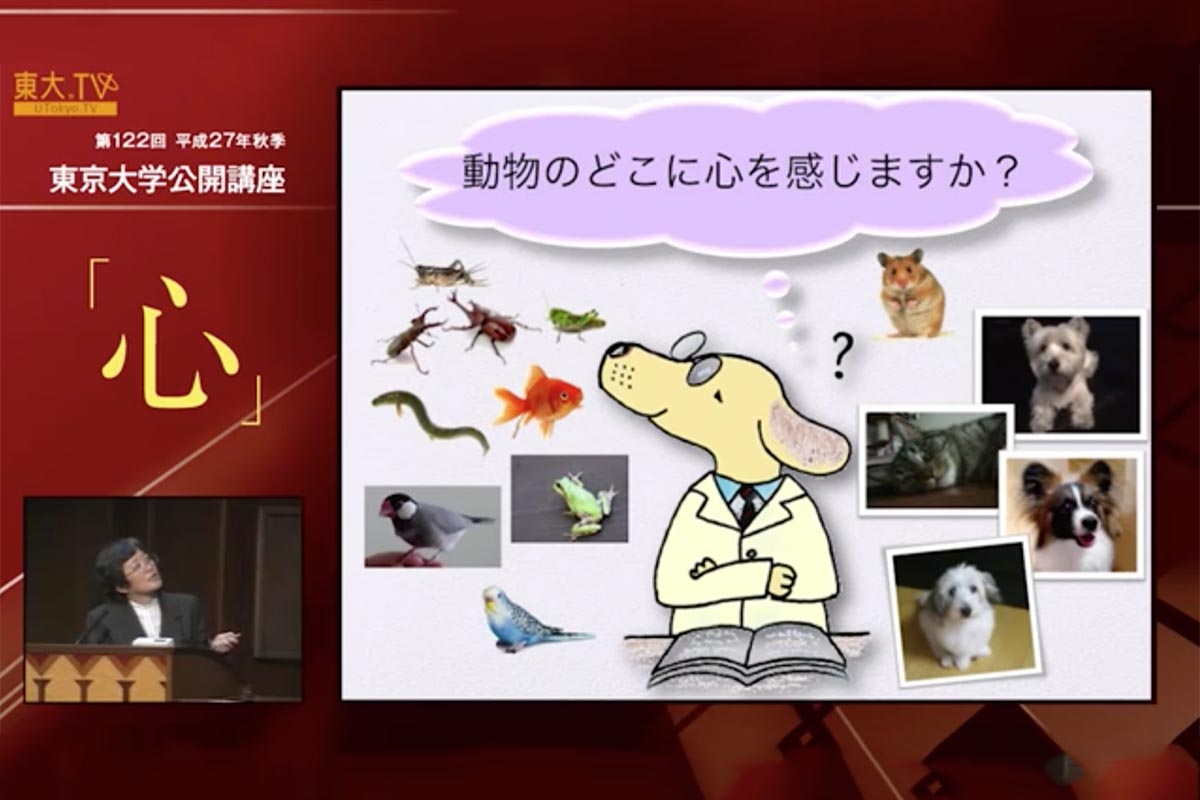
#3 Animal Minds [JP]
The concept of mind was created by human-beings. A dictionary says that the mind is "the sum of 'human' mental activities or what underlies them." Do non-human animals have no mind? Some of them do have brains, and, presumably, also "mental" activities. In this lectures, Prof. Takeuchi discusses what "animal minds" amount to, on the basis of evolutionary studies. NOTE: …
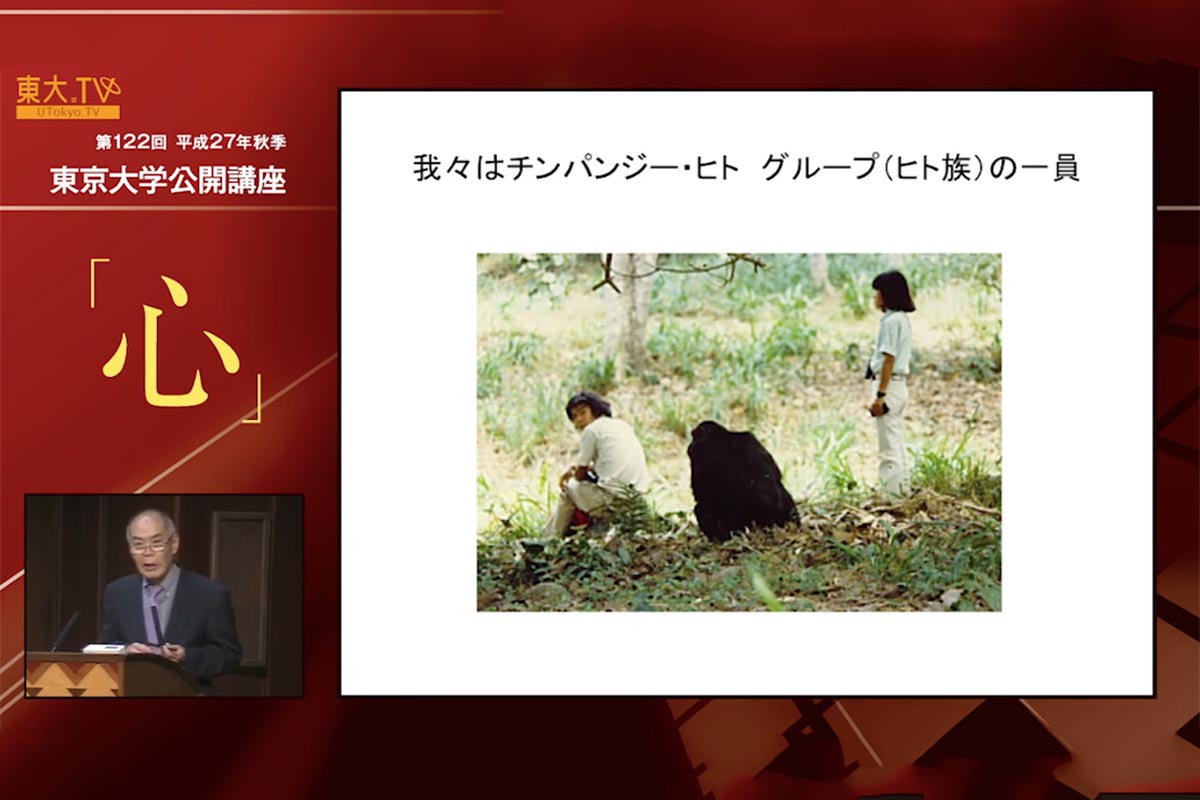
#4 How Did Human Mind Emerge, and How Has It Developed? [JP]
The human-beings are genetically most akin to, and shares a lot of behavioral characteristics with, the chimpanzees. However, human-beings have developed their own cognitive capacities which are absent in other anthropoids. Sympathy, education, understanding other minds, use of language... These social cognitive capacities are peculiar to human-beings. They could develop their cultures and establ…
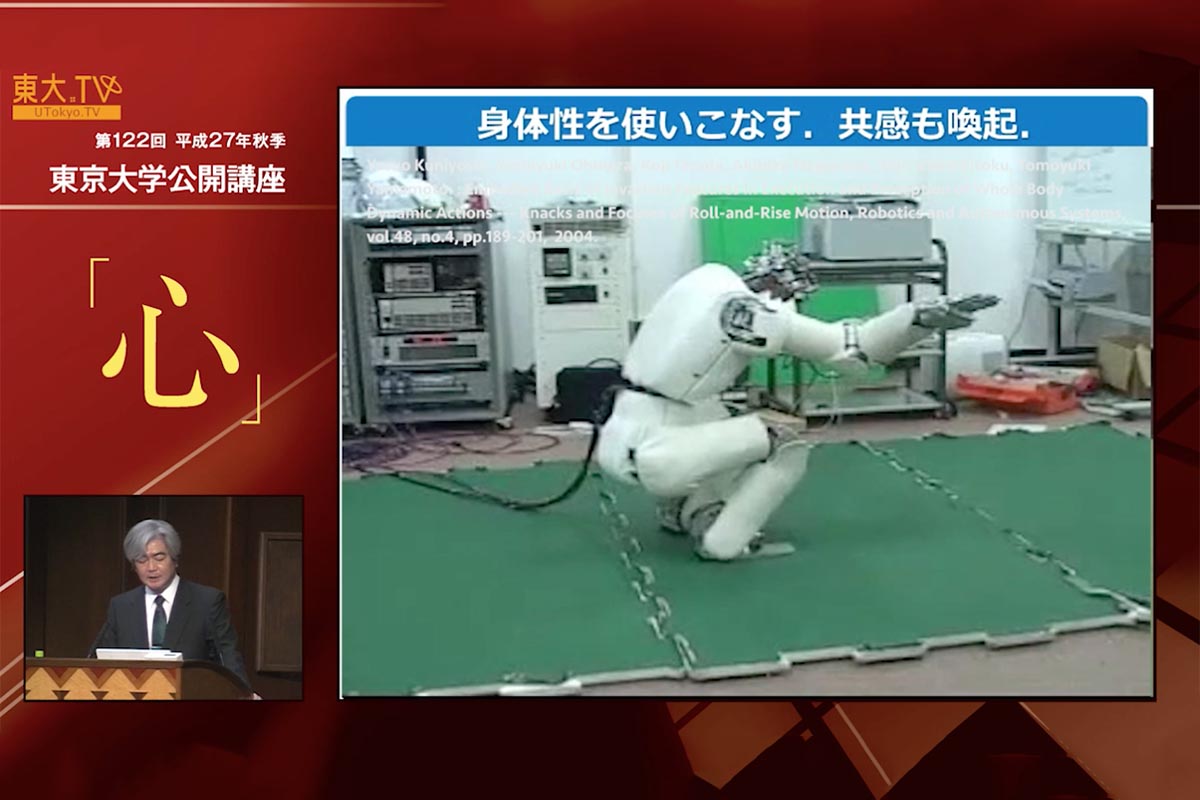
#5 Can Robot Have Mind? [JP]
Many people believe that AI will come to have the mind which is greater than human. Is it true? Can we create the mind at all? And, what is the mind? Introducing recent outcomes of AI and robot research, Prof. Kuniyoshi discusses what the mind is and whether it can be artificially created. NOTE: - This lecture was conducted only in Japanese.
Communication and Mind
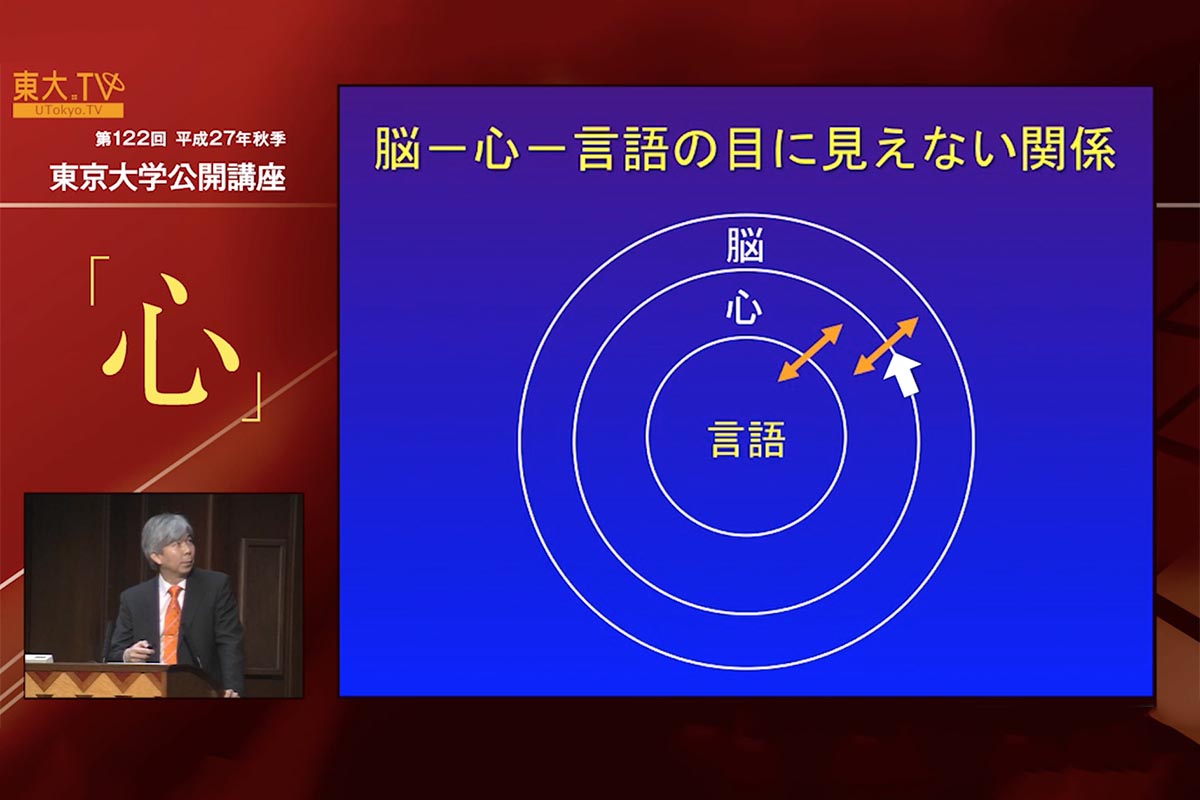
#6 Language and Mind: A View from the Brain [JP]
It is widely believed that the characteristics of human being which are not found in other animals are the use of language, instruments, and fire. However, the latter two features are closely related to, or even dependent on, the linguistic ability the human brain realizes. Prof. Sakai's research pointed out that there is nerve center concerning the grammar in our brain, measuring by the fMRI the…
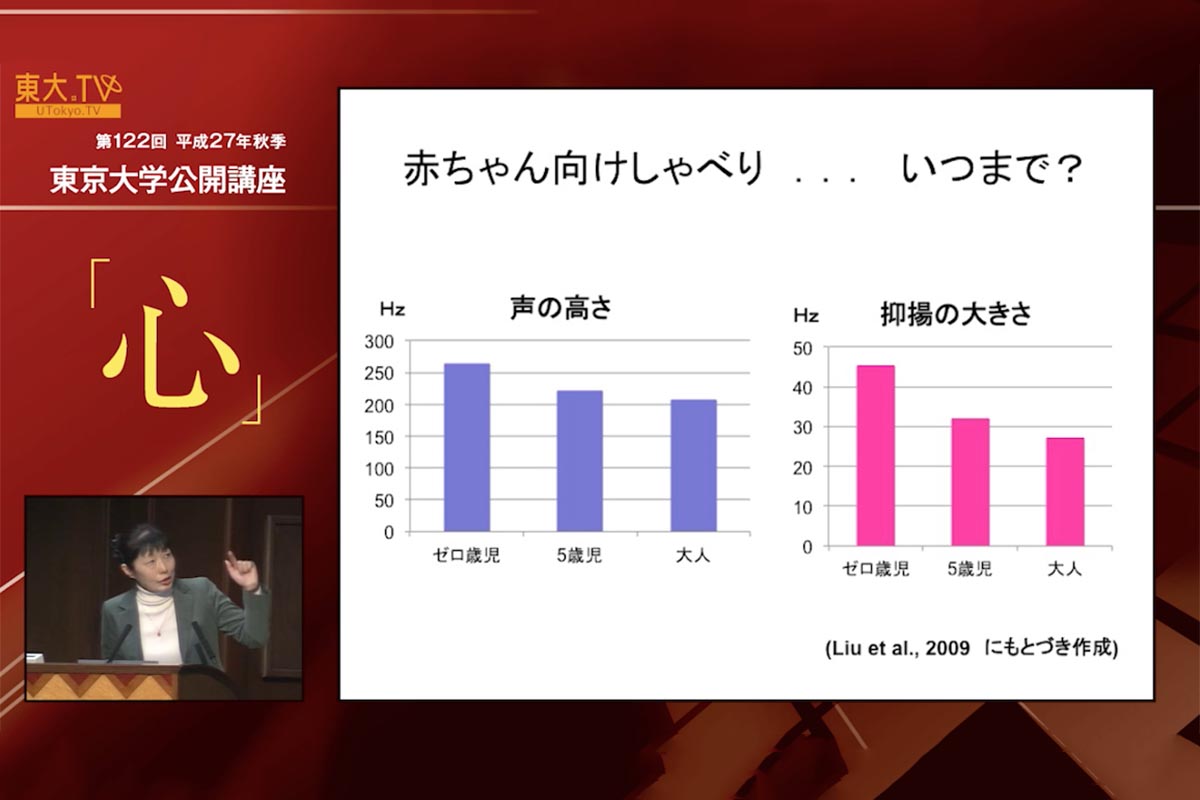
#7 The Mind Which Develops Infant's Language [JP]
Most adults have experience of talking to infants in a different way from talking to adults. S uch "infant-directed speech" is supposed to be a natural expression of love and caring for the infants. Prof. Haryu gives a scientific explanation of this phenomenon and discusses how it works for the development of the language of infants. NOTE: - This lecture was conducted only …
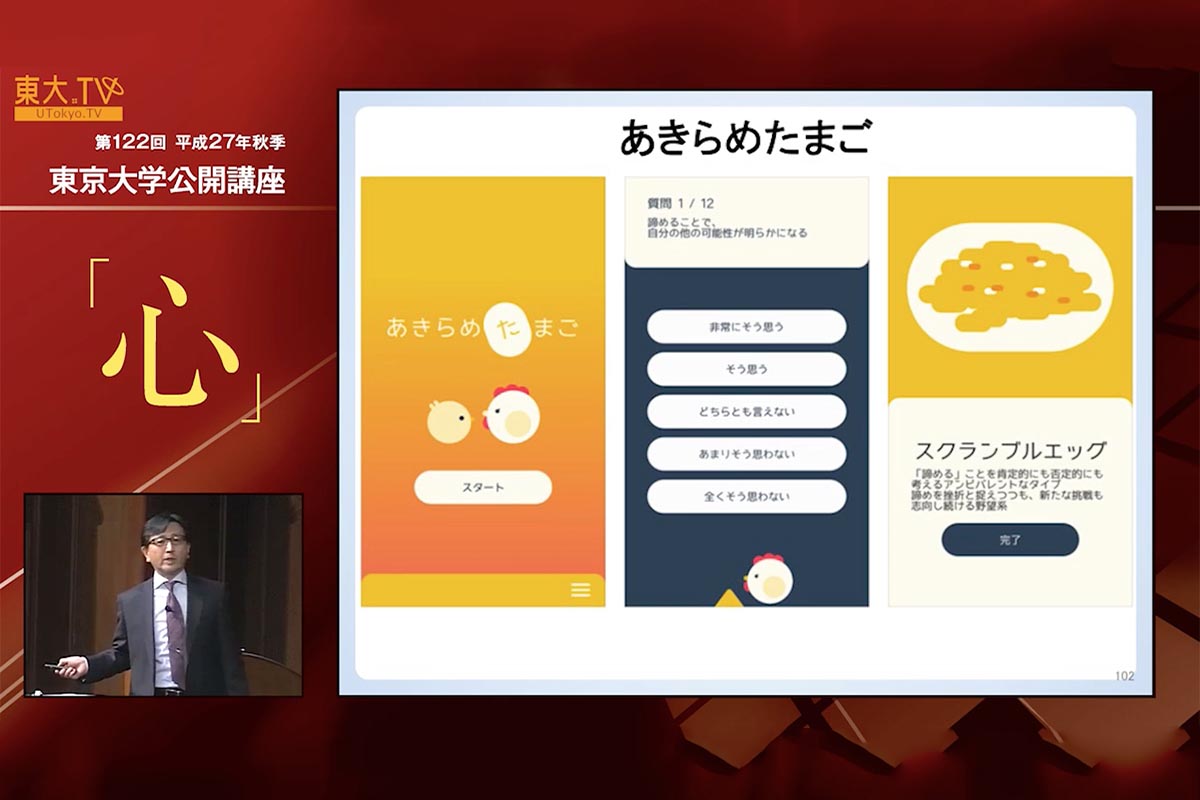
#8 Internet and Mental Health [JP]
The title of this lecture, "Internet and Mental Health," may remind the negative matters such as internet addiction disorder, cyberbullying, etc. However, the internet can positively affect our mental health. For example, social ICT will provide people suffering mental problems with the opportunity to consult professional counselors without visiting the clinics. In this lecture, Prof. Shimoyama i…
 Back to Series List