

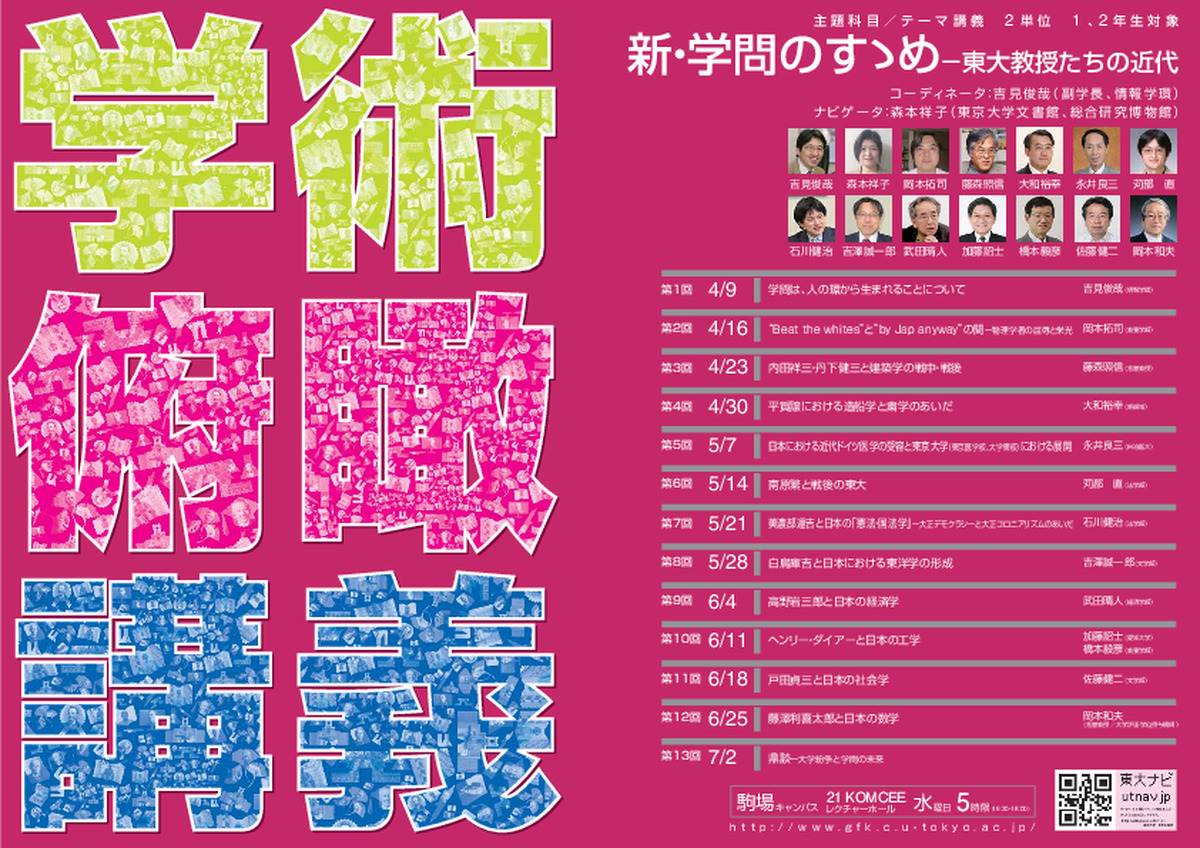
A New Gakumon no Susume (An Encouragement of Learning) – University of Tokyo Professors in the Modern Era (Global Focus on Knowledge)





0

0

0
Content List


Available

Audio-Only
Listening
#1 A New Gakumon no Susume (An Encouragement of Learning) - Where Do Universities Come From? Where Are They Going?
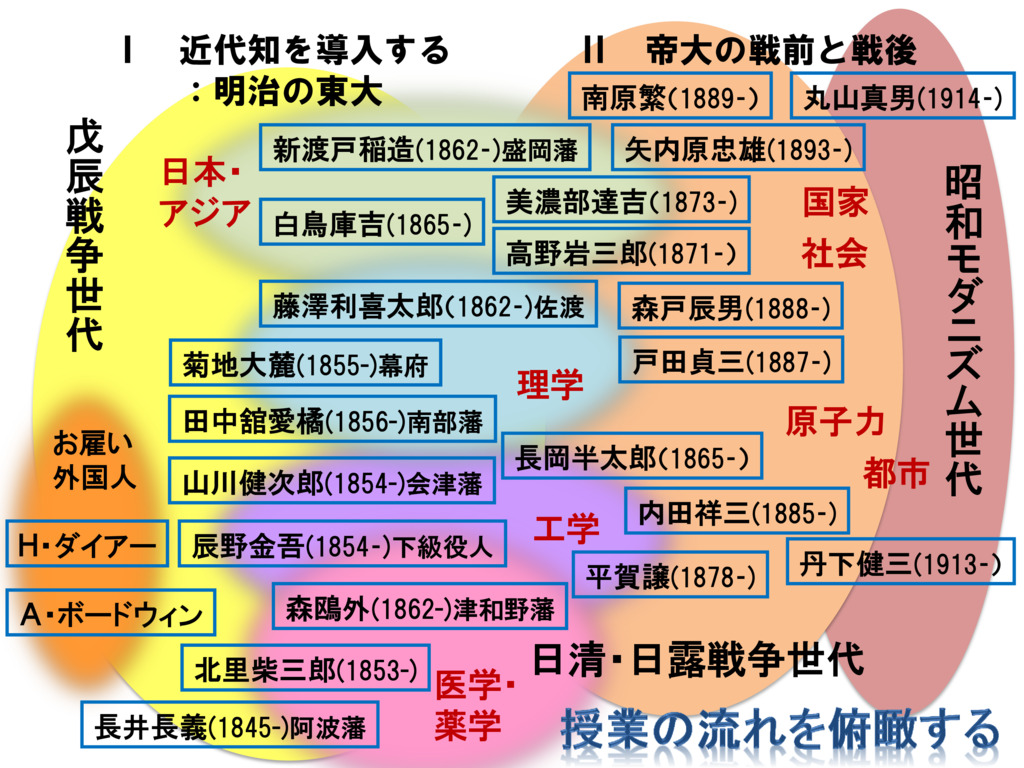
Overview: An overview of the lecture series will be presented. Throughout modern times, what kind of knowledge was created at the University of Tokyo, and who were the people involved in its creation? This lecture will broadly examine the exchange with overseas universities and scholars, the state of academia, and political conditions which served as the context for knowledge creation.
Available
Audio-Only
Listening
Available
Audio-Only
Listening
#2 Between "Beat the whites" and "by Jap anyway" - Humiliation and Glory for Physicists
Overview: The explanation often given for the reason science was introduced to Japan during the latter days of the Tokugawa shogunate and during the Meiji Restoration was because it was expected to serve as a “tool” to enable the ideology of fukoku kyōhei (enrich the nation and strengthen the military). However, Japanese science is highly competitive internationally in fields removed from practic…
Available
Audio-Only
Listening
Available
Audio-Only
Listening
#3 Uchida Yoshikazu and Tange Kenzō – Architecture During, and After, World War II
Overview: The study of architecture at the University of Tokyo was predominant also in the area of design from the time of the Yasuda Lecture Hall – a fixture on the Hongō Campus – and “Uchida Gothic” to the time of the Tokyo Olympics and the Osaka World’s Fair. Tange Kenzō was the greatest star professor of this era, but at the same time, there were also people like Takayama Eika who made advanc…
Available
Audio-Only
Listening
Available
Audio-Only
Listening
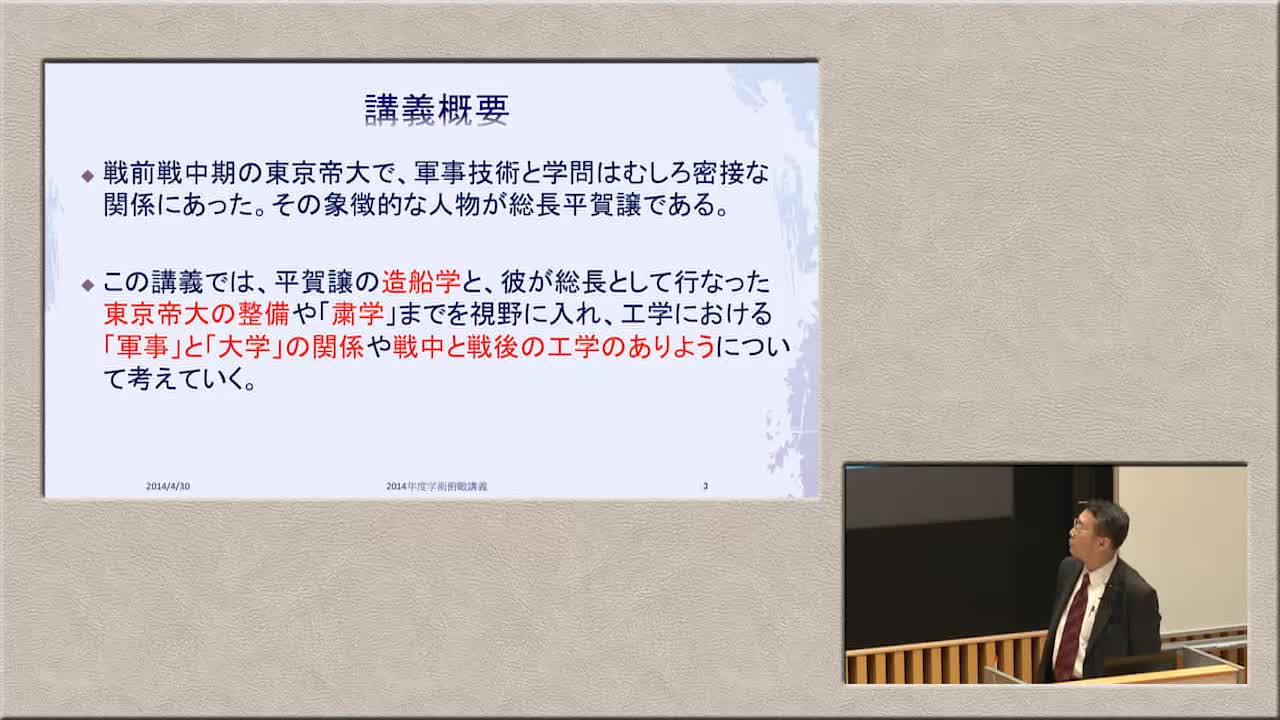
#4 Between Hiraga Yuzuru’s Naval Architecture and Academic Purges
Overview: There was a rather intimate relationship between military technology and scholarship at Tokyo Imperial University in the years leading up to, and during, World War II. The figure symbolizing this relationship is Hiraga Yuzuru, the president of Tokyo Imperial University during those years. This lecture will look at Hiraga Yuzuru’s work in naval architecture, and the work he did as presid…
Available
Audio-Only
Listening
Available
Audio-Only
Listening
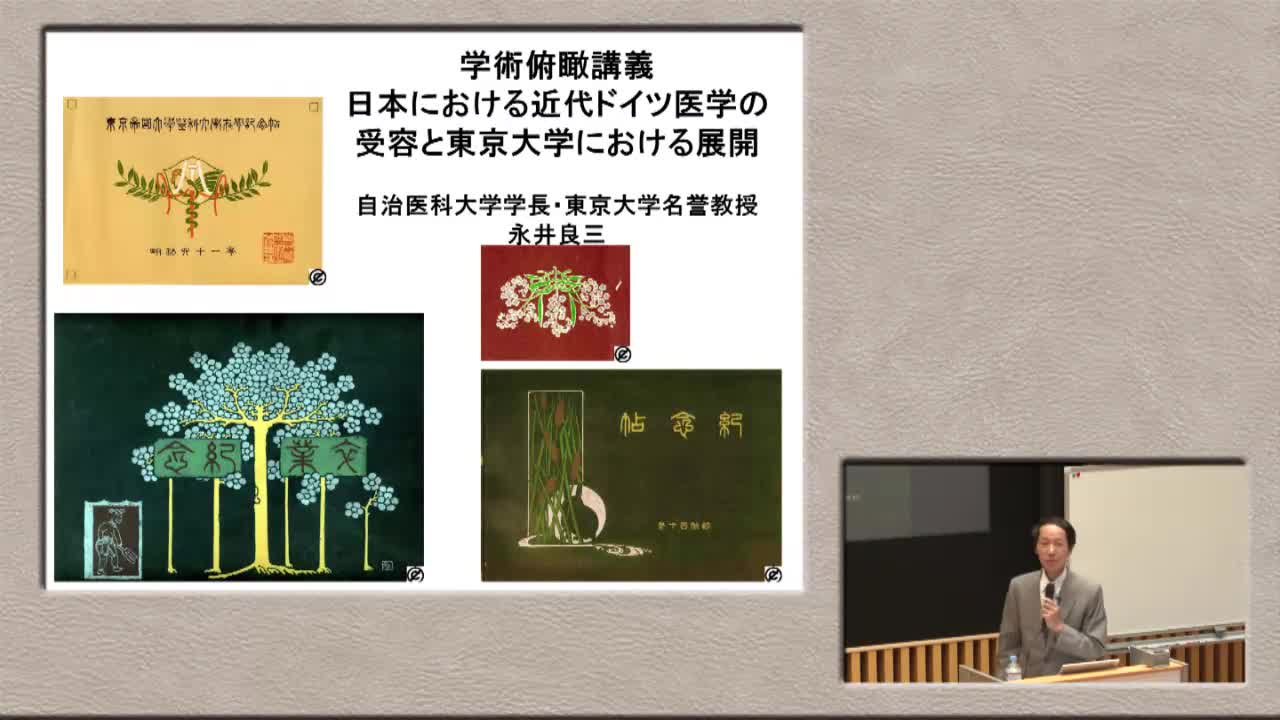
#5 The Reception of Modern German Medicine in Japan and Developments at the University of Tokyo (Tokyo Medical School, Daigaku Tōkō)
Overview: Modern Japanese medicine developed with German medicine as its base. There were many turning points in the introduction of German medicine. This lecture will present the historical background behind the introduction of German medicine to Japan, and the influence it had on Japanese medicine and medical care.
Available
Audio-Only
Listening
Available
Audio-Only
Listening
#8 Shiratori Kurakichi and the Formation of Oriental Studies in Japan
Overview: In the course of humanities being formed in Japan, a variety of disciplines generally categorized as Oriental Studies appeared. In fact, these disciplines were strongly oriented toward how to view the relationship between Japan and Asia. Oriental History was created as a modern form of academic knowledge which distinguished itself from the kangaku Chinese studies tradition of the Edo P…
Available
Audio-Only
Listening
Available
Audio-Only
Listening
#9 Takano Iwasaburō and the Study of Economics in Japan
Overview: In contrast to Meiji Period academia, which pushed forward by importing “Western” knowledge while simultaneously discovering the “Orient,” Japanese academia from the Taishō Period onward discovered “problems” and “values” within its own society. Could we not say that Takano Iwasaburō spearheaded the process of separating the Faculty of Economics from the Faculty of Law, and within the k…
Available
Audio-Only
Listening
Available
Audio-Only
Listening
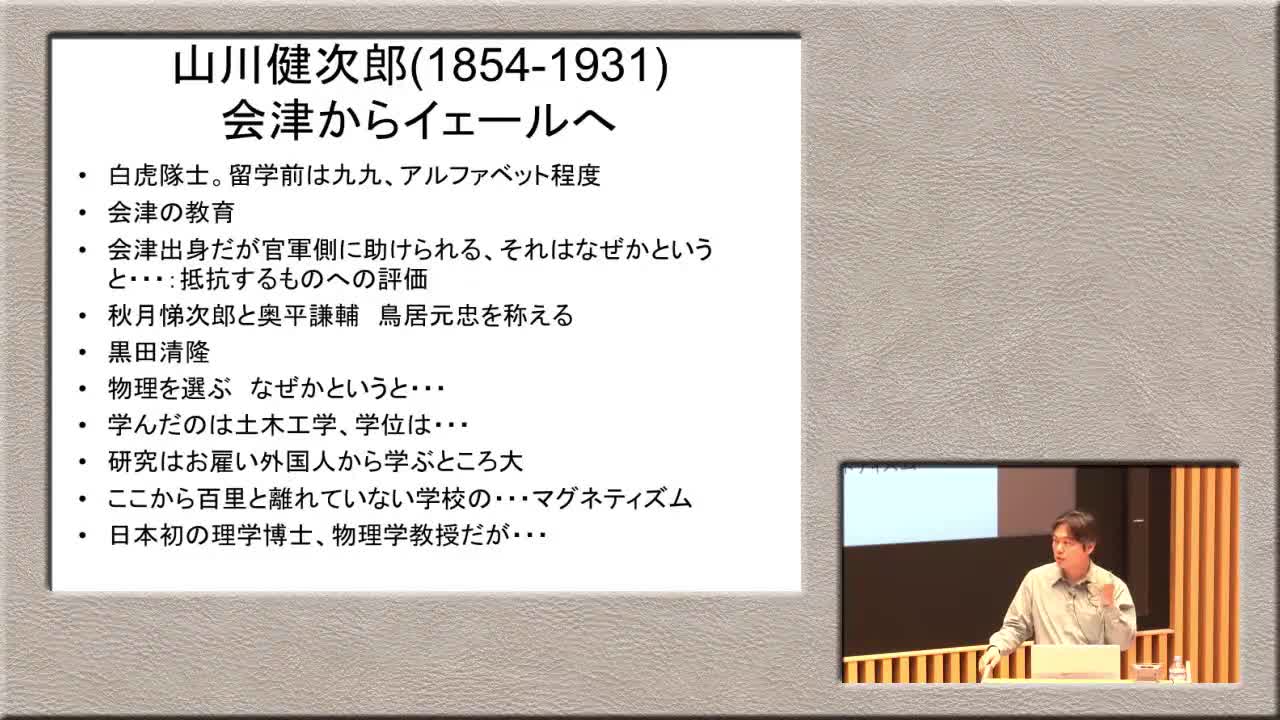
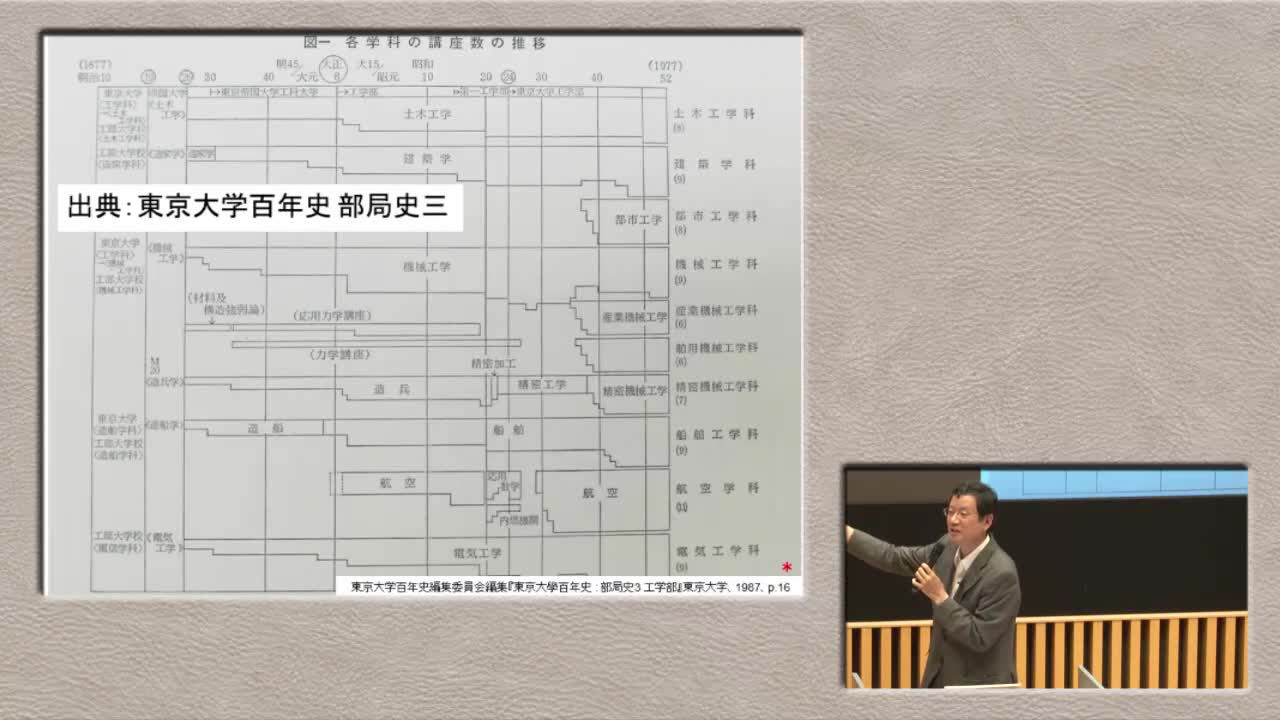
#10 Henry Dyer and Japanese Engineering
Overview: The foundation of modern engineering in Japan was heavily influenced by Scottish engineering. Lord Kelvin of the University of Glasgow sent his disciple Henry Dyer to Japan, where he led a group of young Scottish engineers who were very active at the Imperial College of Engineering. In the background of these activities were the developments in railways, civil engineering and heavy indu…
Available
Audio-Only
Listening
Available
Audio-Only
Listening
#10 Henry Dyer and Japanese Engineering 2
近代日本の工学は、スコットランドの工学の影響を強く受けて基礎が築かれた。グラスゴー大学のケルヴィン卿が弟子のヘンリー・ダイアーを日本に派遣し、ダイアーを中心とするスコットランド若手工学者たちが工部大学校で大活躍していく。その背景には、19世紀英国における鉄道や土木技術、重工業の発展があり、いわば産業革命のエッセンスが明治日本に直輸入されたのである。講義では、このことの意味を考える。また最後に、その…
Available
Audio-Only
Listening
Available
Audio-Only
Listening
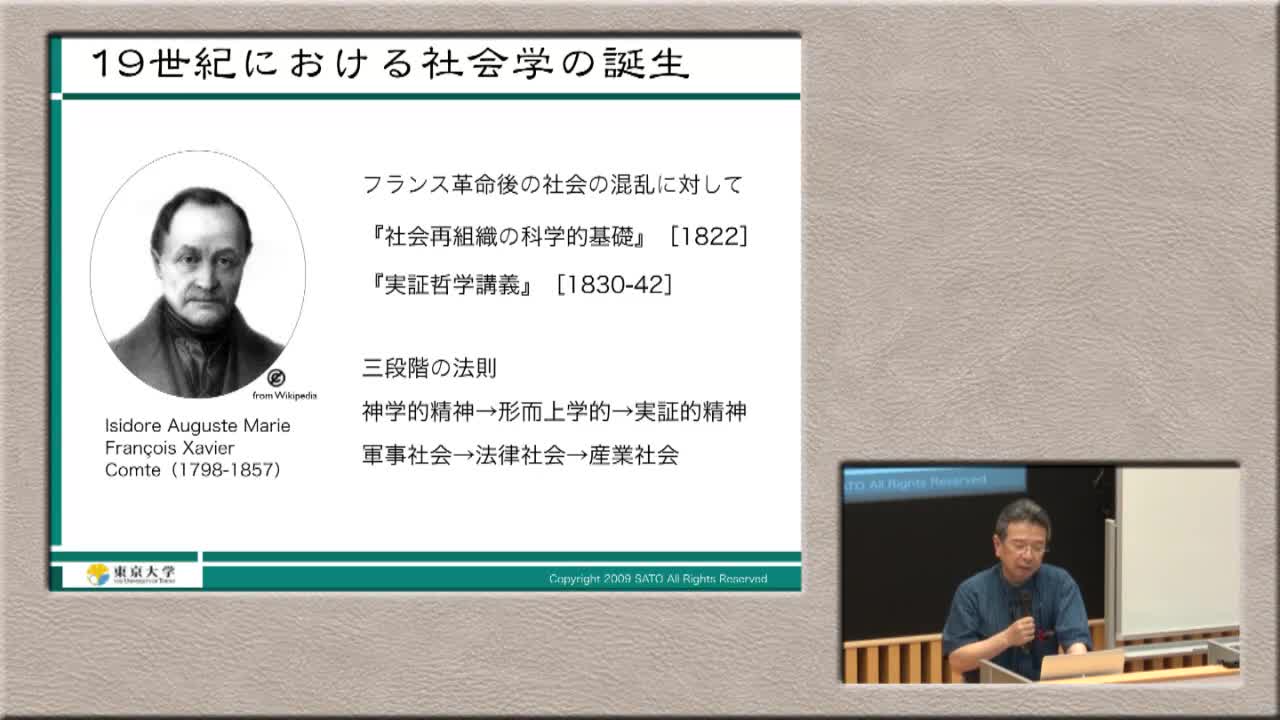
#11 Toda Teizō and Japanese Sociology
Overview: The role that Toda Teizō played in Japanese sociology was similar to Takano Iwasaburō’s in statistics and economics. The importation of the empiricism of Comte, et al. and the emphasis on observation as a method led to social research in areas such as social policy and family research around the 1920s. Sociology discovered “class” and “family” as new subjects of research. This lecture w…
Available
Audio-Only
Listening
Available
Audio-Only
Listening
#12 Fujisawa Rikitarō and Japanese Mathematics
Overview: Fujisawa Rikitarō is the one who laid the foundation for both mathematics research and education in modern Japan. Fujisawa was the first to author standard articles on mathematics, and train his successors using a modern, seminar-style format. Mathematicians with global reputations, such as Takagi Teiji, were among the students trained by Fujisawa. This lecture will look at the efforts …
Available
Audio-Only
Listening
Available
#13 Three-Way Discussion – The University Dispute and the Future of Academia
Overview: When considering the historical position of education and learning at the University of Tokyo which today is at a turning point, reference must inevitably be made to the reforms initiated by Nanbara Shigeru during the Occupation and the failed reforms during the university dispute in the late 1960s. Close to half a century has already passed since the university dispute, and we are now …
Available
 Back to Series List