

UTokyo Open Lectures: Population






0

1

0
Content List
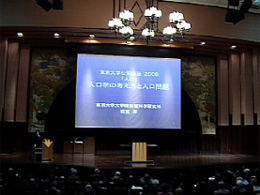

#1 Demographic Thinking and Population Issues
Japan faces a triple set of demographic issues in the form of the trend towards fewer children, its aging society and its decrease in population. To facilitate understanding of these mechanisms, we hope to introduce basic thinking concerning demographics, using the trend towards fewer births in Japan as an example.
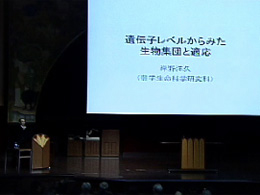
#2 Community and Adaptation as a View in Terms of Gene
By comparing genes, we can measure the contingency of genes as well as the speed of variation which in turn allows us to gauge the size of communities and the forms of their responses. We will look at “useful genes” which have been developed through breeding selection during the several thousand year history of agriculture.
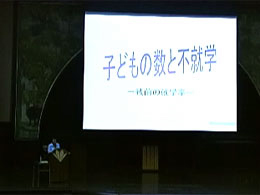
#3 The Number of Children and Those not Attending School
Even at the end of the Meiji Period when Japan could boast a school attendance rate of more than 90%, a wealth of historical records show that many girls did not attend school. By searching for the reasons for this situation, we hope to discover what made schools at that time different from their modern counterparts.
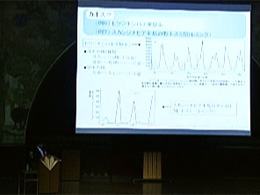
#4 Demographics of Animal Societies
At the end of the past year, it was heavily reported that Japan had reached a major turning point as for the first time its overall population started to decline. The fact is that the same theories and analyses used with human populations can be applied to animal populations. In this lecture, we want to explain comparisons between human and animal populations from the standpoint of demographic th…
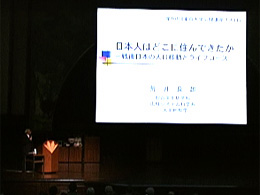
#5 Where Have the Japanese Dwelled?
In postwar Japan we have seen a great influx into urban spaces, especially as an end result of population influx from local areas to major urban centers. In this lecture we propose to rethink this situation from the perspective of the life courses of inhabitants of these areas.
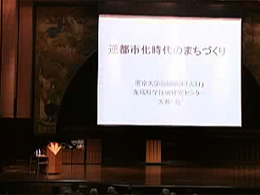
#6 Community Building in an Age of Reverse Urbanization
Although some advantages of high density societies—such as efficiency and lessened strain on the environment—continue, the way of looking at cities to which the Japanese people had become accustomed has been changing. In this lecture, we will consider what can be done amidst a trend towards reverse urbanization to create laid-back urban societies.
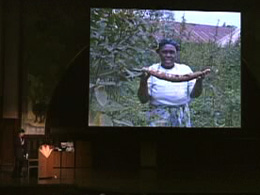
#7 Population, Food Supplies, and Environment
This lecture will discuss the following two points. (1) Regarding population growth trends, we will confirm the fact that recently in developing nations we have witnessed a shift from positive growth rates to negative growth rates, and speculate about the basic causes of this phenomenon. (2) We will look back at trends in food production, and show clearly that the core problem is not the amount o…
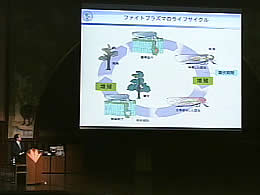
#8 Where Would the Food for 800 Million People Disappear?
Around 12% of the food produced in the world each year is lost to disease. In order to protect and heal crops afflicted by disease, we need to train “plant doctors, ” and establish “plant hospitals” through promotion of the research discipline of “agro-medicine.”
#9 Century of Population Stagnation and Thereafter
Taking population movements in Europe from the end of the Middle Ages as an example, this lecture will consider the relationship between population shifts and historical change, including the situations in Eurasia and Japan.
#10 Living in an Era of Declining Population
From a perspective presuming fewer children being born, we will discuss the principles we need to have if we want to survive in a society where the population is declining.
 Back to Series List