

UTokyo Open Lectures: Globalization






0

0

0
Content List
Globalization and the State, society and the economy


Available
#1 Introduction to globalization
This course (5 lectures) represents an attempt to encourage participants to consider globalization, a process which is certain to continue to gain further momentum in the future, from a variety of perspectives, including in terms of its history, causes, impact, etc. The lectures will be given by professors from a number of departments and research centers at the University of Tokyo.
Available

Available
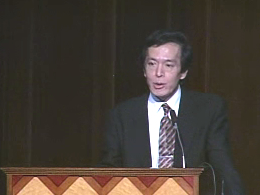
#2 A world globalizing—From the standpoint of the historian
Globalization has progressed through a wider range of human activities, creation of information networks which transcend national boundaries, and establishment of global markets. Within global markets encompassing several countries we have seen the simultaneous pursuit of both integration and segmentation, which in turn has produced wrenching waves of restructuring.
Available
Available
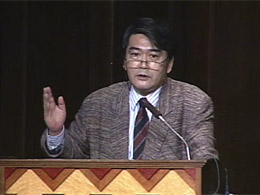
#3 Globalization and the law
Under market fundamentalism, phenomena directly the opposite of the spirit of the law of “protecting the weak and controlling the strong” tend to appear. Within the WTO framework, there are contradictory agreements both deregulating and strengthening regulations. Hopefully, by understanding this background and actual conditions, we can gain insights into how to reconsider reforms in Japan.
Available
Available
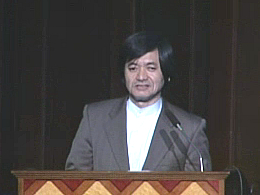
#4 States, markets and currencies—How different? How the same?
One of the lessons of the 20th Century was that “the capitalist production model will not function without market mechanisms, and market mechanisms can only exist under a free political system.” We will in this lecture consider how during the 21st Century the principles of capital and political dynamics which infuse the markets will be the course pursued especially in the European Union and East …
Available
Globalization and food/agriculture

Available
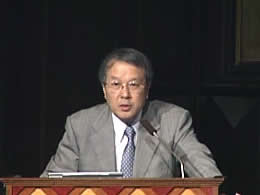
#5 Globalization and Japanese agriculture
The promotion of international trade has had an enormous impact on Japan’s economic development. However, since food production depends upon land abundance conditions, the liberalization of trade in food products must take into consideration problems such as a decline in the rate of food self-sufficiency, etc., and an appropriate and realistic level must be identified.
Available
Available
#6 Economic globalization and the future of Japanese agriculture
At present, Asia is moving towards conclusion of a FTA (free trade agreement). Joining this FTA would create new pressures on Japanese agriculture, and in light of likely tariff reductions, Japan’s future agriculture would need to be further opened up.
Available
Globalization and security

Available
#7 Globalization and new global security
Along with globalization, issues related to global security have been changing not just for major powers or in interstate relations, but also in terms of collective security for states. With the goal of making global society sustainable, we will reconsider the importance and diversity of security within globalization.
Available

Available
#8 Globalization and air pollution
As energy consumption has burgeoned in China, India, etc., air pollution contaminants from fossil fuels have been increasing. However, many things remain unknown regarding the source of their production and impact, their special regional characteristics and inter-regional relationships. Therefore, expectations are high that Japan, which boasts of superior technologies in the area of the environme…
Available
Available
#9 The science of water cycles which links the global with the local
Since anxiety is increasing over various water-related problems, there are high expectations for cutting-edge science regarding earth observation data integration, which connects global water circulation (water cycles) monitoring data and local water information. Furthermore, it is essential to understand natural fluctuations in water cycles and what effects human activities have on them.
Available
Globalization and technology
Available
#10 Globalization and Japan’s competitive dominance— From an on-the-scene perspective
Along with globalization, Japan as a nation needs to ascertain what manufactured products it wishes to keep and which to export. Based on the hypothesis that various countries excel in the architectures for different manufactures, we will expound a hypothesis maintaining that organizational capabilities show deviation by important regions, and apply this paradigm to manufactures.
Available
#11 “Globalization” of music culture?—Music technology, the music industry, local culture
Along with globalization, we can see the existence of both universal music and pure regional culture being celebrated, but these amount to nothing more than illusions. With globalization having the significance of introducing a new age of self-expression into the cultures of various regions, we will ask some fundamental questions as to what constitutes culture.
Globalization and people
Available
#12 The spread of contagious diseases which affect both human beings and animals, and globalization
There are many kinds of contagious diseases which can afflict both human beings and animals (anthropozoonosis = diseases transmitted to humans by animals) and efforts to control them have in nearly all cases proved unsuccessful. Infections that can be passed on from domestic animals have become more virulent than in the past and therefore more dangerous. At the same time, concerning diseases tran…
Available
Available
#13 Higher education amidst globalization
While on the one hand globalization offers universities the opportunity to recover their original form, it has also created risks, including the tendency towards standardization on the basis of U.S. standards, etc. Japanese higher education has to address the question of what should be required of individuals being trained to meet the challenges of the age of globalization.
Available
Available
#14 Global sustainable development and Japan as a “developed country with new problems” (Closing remarks)
Finally, concerning the stance that Japan as a nation should adopt in the age of globalization, we will consider this issue from the standpoint of a Japan faced with multifarious problems, in other words an “advanced country with issues.”
Available
 Back to Series List