

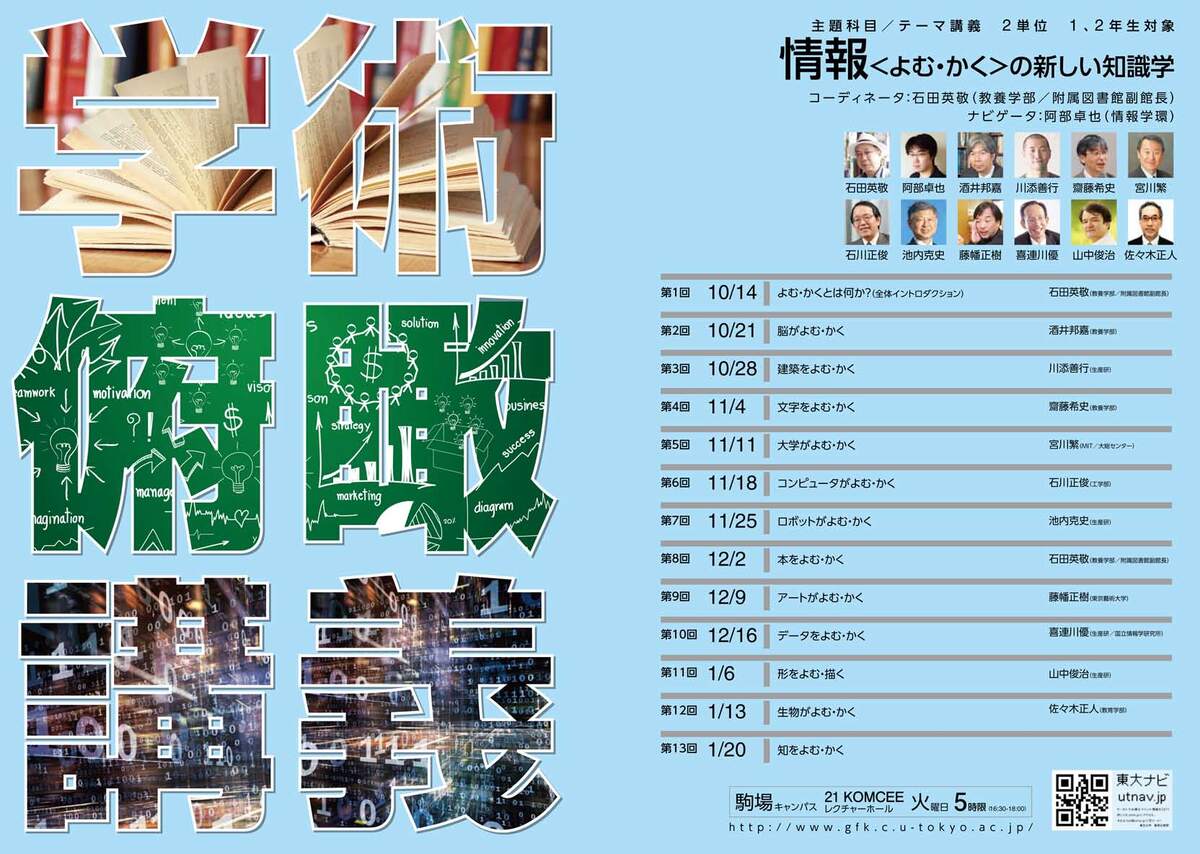
Information: New Knowledge on “Reading and Writing” (Global Focus on Knowledge)





1

0

0
Content List


Available

Audio-Only
Listening
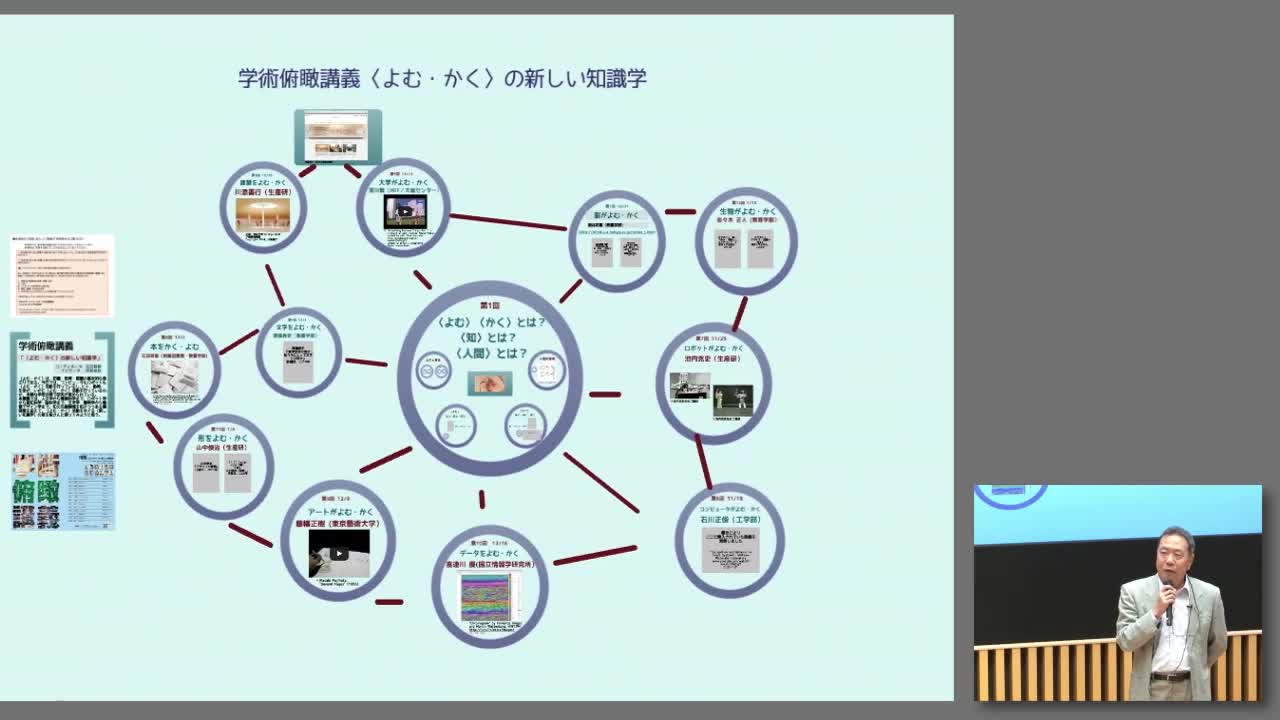
#1 What is “Reading and Writing”?
Overview: “Reading and writing” are human actions that form the basis of the knowledge we call literacy. For a long time, human knowledge was formed by “character” literacy through the medium of “books”. However, technology that goes beyond characters and books in the narrow sense has now become capable of creating knowledge. With these lectures, we would like to consider with various instructors…
Available
Audio-Only
Listening
Available
Audio-Only
Listening
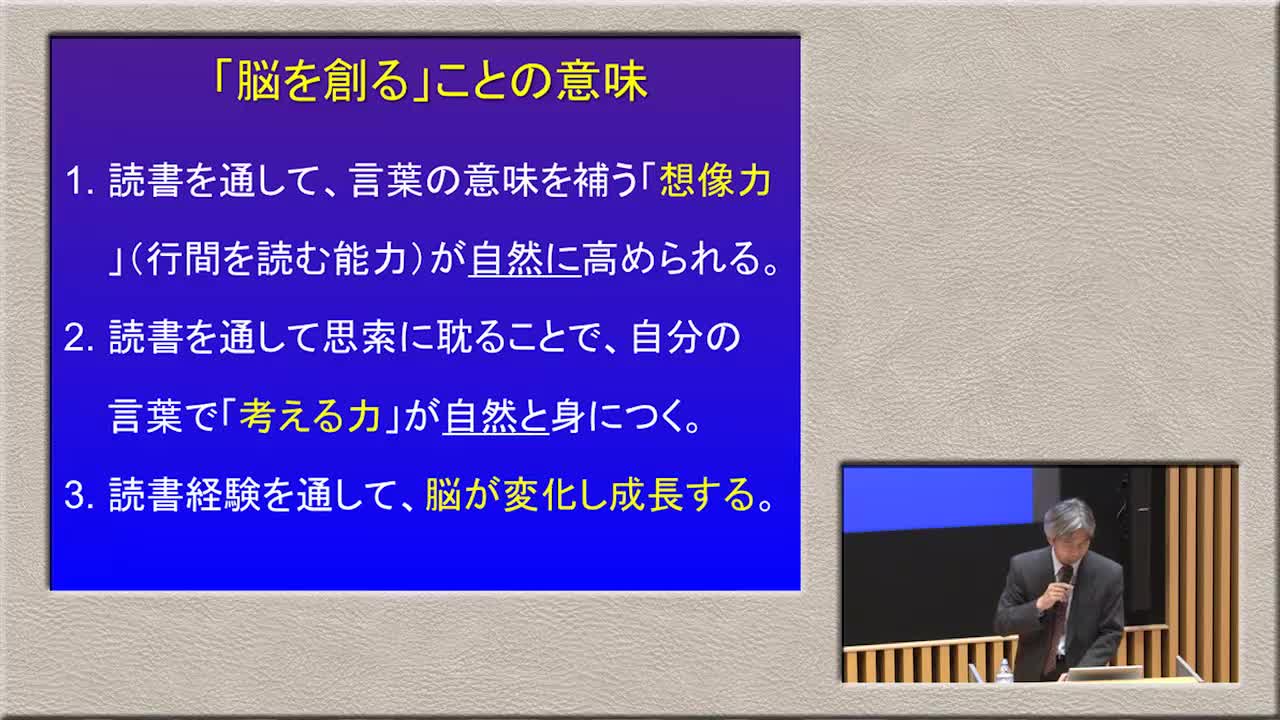
#2 Reading and Writing by the Brain
Overview: We will consider “character reading” and “book reading” from the viewpoint of brain characteristics, based on the neuroscience of language. We will discuss what sort of relationship there is between reading in either “paper” or “electronic” format and the brain, from the viewpoint of higher brain functions such as language information processing, memory consolidation, or thinking abilit…
Available
Audio-Only
Listening
Available
Audio-Only
Listening
#3 Reading and Writing Architecture
Overview: Architecture is the knowledge of constructing an appropriate place using limited materials, in other words, it has a writing style that makes use of words and grammar to describe the world. To understand architecture such as the University of Tokyo New Library Plan more fully, we discuss the novel experience on reading and writing.
Available
Audio-Only
Listening
Available
Audio-Only
Listening
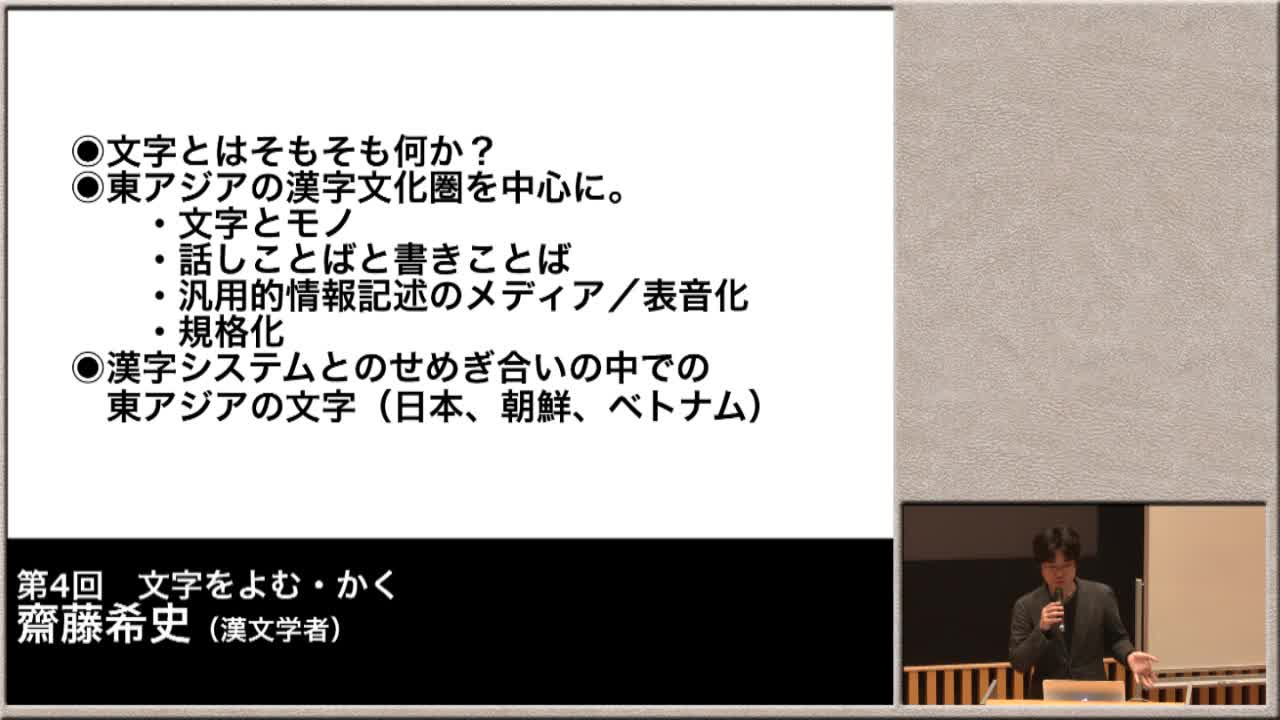
#4 Reading and Writing Characters
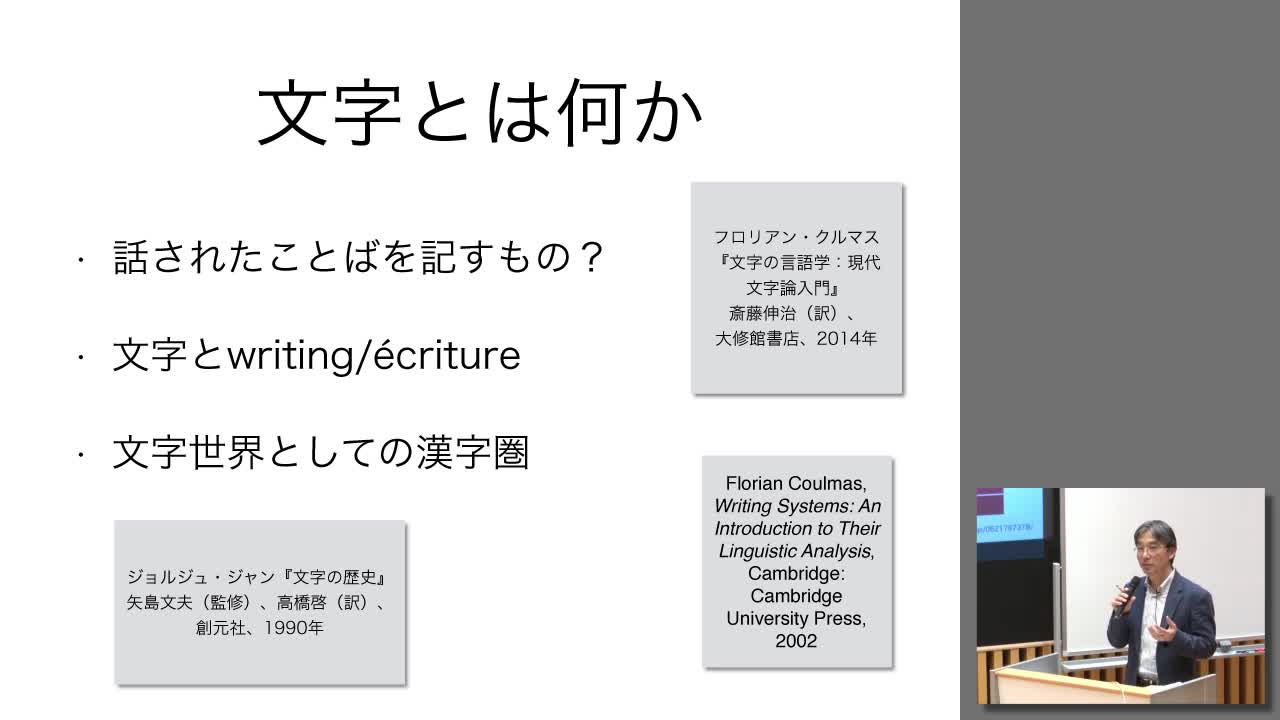
Overview: We will consider “What are characters?” from the viewpoints of the formation and function of Chinese characters as logograms, the character environment in Japan, and also the fundamental relationship between sounds and writing in language.
Available
Audio-Only
Listening
Available
Audio-Only
Listening
#5 Reading and Writing by Universities
Overview: Until recently, universities were closed environments. In 2001, the Massachusetts Institute of Technology launched OpenCourseWare, which enabled anyone to access study materials from virtually all MIT courses free and openly; this was the beginning of universities opening up. This opening up has recently accelerated dramatically by the introduction of Massive Open Online Courses (MOOCs)…
Available
Audio-Only
Listening
Available
Audio-Only
Listening
#6 Reading and Writing by Computers
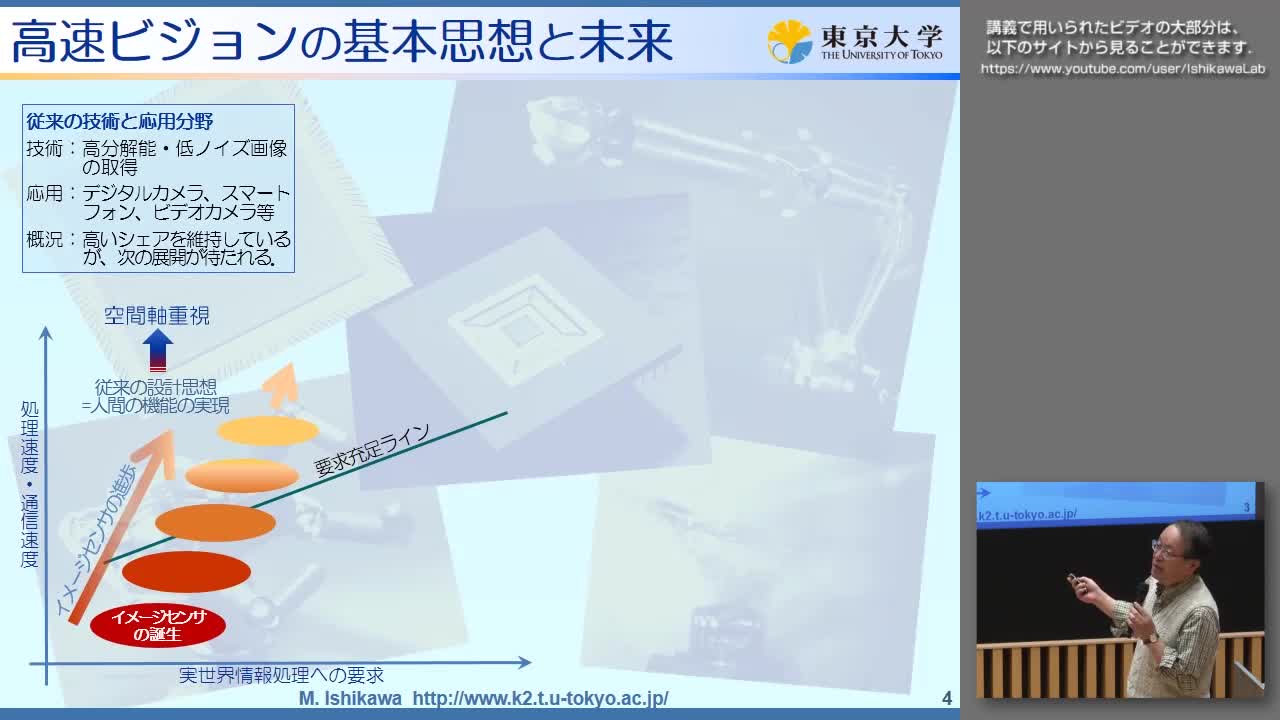
Overview: It has become possible to implement “Reading and Writing” functions for computer eyes that vastly exceed those of human eyes, by increasing their speed capabilities to the limit. We use videos to describe the latest technology, such as high-speed digitization of publications, high-speed gesture recognition, dynamic projection mapping, human-aware high-speed information environment, rapi…
Available
Audio-Only
Listening
Available
Audio-Only
Listening
#7 Reading and Writing by Robots
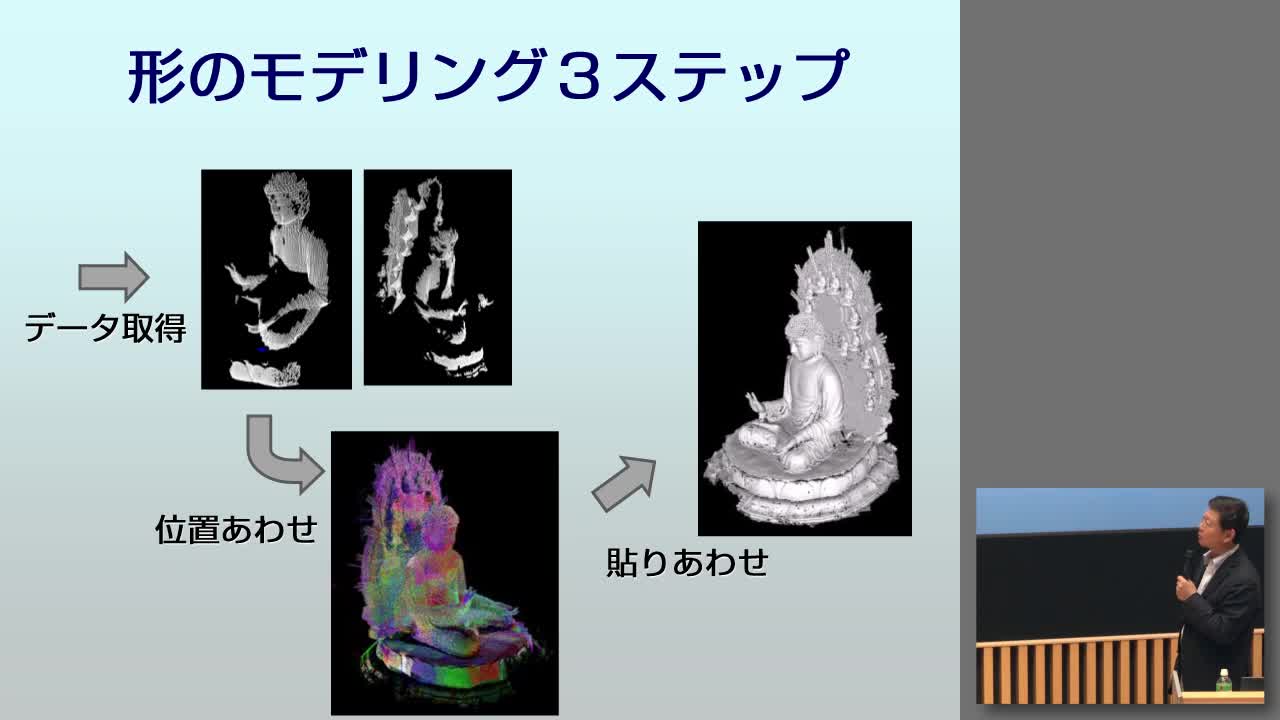
Overview: Our tangible cultural heritage such as Buddha statues and sacred buildings is being lost day by day by events such as the destruction of the great Buddha statues of Bamiyan and the burning of the Golden Pavilion. Our intangible cultural heritage such as folk dances and music is also disappearing, due to a lack of successors or by political intent. If computers can read, store, and repro…
Available
Audio-Only
Listening
Available
Audio-Only
Listening
#8 Reading and Writing Books
Overview: We are currently performing “Reading and Writing” lifestyles in both paper and electronic form. Something we must ask ourselves again in this case is what sort of technology is the book? Taking examples in the works of Mallarmé that explored the ultimate concept of the medium of the book, we will consider “Reading and Writing” in the age of “hybrid reading” that has enabled the reading …
Available
Audio-Only
Listening
Available
Audio-Only
Listening
#9 Reading and Writing by Art
Overview: In 1995, the media artist Masaki Fujihata published his work Beyond Pages which asked the world about the future of books in the digital age, or the essence of books as an interface to events. In the nearly 20 years from this publication, which is thought to be a classic of interactive art, how has Fujihata become more profound through his works and what questions have been raised? Thro…
Available
Audio-Only
Listening
Available
Audio-Only
Listening
#11 Reading and Drawing Shapes
Overview: If you are asked to try to draw a picture, even of something you ought to know well, you will find you remember little about it, but you will readily recall details and the three-dimensional structure of something you have sketched once. Sketching is a method of observing objects and spaces, and is also a method of succinctly describing distinguishing features from within complicated ev…
Available
Audio-Only
Listening
Available
Audio-Only
Listening
#12 Reading and Writing by Living Beings
Overview: Tactile information is a distribution of tensile and compression structures of the body; visual information is in the air surrounding the eyes. We discuss depiction that is an indirect guide to information, from the viewpoint of the realism of this biological information that evolution holds in store.
Available
Audio-Only
Listening
Audio-Only
Listening
#13 Reading and Writing Knowledge
Overview: There will be a review roundtable discussion by a team of several instructors. While recapping the lectures so far, they will combine the discussions of each lecture to formulate “new knowledge”.
Audio-Only
Listening
 Back to Series List