

Classics Talk to Us (Global Focus on Knowledge)






4

5

6
Content List
Greek Literature and Philosophy: Reading the Odyssey – “Hubris! Which One?”


Available

Audio-Only
Listening
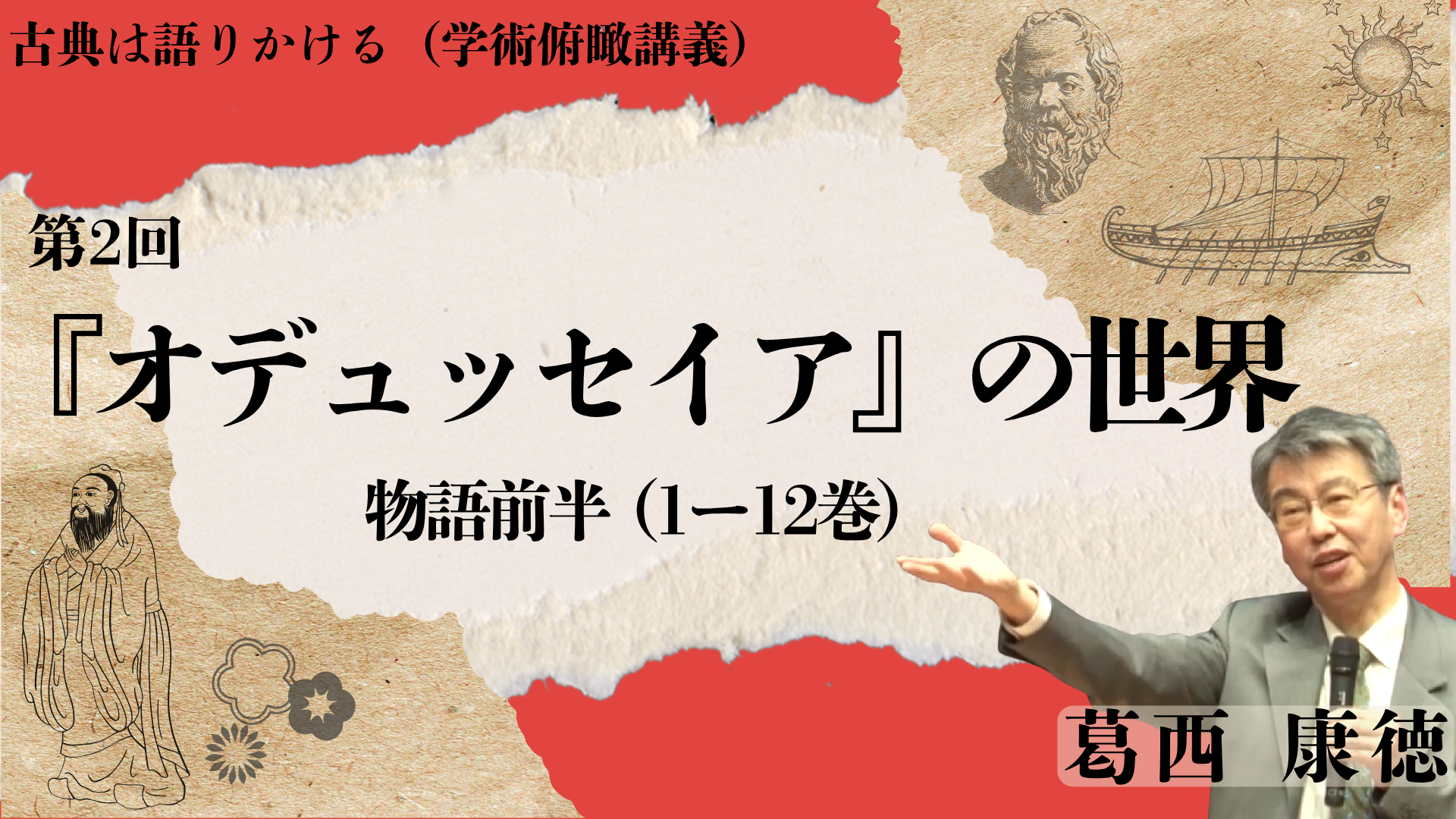
#2 World of the Odyssey: First Half of the Story (Volumes 1-12)
The Odyssey, together with the Iliad, is said to be a work by Homer. On the one hand, the Odyssey is regarded as a fantasy depicting the adventures of the main character Odysseus; on the other hand, the narrative is regarded as a “realistic” story describing government and restoration of order in Odysseus’ home (oikosu) and on the island of Ithaca. In these lectures, we go back and forth be…
Available
Audio-Only
Listening
Available
Audio-Only
Listening
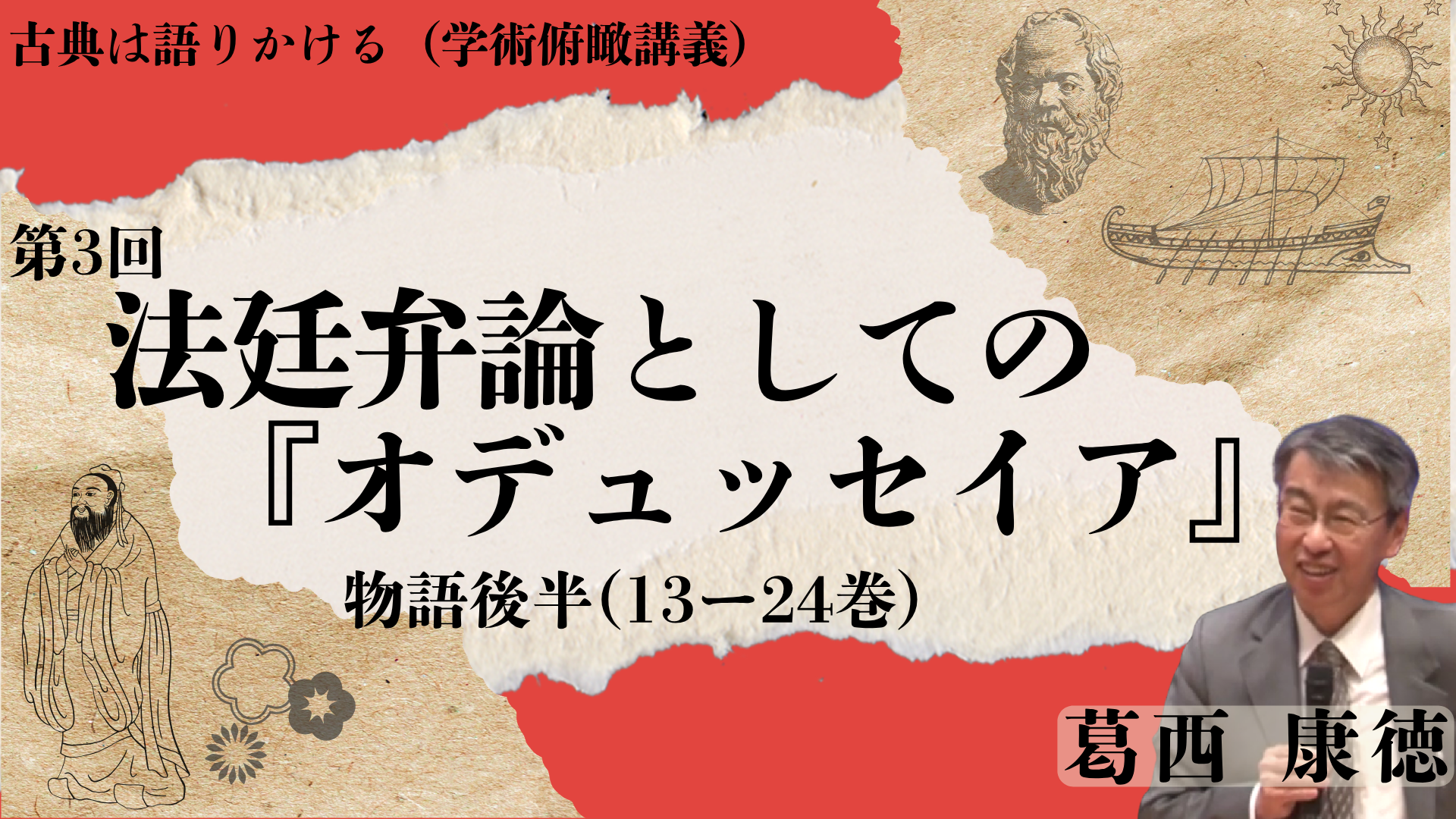
#3 Odyssey as Court Proceeding: Second Half of the Story (Volumes 13-24)
The Odyssey, together with the Iliad, is said to be a work by Homer. On the one hand, the Odyssey is regarded as a fantasy depicting the adventures of the main character Odysseus; on the other hand, the narrative is regarded as a “realistic” story describing government and restoration of order in Odysseus’ home (oikosu) and on the island of Ithaca. In these lectures, we go back and forth be…
Available
Audio-Only
Listening
Greek Literature and Philosophy: Birth of the “Philosopher” Socrates
Available
Audio-Only
Listening
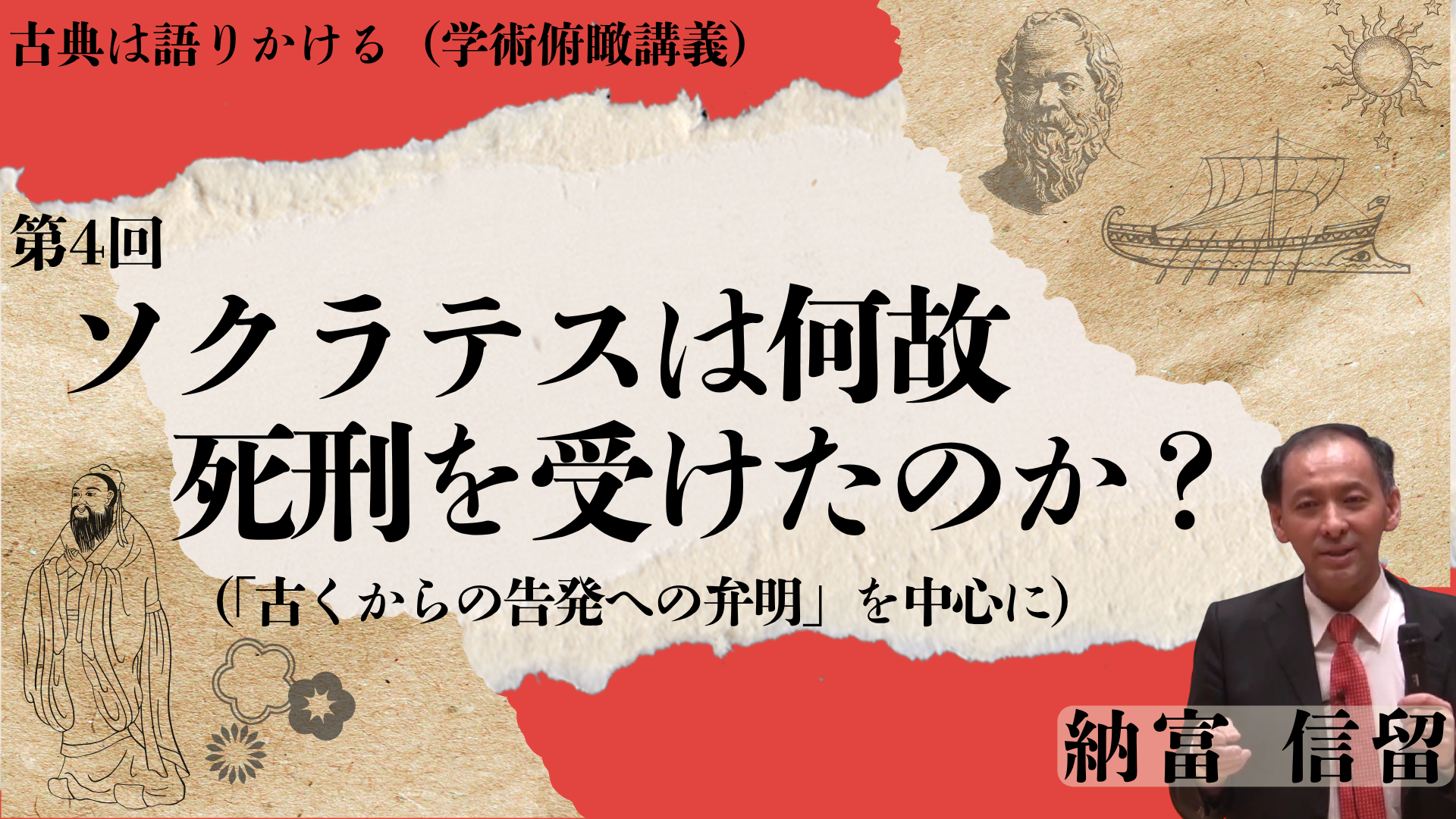
#4 Why Was Socrates Sentenced to Death? (Centering on Apology to the Long-Standing Charges)
The Greek philosopher Socrates was condemned to death by an Athenian court for impiety in 399 BC. Plato and other devoted followers left detailed accounts of the life and speeches of Socrates. Apology of Socrates is particularly well-known as the Western classics, but its true significance is not fully understood. What is the truth that Socrates is said to have revealed to the Athenian court, and…
Available
Audio-Only
Listening
Available
Audio-Only
Listening
#5 What Was Brought into Existence by the Life of Socrates? (Centering on Apology for the Life of the Philosopher)
The Greek philosopher Socrates was condemned to death by an Athenian court for impiety in 399 BC. Plato and other devoted followers left detailed accounts of the life and speeches of Socrates. Apology of Socrates is particularly well-known as the Western classics, but its true significance is not fully understood. What is the truth that Socrates is said to have revealed to the Athenian court, and…
Available
Audio-Only
Listening
Chinese Literature and Philosophy: Who Is Qu Yuan?
Available
Audio-Only
Listening
#6 A Hero of Passion and Tragedy: Li Sao and Its Tradition
Qu Yuan came to a tragic end when he committed ritual suicide by drowning when his native state of Chu suffered declining fortunes before the hegemony of the Qin dynasty. With the sweet notes of Chu Ci (Songs of Chu) anthology of poems, which is said to be his work, the tragedy of Qu Yuan impressed people greatly and had large influence on the literature in the years after. But in the modern ages…
Available
Audio-Only
Listening
Available
Audio-Only
Listening
#7 Revolutionary Patriot or Literary Pretense: How Was Li Sao Read in the Modern Ages?
Qu Yuan came to a tragic end when he committed ritual suicide by drowning when his native state of Chu suffered declining fortunes before the hegemony of the Qin dynasty. With the sweet notes of Chu Ci (Songs of Chu) anthology of poems, which is said to be his work, the tragedy of Qu Yuan impressed people greatly and had large influence on the literature in the years after. But in the modern ages…
Available
Audio-Only
Listening
Chinese Literature and Philosophy: Learning the Analects, Learning from the Analects
Available
Audio-Only
Listening
#8 About Learning (Chapters on “To Learn And To Practice,” “Virtue Is Not Left To Stand Alone,” And “A Word Is Enough to the Wise”)
The Analects of Confucius is a classical work that draws many readers even today. With regard to the content of the Analects, multiple annotators in the history have proposed their own ways of reading. The development of Confucianism can be seen as a history of striving to understand the “correct reading” of the text. In these lectures, we will appreciate several of the excellent chap…
Available
Audio-Only
Listening
Available
Audio-Only
Listening
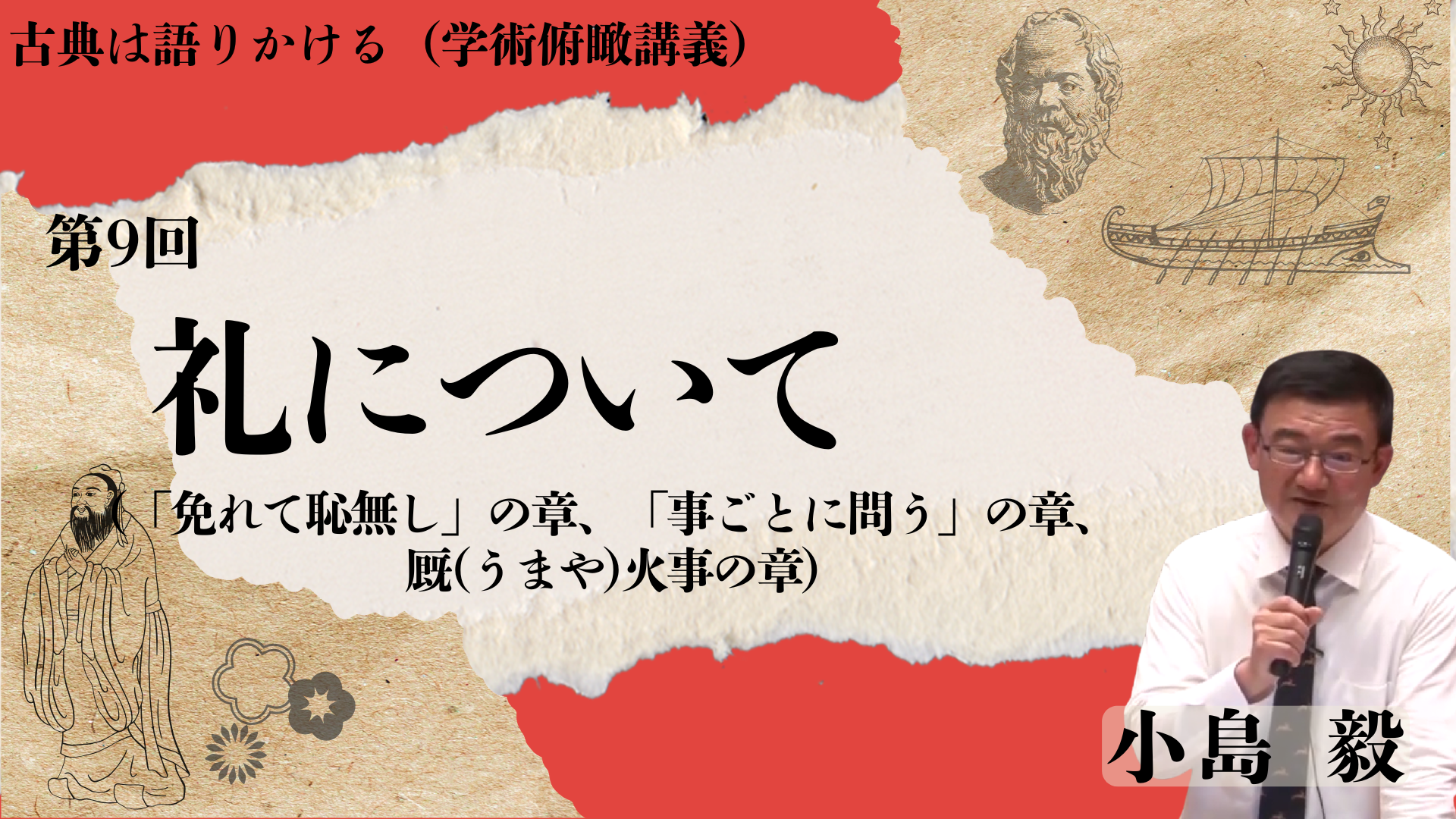
#9 About Li (Rights) (Chapters on “People Spared No Shame,” “Asking Each Detail,” And “The Burning Stable”)
The Analects of Confucius is a classical work that draws many readers even today. With regard to the content of the Analects, multiple annotators in the history have proposed their own ways of reading. The development of Confucianism can be seen as a history of striving to understand the “correct reading” of the text. In these lectures, we will appreciate several of the excellent chap…
Available
Audio-Only
Listening
Japanese Literature and Philosophy: Thoughts of Poverty and Leisure in Tsurezuregusa
Available
Audio-Only
Listening
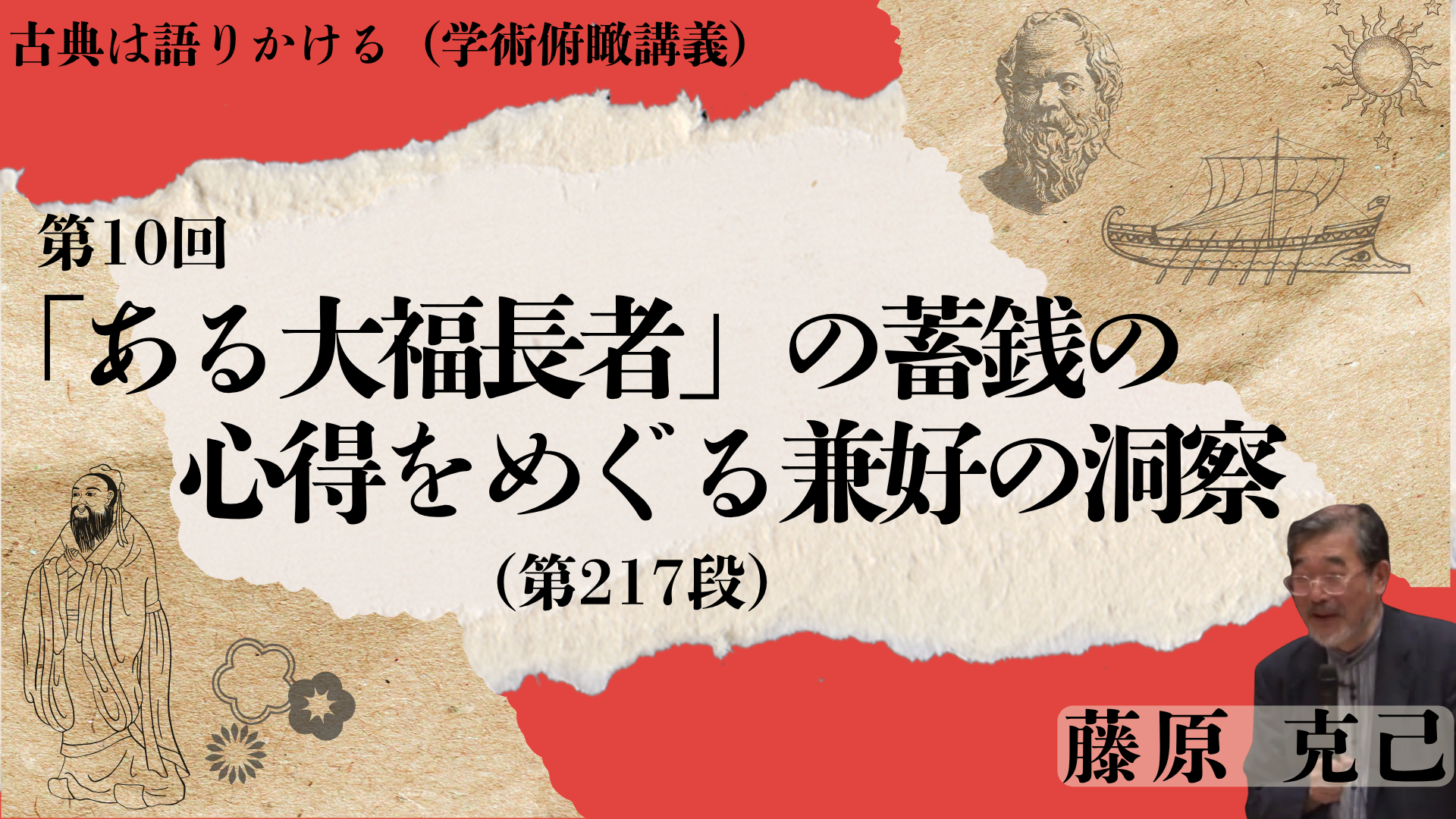
#10 Kenko’s Insights over Principles on Saving Money by “a Man of Enormous Wealth” (Passage 217)
Erich Fromm argues in his book To Have or to Be? (translated into Japanese by Tetsuro Sano under the title Act of Living) that, for our society to be sustainable, our ways of life have to shift from a having mode mode in which people earnestly seek for the acquisition of things to a being mode in which people seek for enhancement of being (or living) itself. In light of these thoughts by Fromm, t…
Available
Audio-Only
Listening
Available
Audio-Only
Listening
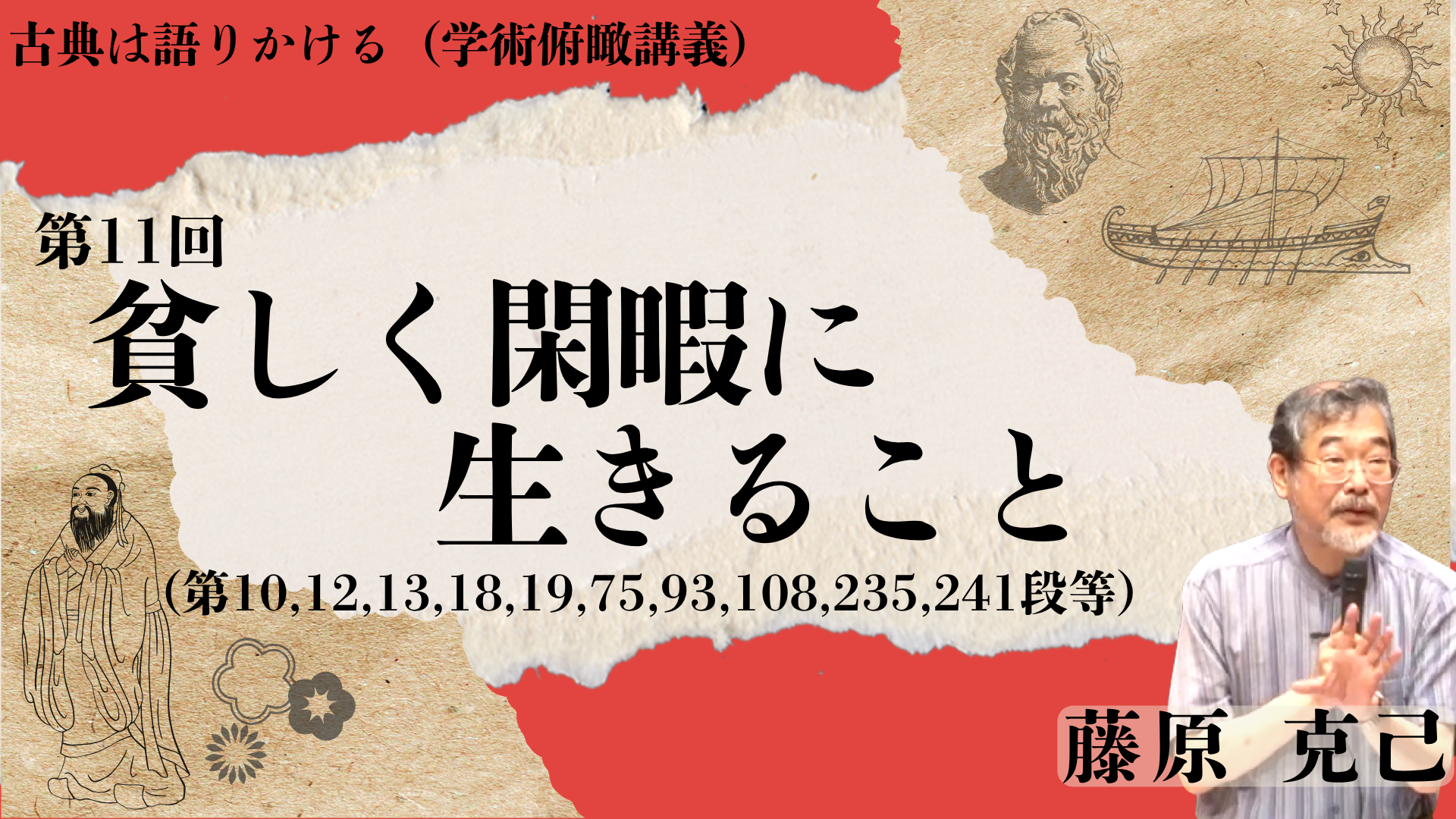
#11 Life of Poverty and Leisure (Passages 10, 12, 13, 18, 19, 75, 93, 108, 235, 241, etc.)
Erich Fromm argues in his book To Have or to Be? (translated into Japanese by Tetsuro Sano under the title Act of Living) that, for our society to be sustainable, our ways of life have to shift from a having mode mode in which people earnestly seek for the acquisition of things to a being mode in which people seek for enhancement of being (or living) itself. In light of these thoughts by Fromm, t…
Available
Audio-Only
Listening
Japanese Literature and Philosophy: Worldviews in Chinese and Japanese Writings
Available
Audio-Only
Listening
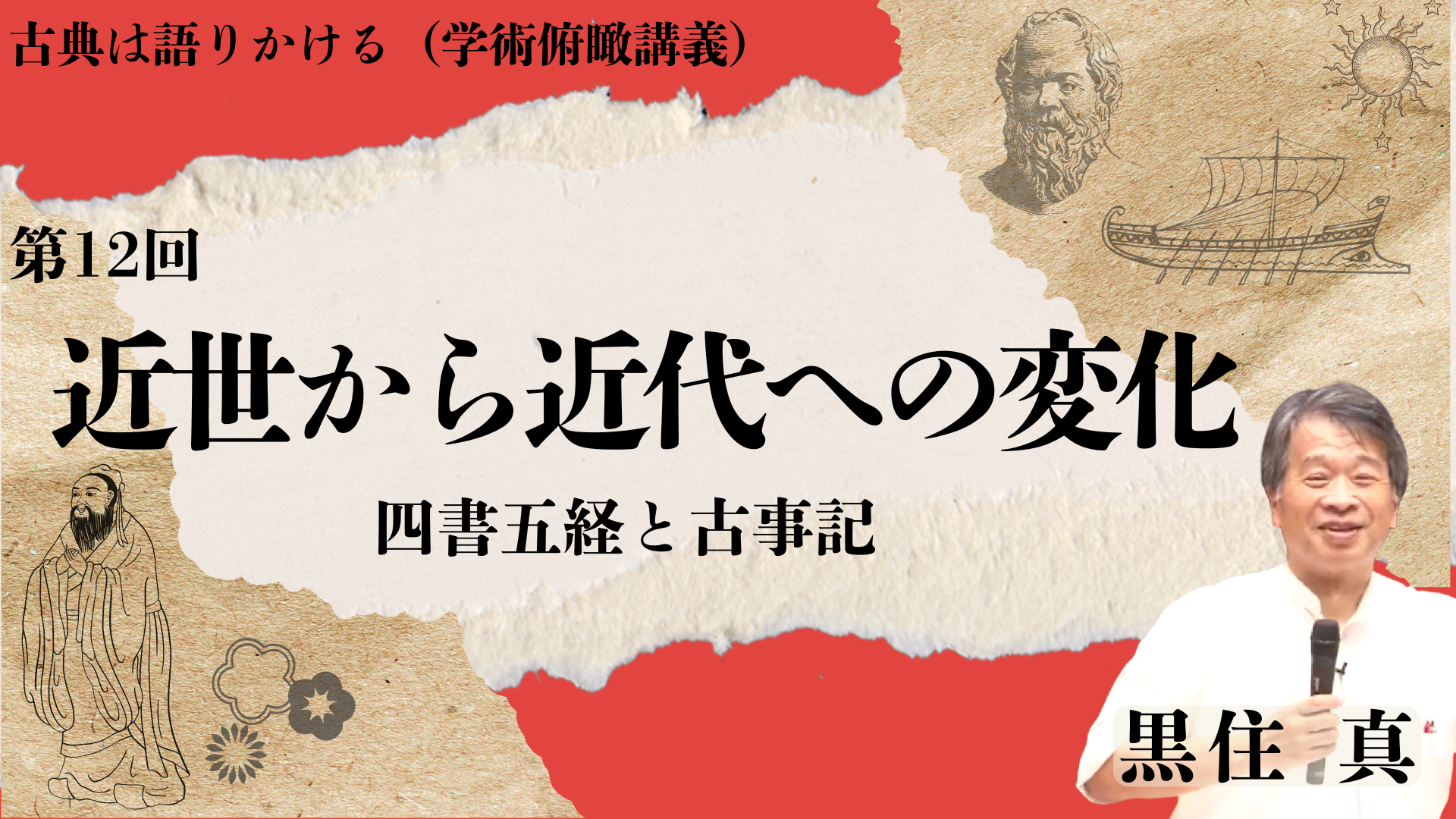
#12 Transition from the Early Modern to the Modern Ages: Four Books and Five Classics and the Kojiki
Formation of classical literature often turns out to be a construction of worldviews based on a fundamental language. In the case of Japan, that language consists of Chinese terms as well as native Japanese terms, both of which are closely interconnected, and there is a long history of change wrought by the society over time in how the two sets of terms are related to each other. The Japanese wor…
Available
Audio-Only
Listening
Available
Audio-Only
Listening
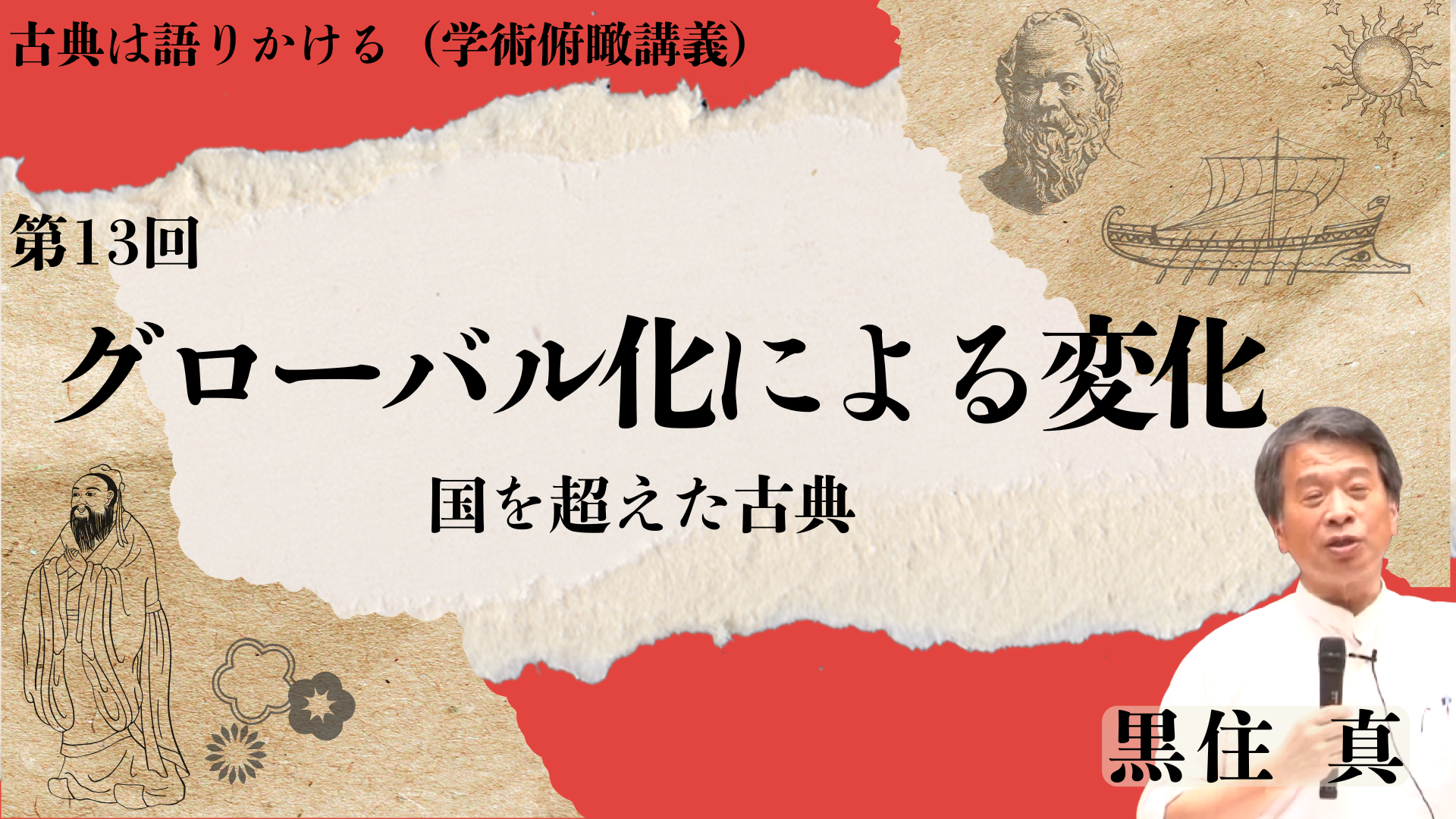
#13 Changes Brought by Globalization: Classics That Spread across Countries
Formation of classical literature often turns out to be a construction of worldviews based on a fundamental language. In the case of Japan, that language consists of Chinese terms as well as native Japanese terms, both of which are closely interconnected, and there is a long history of change wrought by the society over time in how the two sets of terms are related to each other. The Japanese wor…
Available
Audio-Only
Listening
 Back to Series List