

Creating Mathematics - The Challenge of Mathematics (Global Focus on Knowledge)





2

2

2
Content List
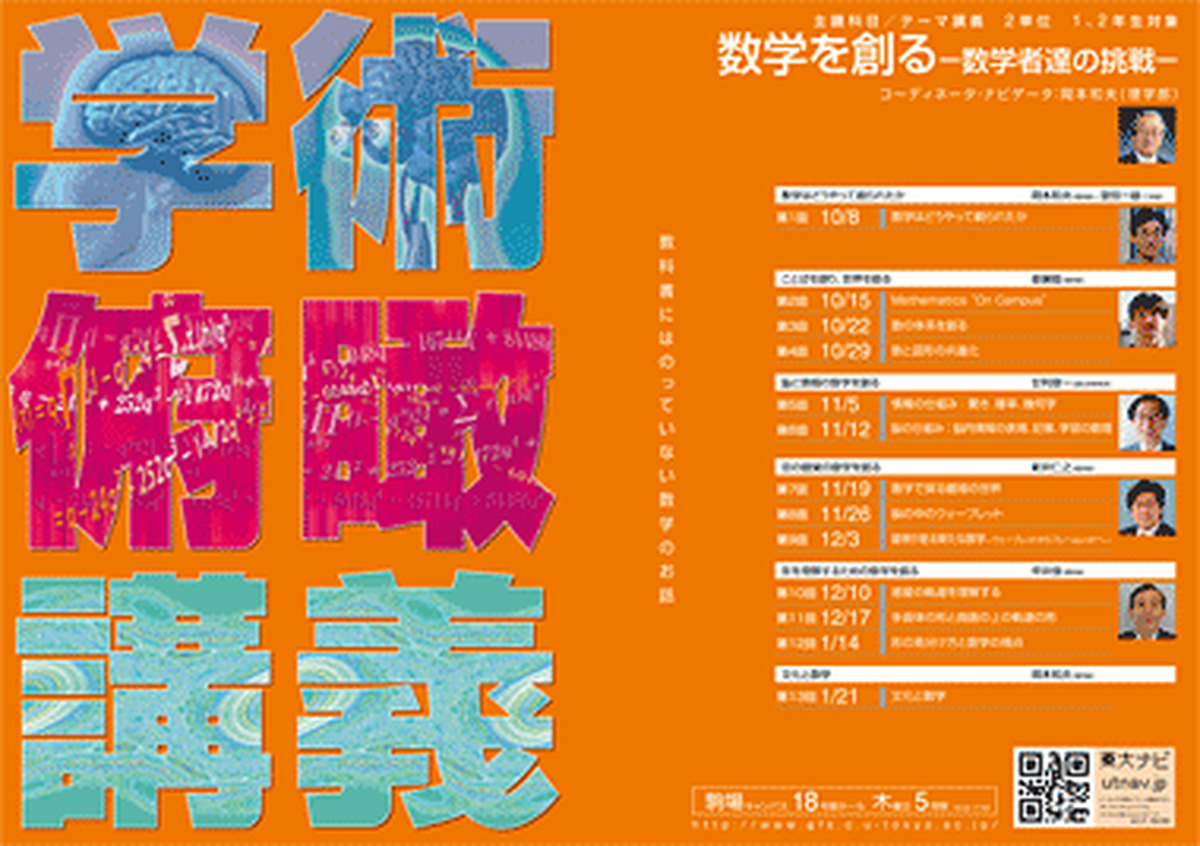
How the Mathematics Was Created
Originating Words, Creating Worlds Mathematics "On Campus"


Available

Audio-Only
Listening
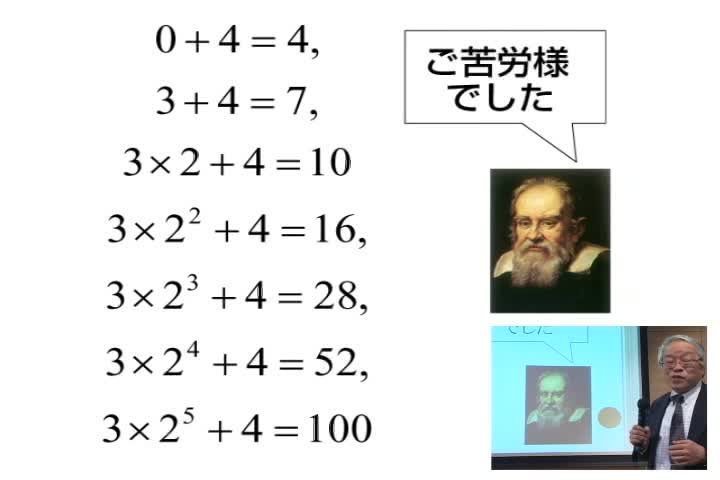
#2 Mathematics “On Campus”
英語Iの教科書‘‘On Campus’’の第4課には、フェルマーの最終定理の証明の糸口発見のきっかけとなった、谷山と志村の出会いが描かれている。17世紀にフェルマーが書き込みを残してから、1994年にワイルスが証明するまで、数学者はすばらしい発見を積み重ね、そのような難問も解決できる世界を創りあげてきた。人類の歴史とともに、古くそして今も発展を続ける数学の世界は、どう創られてきたのか、その一端を紹介する。
Available
Audio-Only
Listening
Available
Audio-Only
Listening
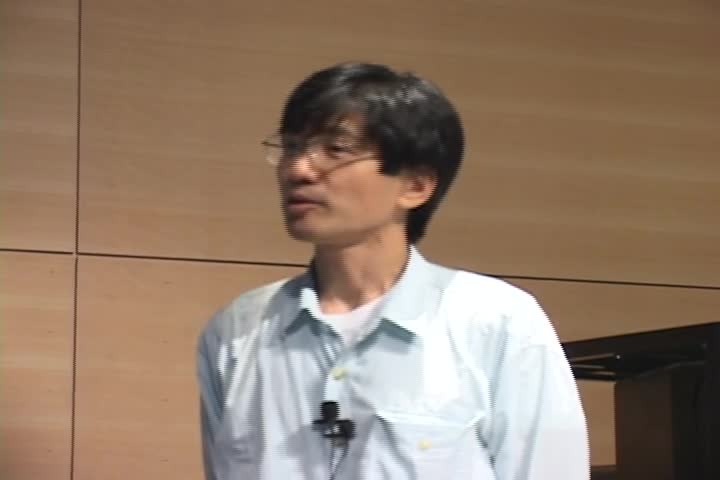
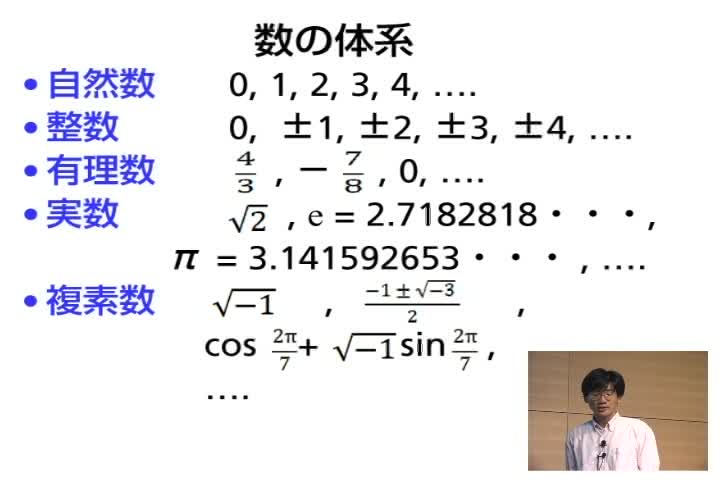
#3 Developing a system of numbers
英語Iの教科書‘‘On Campus’’の第4課には、フェルマーの最終定理の証明の糸口発見のきっかけとなった、谷山と志村の出会いが描かれている。17世紀にフェルマーが書き込みを残してから、1994年にワイルスが証明するまで、数学者はすばらしい発見を積み重ね、そのような難問も解決できる世界を創りあげてきた。人類の歴史とともに、古くそして今も発展を続ける数学の世界は、どう創られてきたのか、その一端を紹介する。
Available
Audio-Only
Listening
Available
Audio-Only
Listening
#4 Co evolution of numbers and geometry
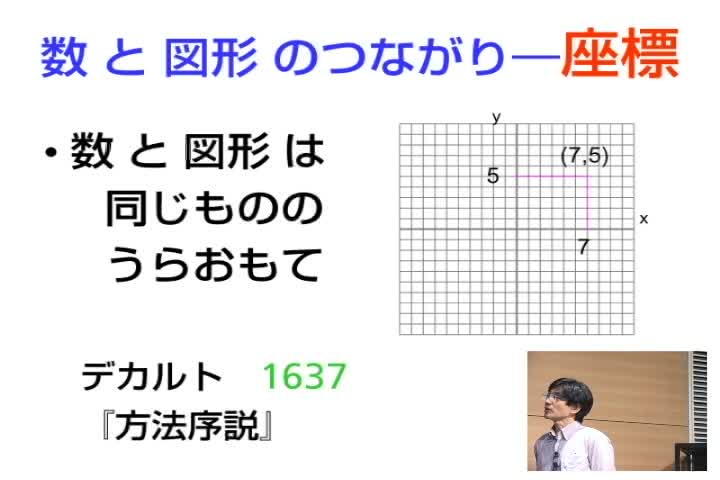
英語Iの教科書‘‘On Campus’’の第4課には、フェルマーの最終定理の証明の糸口発見のきっかけとなった、谷山と志村の出会いが描かれている。17世紀にフェルマーが書き込みを残してから、1994年にワイルスが証明するまで、数学者はすばらしい発見を積み重ね、そのような難問も解決できる世界を創りあげてきた。人類の歴史とともに、古くそして今も発展を続ける数学の世界は、どう創られてきたのか、その一端を紹介する。
Available
Audio-Only
Listening
Creating Mathematics That Describes Brain and Information
Available
Audio-Only
Listening
#5 Information: surprise, probability, and geometry
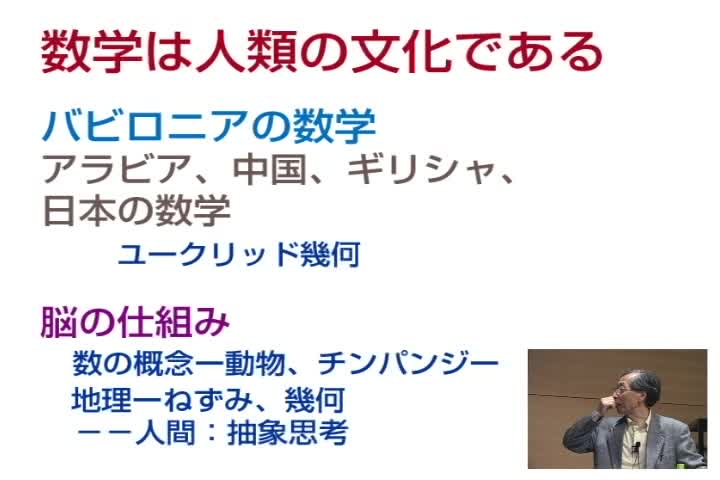
脳はとてつもなく複雑な器官である。脳は情報を処理するのみならず、さらに心を生みだす不思議な器官である。数学も、脳が創り出した。脳の仕組み、さらには情報そのものを、数理という方法で見ると何がわかるのだろう。脳は数理科学にとっての一大挑戦課題であると同時に、新しい数学を生む宝庫である。
Available
Audio-Only
Listening
Available
Audio-Only
Listening
#6 Brain Systems: mathematics dealing in expression, memory, and learning inside a brain
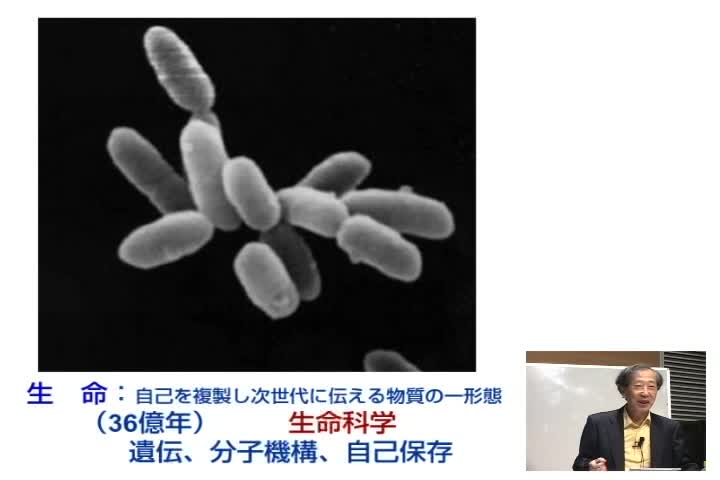
脳はとてつもなく複雑な器官である。脳は情報を処理するのみならず、さらに心を生みだす不思議な器官である。数学も、脳が創り出した。脳の仕組み、さらには情報そのものを、数理という方法で見ると何がわかるのだろう。脳は数理科学にとっての一大挑戦課題であると同時に、新しい数学を生む宝庫である。
Available
Audio-Only
Listening
Creating A Mathematics of Optical Illusions
Audio-Only
Listening
#7 Looking into the Mathematical world of optical illusions
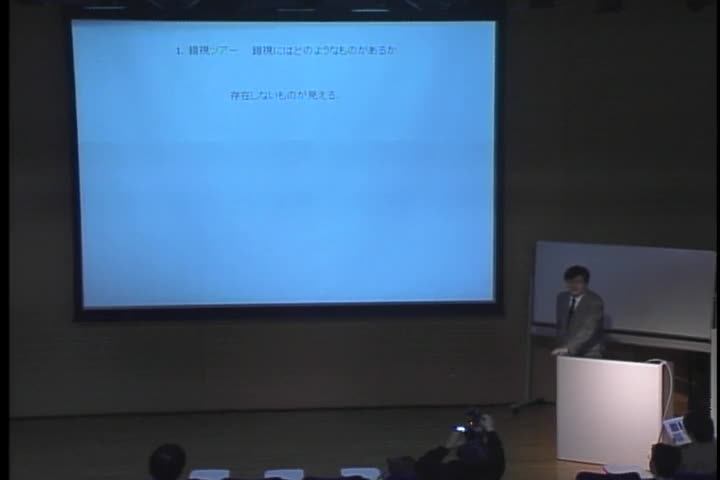
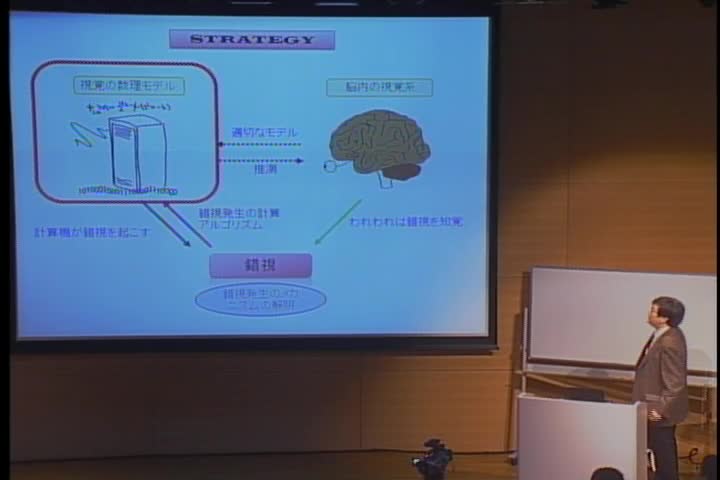
私たちの視覚はしばしば錯覚を引き起こす。これは錯視と呼ばれている。なぜ錯視は起こるのだろうか?本講義ではこの問題に数学を用いてせまってみたい。そのために用いる数学は、ウェーブレット、特に離散ウェーブレットと呼ばれるものである。これは1990年頃より錯視研究とは関係なく創られてきた数学である。講義では、さまざまな錯視とその数学的な解析を、ウェーブレットの入門的解説も交えて述べていきたい。さらに錯視の研…
Audio-Only
Listening
Audio-Only
Listening
#8 Wavelets inside the Brain
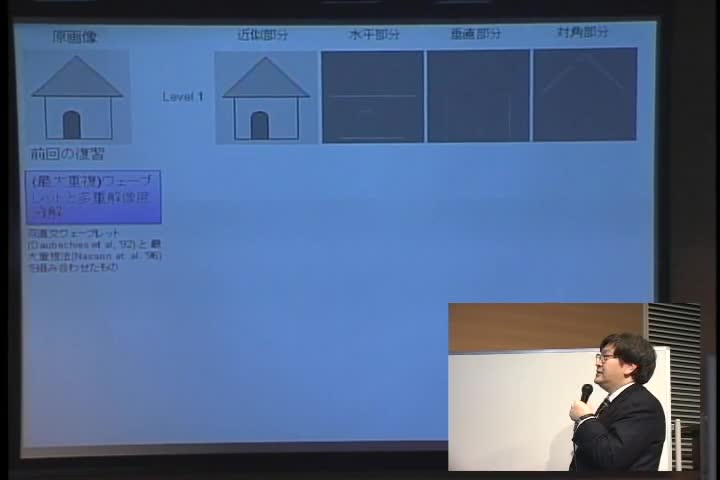
私たちの視覚はしばしば錯覚を引き起こす。これは錯視と呼ばれている。なぜ錯視は起こるのだろうか?本講義ではこの問題に数学を用いてせまってみたい。そのために用いる数学は、ウェーブレット、特に離散ウェーブレットと呼ばれるものである。これは1990年頃より錯視研究とは関係なく創られてきた数学である。講義では、さまざまな錯視とその数学的な解析を、ウェーブレットの入門的解説も交えて述べていきたい。さらに錯視の研…
Audio-Only
Listening
Audio-Only
Listening
#9 Emergence of new Mathematics from Optical illusions -from Wavelets to Framelets-
私たちの視覚はしばしば錯覚を引き起こす。これは錯視と呼ばれている。なぜ錯視は起こるのだろうか?本講義ではこの問題に数学を用いてせまってみたい。そのために用いる数学は、ウェーブレット、特に離散ウェーブレットと呼ばれるものである。これは1990年頃より錯視研究とは関係なく創られてきた数学である。講義では、さまざまな錯視とその数学的な解析を、ウェーブレットの入門的解説も交えて述べていきたい。さらに錯視の研…
Audio-Only
Listening
Creating Mathematics to Comprehend Geometrical Figures
Available
Audio-Only
Listening
#10 Understanding the orbits of planets
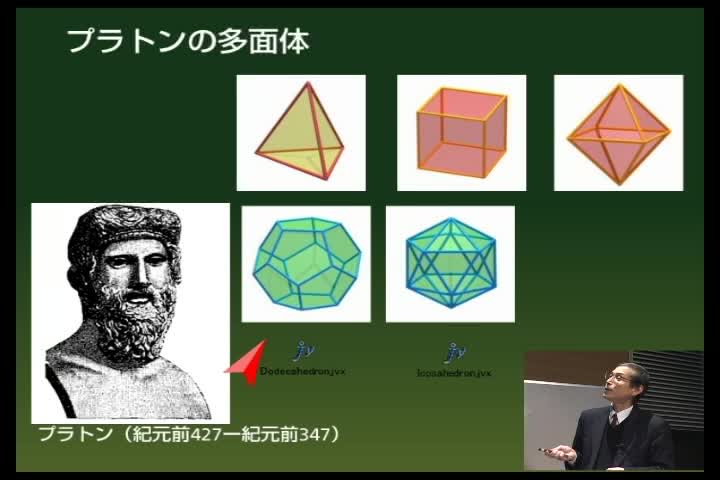
プラトンの多面体と呼ばれる5つの正多面体は、しばしば神秘的な意味を持つものとしてあつかわれた。これらは美しい対称性を持つ図形である。近世において、デカルトが座標を導入したことの意味は、数式と図形が対応するようになったことである。図形一つ一つの個性を考えることから、たくさんの図形の関係を考えることへの意識の変革が生まれた。さらに微分積分が発見され、宇宙に現れる楕円軌道が、ニュートンの万有引力の法則…
Available
Audio-Only
Listening
Available
Audio-Only
Listening
#11 Shapes of Polyhedrons and shapes of orbits on the curved surface
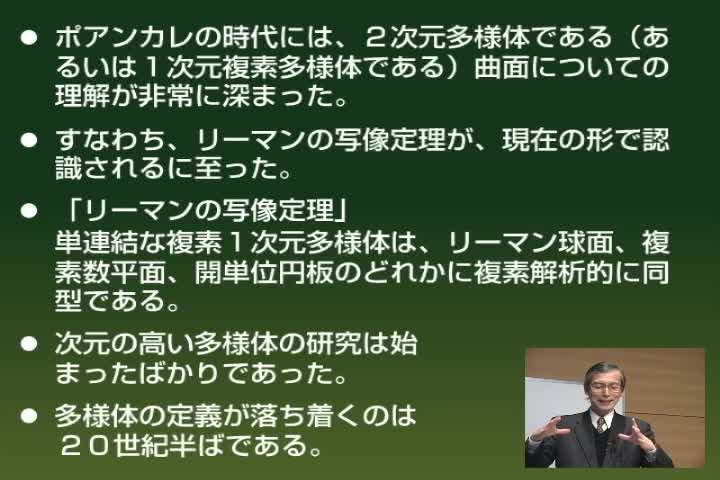
プラトンの多面体と呼ばれる5つの正多面体は、しばしば神秘的な意味を持つものとしてあつかわれた。これらは美しい対称性を持つ図形である。近世において、デカルトが座標を導入したことの意味は、数式と図形が対応するようになったことである。図形一つ一つの個性を考えることから、たくさんの図形の関係を考えることへの意識の変革が生まれた。さらに微分積分が発見され、宇宙に現れる楕円軌道が、ニュートンの万有引力の法則…
Available
Audio-Only
Listening
Available
Audio-Only
Listening
#12 How to distinguish different shapes, and Mathematical point of view
プラトンの多面体と呼ばれる5つの正多面体は、しばしば神秘的な意味を持つものとしてあつかわれた。これらは美しい対称性を持つ図形である。近世において、デカルトが座標を導入したことの意味は、数式と図形が対応するようになったことである。図形一つ一つの個性を考えることから、たくさんの図形の関係を考えることへの意識の変革が生まれた。さらに微分積分が発見され、宇宙に現れる楕円軌道が、ニュートンの万有引力の法則…
Available
Audio-Only
Listening
 Back to Series List